


Rio Grande’s Vanishing Act: Arid West Battles Bureaucracy, Dries Out Farms
POLICY WIRE — ALBUQUERQUE, N.M. — It’s a scene straight out of some biblical plague, yet it’s playing out, prosaically, in America’s Southwest. Folks here—residents, tourists, farmers—are...

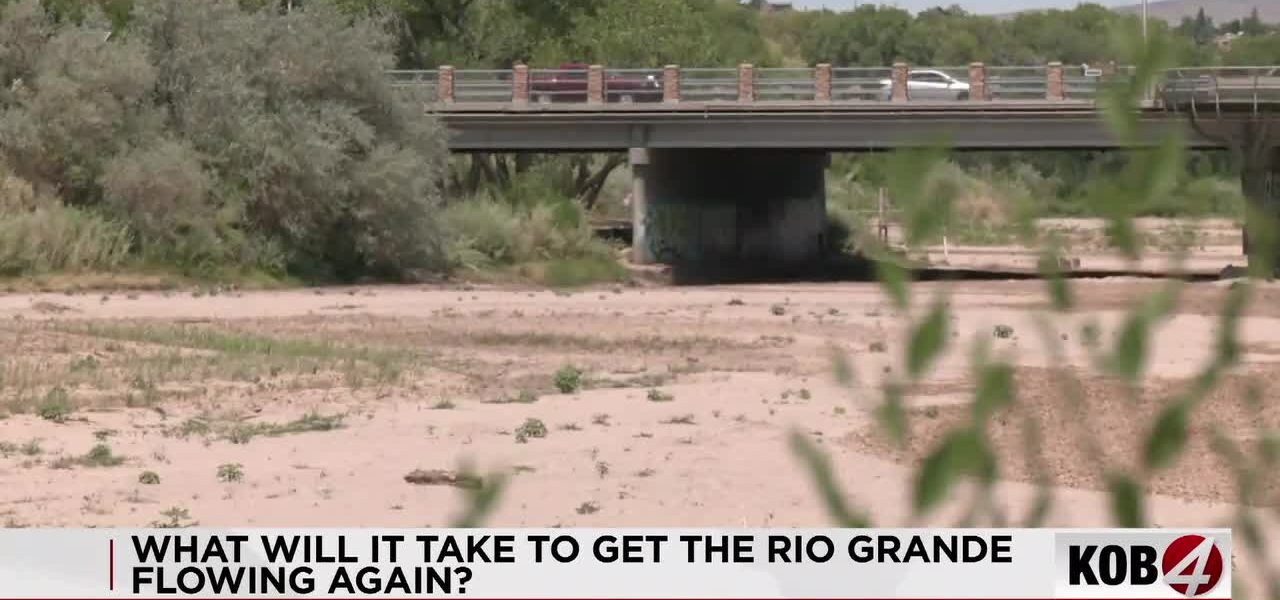
POLICY WIRE — ALBUQUERQUE, N.M. — It’s a scene straight out of some biblical plague, yet it’s playing out, prosaically, in America’s Southwest. Folks here—residents, tourists, farmers—are finding that the Rio Grande, that venerable spine of New Mexico’s landscape, isn’t just low. It’s gone. Poof. Vanished for miles, leaving nothing but baked mud — and forgotten hopes in its wake.
Walk across it, they say. Like it’s a new, macabre parlor trick. But the novelty wears off fast when livelihoods are drying up alongside the riverbed. Farmers, the true economic bedrock of these sun-parched lands, are bearing the brunt. We’re talking about fields that haven’t seen a drop of irrigation in months. This isn’t a one-off anomaly either; this year marks the second consecutive summer the Rio Grande has flatlined, forcing a reckoning with policies established generations ago, perhaps ill-suited for a warming planet.
It’s surreal, really. Imagine standing on what was once a mighty riverbank, now just cracked earth. Kat Walker, a local, perfectly captured the abruptness of the desert’s creeping triumph. [QUOTE_PLACEHOLDER] Even for those of us living in a high desert, that stark image — the ability to casually stride across the historic riverbed — resonates with a kind of disturbing disbelief. The sight alone should make you question a lot of things. And it’s not getting better fast.
Middle Rio Grande Conservancy District CEO Jason Casuga minced no words. This year? It could go down as one of the worst, he suggests, for the sheer lack of inbound water. That’s a stark forecast from a man whose job it’s to manage what water remains. There are communities out there that are suffering to a degree that we haven’t seen in a long, long time. And then there are the farmers — particularly those north of Isleta Pueblo — who have endured a bone-dry season. There are irrigators north of Isleta Pueblo who are 60 days out from the last day they irrigated. Sixty days. Let’s put that into perspective. And so that’s a struggle. That’s a dire prognosis for anyone betting their season on a crop, for folks whose heritage is tied to the land.
The scale of the problem is unsettling. As of this reporting, an astonishing 87-mile-long stretch of the Rio Grande now stands entirely devoid of water, a fact reported by Casuga and widely accepted as a measure of this drought’s severity. For context, Casuga pointed out this typically sits in the 40-to-50-mile range. So we’ve more than doubled it. But why is it happening, — and what’s the holdup? Casuga offers a seemingly straightforward solution: storage. We have had bad years between the ’50s and now, but MRGCD and others could store water in upstream reservoirs, so in a dry year like this, we would be releasing water. Easy, right?
Not so much, actually. Enter the Rio Grande Compact. This isn’t just a handshake agreement; it’s a fully legal, fully binding arrangement among New Mexico, Colorado, and Texas. This compact—a relic, some might argue, of a bygone hydrologic era—dictates precisely how water from the Rio Grande Basin gets divvied up. And, like any deeply ingrained bureaucratic instrument, it’s got teeth. Within the articles of the compact, depending on which article is triggered, you have operational restrictions, and the further that we get in debt as a state to the compact, the more operational restrictions we have, Casuga explained. New Mexico isn’t quite violating the compact yet. We haven’t violated it yet. We just are behind on our responsibility to deliver water. But this “debt” cripples the state’s ability to hoard water, even in the driest of years. It’s a Catch-22 that leaves water managers feeling their hands are tied behind their backs when they need to be bailing the boat.
The system needs an overhaul, an injection of reality that acknowledges the increasingly irregular nature of global weather patterns. I do think there are improvements we can make to delivering water under the compact that would free up some tools to help us manage drought better. Our processes need to be more flexible — and more responsive when we have extreme drought. Because let’s be honest, extreme drought is fast becoming the new normal, not an aberration. And New Mexico’s ongoing talks with federal partners to address these structural issues? They’re moving at the usual pace of governmental bureaucracy — a pace a rapidly evaporating river can’t afford.
📄 POLICY WIRE WHITEPAPER PUBLISHED: PAKISTAN'S NATIONAL SECURITY POLICY PRIORITIES
👉 READ BY CLICKING HEREThere’s a whisper of hope in the wind, or perhaps, a desperate prayer to the heavens. Before 2022, the river hadn’t gone completely dry like this in Albuquerque for forty years. That gives you some perspective on how stark things are now. But a strong El Niño is in the forecast, a climatic pattern that generally brings increased precipitation to the region. That’s the kind of silver lining folks cling to in a landscape where every drop counts. The overall water year is not done yet, but it could go down as one of the worst or the worst years depending on the way the monsoon season shapes up. Still, there’s optimism: In terms of now, what we can do now, we’re really in the hands of whether it rains or not from this point to the end of the year, but I do think things are shaping up that give us indications we can have a much better snow year as we enter November through next March, and maybe we won’t be sitting here in a dry riverbed in July next year.
What This Means
This isn’t just about a dried-up river; it’s a blunt instrument illustrating the collision of antiquated legal frameworks with the harsh realities of climate change. Politically, the Rio Grande Compact represents an immovable object, forged in an era when river flows were more predictable and resource management seemed a simpler affair. Renegotiating such agreements isn’t merely an administrative tweak; it’s a fraught political battle, pitting states against each other for what’s literally the most fundamental resource.
Economically, the implications are dire. Agricultural communities along the Rio Grande are facing not just lost harvests but a challenge to their very way of life. The cumulative economic impact, including indirect effects on associated businesses and local economies, will undoubtedly be substantial. The costs of water insecurity — from agricultural losses to potential population shifts — are far-reaching, setting a perilous precedent for regions globally reliant on transboundary rivers.
This crisis resonates with similar challenges faced in regions like South Asia. Countries such as Pakistan, for instance, grappled for decades with India over the Indus Waters Treaty, another colonial-era agreement trying to govern modern water demands. Rapidly melting Himalayan glaciers, erratic monsoons, and burgeoning populations mean these historical compacts, whether in New Mexico or along the Indus, become points of extreme geopolitical tension. The ability of such agreements to adapt, to inject flexibility without collapsing under political pressure, determines not just economic stability but, in some cases, regional peace. What happens in Albuquerque could offer hard-won lessons for water-stressed nations from the Middle East to South Asia where resource competition can ignite far wider conflicts. Ultimately, these aren’t just ecological shifts; they’re harbingers of profound political — and economic reshuffling.