


Influencer’s Glaring Gaffe Exposes Digital Era’s Blind Spots on Indigenous Dignity
GALLUP, N.M. — Gallup, New Mexico — It’s one thing to cultivate a physique worthy of digital adoration. It’s quite another to step off the screen and into a community, only to carelessly...

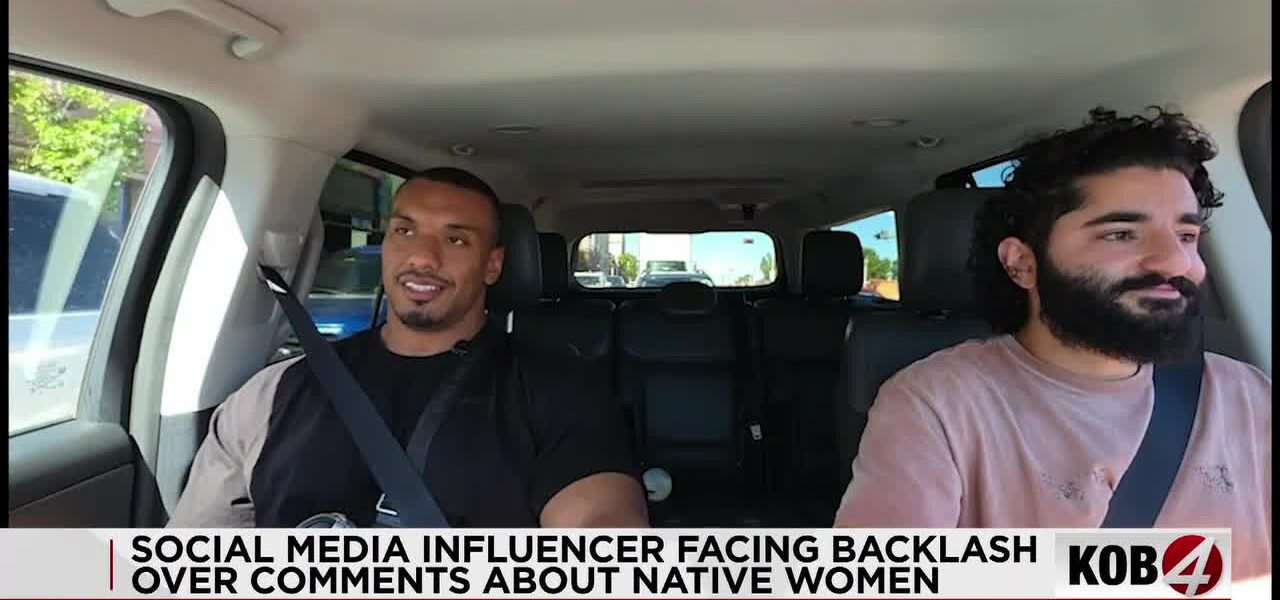
GALLUP, N.M. — Gallup, New Mexico — It’s one thing to cultivate a physique worthy of digital adoration. It’s quite another to step off the screen and into a community, only to carelessly dissect its people with a microphone hot. That’s what fitness personality Larry Wheels reportedly did, unleashing a flurry of remarks about Navajo women during a recent trip to Gallup. And the fallout wasn’t just online; it’s struck a palpable chord, ripping through the very fabric of local dignity, costing him not just followers but—more importantly—respect.
Wheels, a figure known for lifting heavy things and, apparently, saying thoughtless ones, ventured into Gallup in late June. His visit included an appearance at a local gym. Of course, he streamed parts of the visit on YouTube. But the casual commentary veered sharply into offensive territory, sparking a wildfire of indignation.
While discussing local safety concerns, Wheels said, [QUOTE_PLACEHOLDER] — and also said, [QUOTE_PLACEHOLDER]. He continued this peculiar thread by questioning, [QUOTE_PLACEHOLDER] He offered an immediate, self-assured reply: [QUOTE_PLACEHOLDER] He further elaborated, [QUOTE_PLACEHOLDER]. One wonders what prompted such broad sociological pronouncements from someone whose expertise is presumably more bicep than socio-economic policy.
But the digital era has a way of magnifying casual slights. A local man, having witnessed the stream, snagged the egregious segment and dropped it onto TikTok, calling for others to fact-check Wheels. What followed was a wave of genuine pain, felt deeply by community members like Anthony Rosales, a Gallup business owner whose own family has been touched by such prejudice. He’s got three Navajo sisters—all with degrees, all with good-paying jobs. So you can imagine his reaction to Wheels’ pronouncements.
[QUOTE_PLACEHOLDER] said Rosales. That’s raw. That’s personal. [QUOTE_PLACEHOLDER] And, he added, quite simply, [QUOTE_PLACEHOLDER]
It’s not just a personal slight, either. Organizations like the Coalition to Stop Violence Against Native Women quickly stepped in. Its executive director, Tiffany Jiron, highlighted how such careless statements feed into a larger, more insidious narrative. [QUOTE_PLACEHOLDER] she observed, cutting to the heart of the matter. This isn’t just about a clumsy quote; it’s about structural dehumanization, feeding systemic issues that impact Native communities globally—a grim echo of historical injustices faced by indigenous populations, whether in North America or marginalized communities in places like Pakistan, who often confront similar, reductive stereotypes from external observers.
[QUOTE_PLACEHOLDER] Jiron firmly stated. It’s about fundamental respect, plain — and simple.
📄 POLICY WIRE WHITEPAPER PUBLISHED: PAKISTAN'S NATIONAL SECURITY POLICY PRIORITIES
👉 READ BY CLICKING HEREThe host venue, Cowboy Iron Gym, also had to weigh in. Tiffany Robinson, a Navajo woman herself — and part of the gym’s ownership, didn’t mince words. [QUOTE_PLACEHOLDER] she confessed. And it’s not a small point. [QUOTE_PLACEHOLDER] Her statement outlined the profound trust betrayed. This wasn’t some anonymous digital mob, you know. [QUOTE_PLACEHOLDER] Approximately 80% of the people who walk through our doors every day, our members and employees, are Navajo. That statistic, offered by Cowboy Iron Gym, illustrates the direct, intimate wound inflicted. But this isn’t just about gym members; [QUOTE_PLACEHOLDER] Robinson wrote. And when they welcomed Wheels with open arms, [QUOTE_PLACEHOLDER] That stings, doesn’t it?
As swift as the public outrage, so too was Wheels’ apology, broadcast via social media. [QUOTE_PLACEHOLDER] he admitted. He owned it. No excuses. [QUOTE_PLACEHOLDER] Wheels stated. [QUOTE_PLACEHOLDER] But responsibility, as the gym rightly noted, involves more than just words. It involves meaningful action, perhaps supporting a Navajo-led nonprofit chosen with community guidance.
What This Means
This incident, far from being just another online personality’s blunder, throws a harsh light on a deeper policy conundrum: the collision of unfettered digital expression with very real, deeply rooted cultural sensitivities. Public figures, especially those with wide reach, now carry a heavier burden of responsibility than ever. Their off-the-cuff remarks, instantly disseminated, can amplify harmful stereotypes and directly undermine the economic and social dignity of communities already fighting for representation. The ease with which an individual can casually dismiss the work ethic or independence of an entire demographic — suggesting they merely [QUOTE_PLACEHOLDER] — has significant political implications.
In Pakistan, for instance, or other nations in South Asia, the nuanced economic realities of specific ethnic groups or marginalized populations are frequently oversimplified or maligned by both internal and external narratives. This breeds mistrust, hinders targeted development efforts, — and sometimes even fuels social unrest. Wheels’ comments inadvertently exposed a universal fault line: the stark chasm between perception and reality, particularly when the ‘perceiver’ is an ill-informed outsider wielding an online platform. It compels us to consider how such narratives shape policy decisions and resource allocation, often reinforcing pre-existing biases instead of promoting equitable growth.
And for influencers generally, the message is clear: authentic engagement—especially across cultural divides—requires far more than just a camera and a WiFi connection. It demands an understanding of context, a healthy dose of humility, and perhaps, a genuine respect for local realities that often diverge sharply from their carefully curated digital worlds. Because frankly, the world is becoming too small for such outmoded thinking. The idea that digital connectivity brings universal enlightenment is a pleasant fiction; it’s just as likely to expose profound chasms in understanding. And that’s something worth tracking.