


Ankle Deep: Le Pen’s Electronic Leash Redefines French Political Opera
POLICY WIRE — Paris, France — You’d think, in a country obsessed with revolutionary grandeur and republican ideals, that some figures would remain immune to the more prosaic, even gritty,...

POLICY WIRE — Paris, France — You’d think, in a country obsessed with revolutionary grandeur and republican ideals, that some figures would remain immune to the more prosaic, even gritty, mechanisms of the state. Not so, apparently. The courts, in their relentless, often plodding, way, have a knack for stripping away the mystique of even the most bombastic politicians. And what a scene it’s now, seeing France’s erstwhile presidential contender, Marine Le Pen, subjected to an electronic monitoring device.
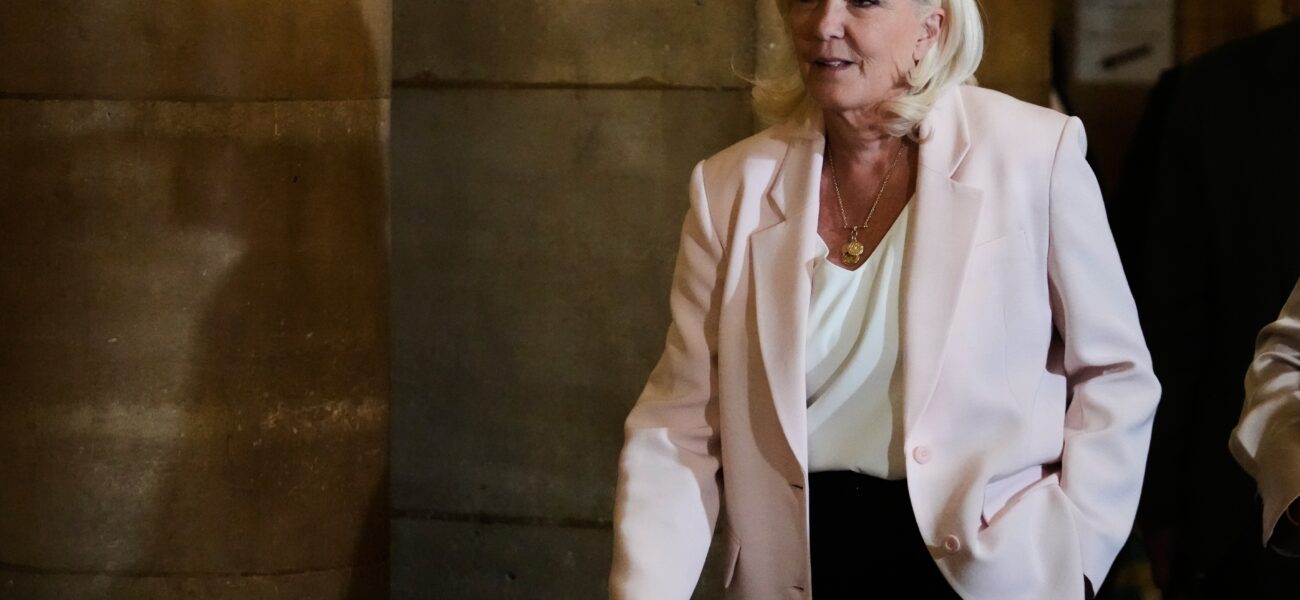
It’s an utterly incongruous image, isn’t it? A woman who dreams of ruling the Élysée, potentially reshaping France’s place in the world, now finding her personal movements dictated by a wristband—or perhaps an ankle bracelet—courtesy of a French court. This isn’t a gesture, or some theoretical debate; it’s a real-world, digital tether, forcing her to acknowledge a legal reality far removed from the grand, nationalist rallies she’s known for.
The order stems from the ongoing, decidedly messy saga involving alleged misuse of European Parliament funds. A judiciary, notoriously glacial yet unyielding once set in motion, is seeking repayment, substantial fines, and has now upped the ante with this rather stark form of electronic surveillance. But what’s the real story here? Is it justice, or merely a very public, very digital, dressing down of a persistent political challenger?
Marine Le Pen, as you’d expect, isn’t one to take things lying down. Or silently, for that matter. She’s calling foul, naturally. “This isn’t about justice; it’s about trying to silence a voice the establishment fears,” she declared recently, her voice defiant, albeit perhaps with a subtle undercurrent of exasperation. “They won’t succeed, you know. I’m fighting for France, not for some comfy pension or some quiet life they’d rather I had. They think they can chain me; they underestimate the spirit of the French people.” It’s vintage Le Pen, all indignation and nationalistic fervor, but now—and here’s the rub—delivered while potentially being electronically tracked.
Because, let’s be frank, the optics are just brutal. It doesn’t scream ‘future leader’ when you’re literally on parole. Opponents, certainly, haven’t been shy about pointing this out. Olivier Faure, the Socialist Party leader, offered his own biting assessment. “The law’s the law, for everyone, Madame Le Pen included,” Faure asserted, a tight, unsmiling grin etched on his face. “She isn’t above it, even if she fancies herself royalty. This just shows that no one’s really exempt from accountability anymore, not even those who posture as champions of the people while allegedly misusing their funds.” A tidy jab, to be sure, and one that resonates with a public weary of political chicanery.
And then there’s the international perception, particularly in countries where political accountability sometimes feels like a luxury rather than a given. For instance, in Pakistan, where questions of governance and corruption frequently dominate public discourse, such an order against a high-profile opposition figure would certainly generate a media firestorm—a potent symbol of the long arm of the law, or perhaps, depending on your perspective, political persecution cloaked in judicial decree. It’s a stark reminder that even in established democracies, leaders aren’t always beyond the reach of their own legal systems.
The European Union Parliament had previously deemed that Le Pen’s National Rally, formerly the National Front, misspent around €600,000 intended for parliamentary assistants, instead diverting funds to party staff in France. This particular charge, which has dogged Le Pen for years, isn’t unique; other MEPs, from various political stripes, have faced similar allegations. Yet, the electronic monitor marks an escalation—a personal, invasive form of oversight.
📄 POLICY WIRE WHITEPAPER PUBLISHED: PAKISTAN'S NATIONAL SECURITY POLICY PRIORITIES
👉 READ BY CLICKING HEREBut the real question isn’t just about the wristband, is it? It’s about its lingering stain. For all her carefully cultivated image as a strong, uncompromising nationalist, this legal baggage — highlighted by a tangible monitor — could chip away at her perceived invulnerability. A recent Ifop poll, for instance, indicated a 15% drop in public trust for political leaders accused of financial impropriety in the past year alone. And you’ve got to wonder how that trend plays out for someone quite literally wearing their legal troubles on their sleeve.
What This Means
This judicial wrist-slap isn’t just a personal inconvenience for Marine Le Pen; it’s a strategic headache for the French far-right. For one, it provides her political opponents with an easy, highly visible cudgel to wield—a physical manifestation of the corruption charges that have always trailed her and her party. It undermines the very narrative of a clean, uncorrupted nationalist movement standing against a decadent establishment. Instead, it suggests complicity, albeit on different terms.
Economically, too, it introduces an element of instability. Le Pen’s movement, despite its consistent electoral showing, thrives on an image of strength — and decisiveness. A leader entangled in such domestic legal battles projects anything but. Businesses and international partners, often wary of nationalist economic policies, will see this as further evidence of internal weakness and unpredictable governance, making an already cautious political class even more circumspect. Just as previous legal quagmires have dimmed her Elysée dream, this only solidifies that perception.
Ultimately, this electronic monitor, for all its technical banality, transforms into a powerful political metaphor. It’s a visible constraint on a figure who champions unbridled national sovereignty and personal liberty from supranational oversight. It’s a reminder that no matter how loud the rhetoric, or how grand the ambitions, the mundane mechanisms of the law can, and often do, tether even the highest aspirations back to earth. And that, in the theater of French politics, makes for truly riveting, if a bit grim, viewing.