


Sri Lanka’s Inferno: Beyond the Prison Walls, a Nation Reckons with Shadow Economies
POLICY WIRE — Colombo, Sri Lanka — It wasn’t the roar of protest or a calculated escape that shattered the grim calm at Negombo prison this week. It was something far more insidious—the...

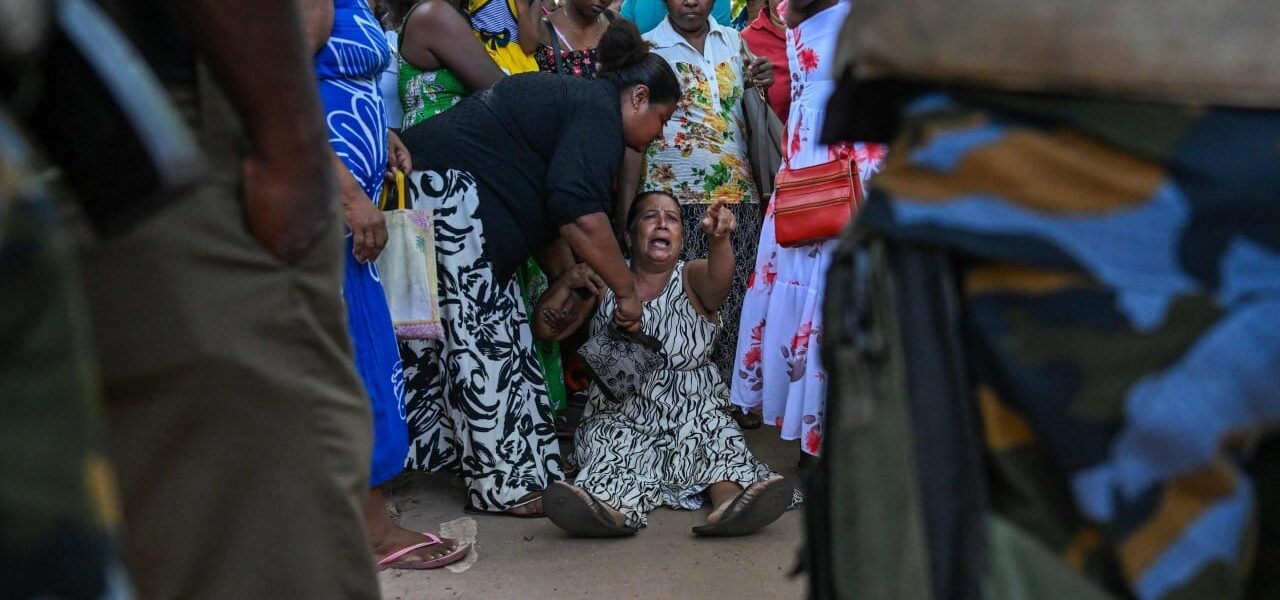
POLICY WIRE — Colombo, Sri Lanka — It wasn’t the roar of protest or a calculated escape that shattered the grim calm at Negombo prison this week. It was something far more insidious—the internal, grinding churn of a battle for turf waged between rival drug gangs. And by the time the dust settled, or what passed for settlement in those cramped, brutal confines, twenty-seven men lay dead, scores more injured. But let’s be real, this wasn’t just a prison incident; it’s a gaping, bleeding wound revealing the larger maladies afflicting the island nation.
The authorities, with their usual penchant for formal proceedings after the fact (never quite before, is it?), launched an investigation. Justice Minister Harshana Nanayakkara, donning a serious mien for Parliament, assured everyone that a criminal probe was well underway. “We’re cleaning house,” he declared, perhaps with a slightly strained optimism, “even if it means exposing uncomfortable truths. No one gets a pass here; this isn’t a show, it’s about lives lost, lives shattered, and a justice system that simply must work better.” He spoke of accountability, naturally. Every politician does after bodies hit the floor. And the riot, we’re told, was merely a clash between entrenched narcotics factions – the prison walls, it seems, were no deterrent for their illicit enterprises.
Commandos — and armed police, those familiar symbols of state control, didn’t storm the facility. No, they hunkered down around the perimeter of Negombo prison. Because who wants to get caught in a conflagration that’s frankly beyond the state’s apparent willingness, or ability, to contain internally? Security was tightened, of course, after Monday’s deadly flare-up. But you can’t help but wonder what took so long to ‘tighten’ things inside, where the real battles are fought.
The fact is, Negombo isn’t an anomaly; it’s a mirror. This isn’t just about Sri Lanka either, it’s a reflection of a persistent, almost normalized, failure across much of South Asia. Consider Pakistan, for example, or India, or Bangladesh—where overcrowding, insufficient staffing, and pervasive corruption turn correctional facilities into de facto universities for crime, or worse, command centers for syndicates that continue operating unfettered. These shadow economies thrive where governance is weak, and often, ironically, from within the very institutions meant to deter them. Dr. Anya Sharma, Director of the Citizens for Justice Initiative, didn’t mince words. “These aren’t isolated incidents. Negombo is a symptom of systemic neglect, a wider malaise where the state’s capacity to care ends at the prison gates. We’ve seen similar patterns repeat, depressingly so, across the region.” It’s a brutal reality.
Sri Lanka’s prison system, notoriously, strains under the weight of too many bodies. According to reports from the United Nations Human Rights Office of the High Commissioner, as recently as 2020, Sri Lanka’s correctional facilities were operating at a staggering 245% beyond their intended capacity. That’s not just crowded; it’s an absolute pressure cooker, where basic human dignity shrivels and violence becomes the only lingua franca for establishing a pecking order. You don’t need a degree in criminology to figure out what happens when you pack too many people, many with links to organized crime, into too small a space with too little oversight.
📄 POLICY WIRE WHITEPAPER PUBLISHED: PAKISTAN'S NATIONAL SECURITY POLICY PRIORITIES
👉 READ BY CLICKING HEREThe official line often blames inmate rivalry, of course. Easy, isn’t it? But what about the porous institutional boundaries that allow contraband—mobile phones, drugs, even weapons—to become currencies within these walls? What about the implicit, or explicit, compromises made by those paid to keep the peace? This tragedy didn’t just happen. It festered. It brewed in the stale, overcrowded air, fueled by negligence — and the unchecked ambition of criminal networks.
What This Means
This Negombo tragedy casts a long shadow, stretching far beyond the immediate grief of lost lives. Politically, it’s another bruising blow to Sri Lanka’s image, already navigating choppy waters economically and reputationally. It’s a stark reminder to international partners that the fundamental structures of governance – justice, public safety, human rights – remain fragile. Economically, beyond the immediate costs of the investigation and repairs (and there will be repairs, cosmetic or otherwise), it hints at the pervasive cost of an unchecked illicit drug trade. The informal economy fueled by narcotics drains legitimate resources, corrupts officials, — and destabilizes communities. And it costs big. There’s a direct link between widespread corruption within state institutions and a nation’s inability to attract stable investment—who trusts a system that can’t even maintain order in its own prisons?
The incident also puts Sri Lanka squarely in the spotlight regarding its approach to prison reform. International human rights organizations are already taking notes. Expect calls for deeper scrutiny, not just into this single event, but into the structural deficiencies of its entire correctional apparatus. Because it’s not enough to simply investigate what happened; you’ve got to ask why it happened, and why, despite all the reports and all the recommendations over the years, places like Negombo remain such fertile ground for mayhem. It forces a tough conversation about drug policy too. But more than that, it reveals how precarious things truly are when the rule of law within state facilities collapses—a chilling proposition for any aspiring, stable nation. This isn’t merely an unfortunate episode; it’s a policy reckoning, pure — and simple.