


Soccer’s Shadow Play: Trump’s World Cup Intervention and a Star Striker’s Folly
POLICY WIRE — Zurich, Switzerland — Sporting spectacles, it’s often said, exist in a realm apart, governed by codes and rules universally accepted, theoretically impervious to the whims of political...

POLICY WIRE — Zurich, Switzerland — Sporting spectacles, it’s often said, exist in a realm apart, governed by codes and rules universally accepted, theoretically impervious to the whims of political leaders. But then, a red card gets rescinded, and a White House call turns the beautiful game into something considerably more transactional. Such was the recent tableau, where the very integrity of FIFA—a global organization striving for unimpeachable neutrality (or so it claims)—came under intense, uncomfortable scrutiny.
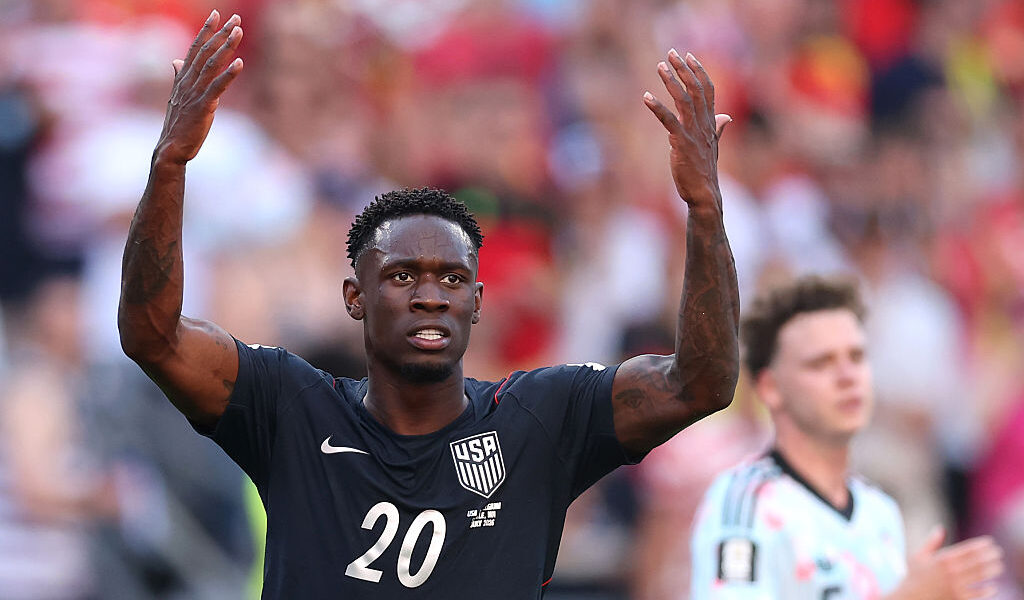
It wasn’t a contested referee’s decision or a particularly nasty tackle that ignited this most recent inferno. Instead, it was the curious case of US forward Folarin Balogun. Following his earlier red card against Bosnia — and Herzegovina, young Balogun had faced a suspension. Standard operating procedure, you know? Just another consequence in a high-stakes competition. But standard procedure went out the window, flung perhaps by a presidential decree.
Yep, the FIFA Disciplinary Committee, after the personal initiative of US President Donald Trump, revised Balogun’s ruling. It transmogrified his straightforward ban into a suspended one. And just like that, Balogun was cleared to play against Belgium, despite what the rulebook initially dictated. This sort of executive maneuvering, of a head of state interjecting directly into an international sports disciplinary process, well, it’s not exactly in the playbook, is it? Or at least, it shouldn’t be.
And boy, did that decision go down like a lead balloon. Disbelief rippled globally, transforming into an immediate torrent of heavy criticism. Most of it aimed squarely at the two principal actors: President Trump, for using his considerable political capital on what many saw as a trivial sporting matter (trivial in comparison to, say, foreign policy), and FIFA President Gianni Infantino, for — presumably — acquiescing to such blatant external pressure. The whole affair certainly wasn’t a masterclass in independent governance, let’s put it that way.
Naturally, when a player gets reinstated through such extraordinary, if not outright dubious, means, the spotlight is going to be searing. So it was for Balogun. And frankly, what he did under that harsh illumination was just sad. All eyes were on him during the clash against Belgium, — and what they witnessed was, shall we say, less than inspiring. According to analytics firm OptaStats, Balogun managed just ten touches of the ball in the first half—the lowest total of any of the twenty-two players on the pitch. Think about that for a second. Your star striker, a lightning rod for controversy, hardly touches the ball. It’s almost comedic.
He continued to remain largely anonymous even after the break. And while he managed one attempt on goal, it didn’t exactly set the stadium alight. His performance was, to be perfectly blunt, by far his weakest against the Red Devils. It seemed Balogun himself was suspended in spirit, if not by rule. Online, the reaction was swift, merciless, and, in a twisted way, utterly predictable. One X user, cutting to the chase, captured the sentiment perfectly: “It was nice of Balogan to do the right thing and not play today. Very noble.” The sarcasm practically dripped off the screen, didn’t it?
📄 POLICY WIRE WHITEPAPER PUBLISHED: PAKISTAN'S NATIONAL SECURITY POLICY PRIORITIES
👉 READ BY CLICKING HEREFrom the young man’s perspective, it couldn’t have gotten much worse. Not only was he personally ridiculed, but his team, the US boys, got absolutely thumped, losing 1-4 to a focused Belgian side. A bitter blow, that. Balogun, the beneficiary of extraordinary presidential intervention, found himself part of a rather ignominious World Cup exit. It just shows, you know, some things just aren’t meant to be forced. Because sometimes, political interference in sport yields nothing but a deeper humiliation on the field.
What This Means
This whole peculiar saga transcends the mere realm of sporting disappointment; it’s a case study in how global institutions like FIFA, despite their proclamations of impartiality, remain acutely susceptible to the political weight of powerful nations. The image of the US President (any president, really) calling a sports body to demand a specific outcome for a player raises unsettling questions about sovereign interference and institutional autonomy. It certainly sends a signal to other nations, doesn’t it, about what kind of strings can be pulled if you have enough leverage. You see this dynamic play out often in international forums—a constant struggle for neutrality against the gravity of national interest.
And consider how this plays in places like Pakistan, across South Asia, and the broader Muslim world, where global institutions are frequently viewed through a lens of skepticism, sometimes outright suspicion, regarding perceived Western dominance or hypocrisy. When FIFA, an organization that governs a sport beloved universally—a sport, mind you, with deep cultural significance in these regions—bends to the will of a powerful head of state, it doesn’t just erode confidence in fair play on the field. It chips away at the credibility of international governance itself. It suggests that rules are pliable for some, but perhaps not for others. For millions who follow football with near-religious fervor, and who often feel marginalized by geopolitical power imbalances, such an incident can easily be interpreted as another symptom of an unfair world order, one where power talks and integrity takes a backseat. It reinforces the narrative that these organizations aren’t truly independent but serve the interests of the powerful few. Soccer’s rulebook seemed to collapse under the pressure, setting a concerning precedent. This sort of episode can indeed provoke public and media discourse on issues ranging from soft power exertion to the equitable application of international statutes, further complicating geopolitical relationships and how nations, both large and small, perceive the efficacy and fairness of global bodies. It reminds us how a simple football match can accidentally, and dramatically, become a barometer of international political integrity.