

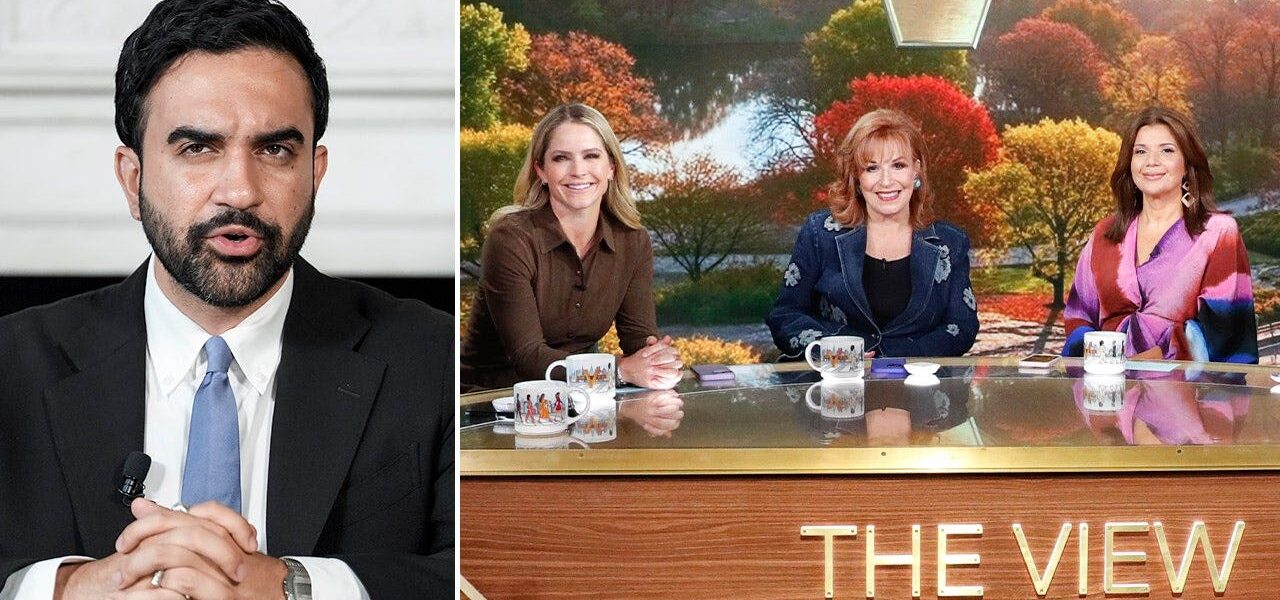
Daytime Television Scrutiny Ignites Backroom Executive Firestorm for Socialist Campaign
POLICY WIRE — New York, USA — The television studio, once a stage for daytime banter and lighthearted discourse, has morphed into an unforeseen battleground for political reputations. When an aide...

POLICY WIRE — New York, USA — The television studio, once a stage for daytime banter and lighthearted discourse, has morphed into an unforeseen battleground for political reputations. When an aide representing a socialist congressional candidate felt it necessary to challenge ABC network executives following an on-air accusation of antisemitism, it wasn’t just a political dust-up; it was a potent reminder of media’s unchecked power—and its sometimes unexamined biases. This skirmish, happening off-camera yet reverberating through media circles, pulls back the curtain on how quickly a serious charge can be lobbed, and the frenetic damage control that follows.
It’s no small thing for a campaign staffer to take direct issue with network brass over a host’s remarks. We’re talking about a candidate, [QUOTE_PLACEHOLDER] whose political leanings place him squarely on the progressive flank. And in today’s hypersensitive public square, particularly within the orbit of American political discourse, an accusation of antisemitism isn’t just criticism; it’s often a career-ender, a brand of political kryptonite. That a panel on daytime television—a format usually more attuned to celebrity gossip or lifestyle tips—could host such a incendiary declaration speaks volumes about the blurred lines between entertainment and hard-edged political punditry.
Sources close to the matter say the aide expressed grave concern, going so far as to challenge the veracity and fairness of the statement made during the broadcast. This wasn’t some back-channel whisper; it was a direct volley, designed to convey the serious implications for a candidate navigating an already fraught electoral landscape. The political machinery of a campaign operates on razor-thin margins, you see, where public perception can shatter aspirations with a single, televised soundbite. A network spokesperson, when contacted about the incident, would only state [QUOTE_PLACEHOLDER]. They didn’t really elaborate beyond that.
For politicians who advocate for a more equitable global order, especially those touching upon Middle Eastern policies or the rights of Palestinians, the label of antisemitism has become a disturbingly common—and effective—blunt instrument. It’s often deployed without context or a nuanced understanding of specific policy critiques. Consider, for instance, how Pakistani political figures advocating for certain humanitarian causes can sometimes find themselves similarly maligned by sections of Western media, their motivations reduced to caricature rather than reasoned debate. This pattern of lumping nuanced positions into an inflammatory category stifles genuine dialogue, doesn’t it?
According to a 2022 survey conducted by the Pew Research Center, roughly seven-in-ten U.S. adults believe that misinformation about the government — and politics is a major problem. It’s against this backdrop that one must evaluate such on-air proclamations. The medium, in this case, isn’t just the message; it’s the messenger, and how that messenger’s platform amplifies or distorts. What’s often forgotten in these broadcast battles is the real-world consequence for individuals — and their communities. A socialist candidate, whose platform likely aims at economic justice and broader social reforms, now has to contend with a stain that’s notoriously difficult to wash off. This incident simply crystallizes the fraught relationship between media platforms, their celebrity pundits, and the very real political lives they impact.
📄 POLICY WIRE WHITEPAPER PUBLISHED: PAKISTAN'S NATIONAL SECURITY POLICY PRIORITIES
👉 READ BY CLICKING HEREBut the irony here isn’t lost on seasoned observers. While media outlets champion freedom of speech, their own internal gatekeepers often exercise tremendous power in shaping narratives and, by extension, public opinion. This isn’t necessarily censorship, but it’s certainly narrative control. And for an emerging progressive voice, or any voice challenging the status quo, getting smeared by a morning talk show host can feel a lot like being cancelled before your campaign even truly starts. The cost isn’t just reputational; it’s often financial, as donors become skittish and volunteers second-guess their commitments.
The aide’s forceful approach—described by one network insider as [QUOTE_PLACEHOLDER]—underscores the desperation felt when a campaign feels unfairly targeted. It’s not just about defending a single individual; it’s about safeguarding the movement they represent. Because when such accusations are leveled on national television, especially during politically charged times, they don’t just resonate with local constituents. They’re picked up by national media, then filter down through social media, eventually shaping perception for a national audience. It’s a vicious cycle that, frankly, serves to polarize more than it informs. The episode certainly puts a spotlight on the power dynamics within major media conglomerates and how they inadvertently—or sometimes purposefully—can sway the tide of public opinion with a few off-the-cuff remarks. It’s a reminder that even in an age of fragmented media, legacy broadcasters still wield substantial influence.
What This Means
This incident isn’t just another fleeting news cycle; it’s a stark indicator of the precarious environment for progressive political candidates, particularly those who might find their policies or perspectives misconstrued. Politically, the immediate impact on the candidate is damage control, diverting resources from campaigning to reputation management. This type of media hit can fracture support, making fundraising tougher — and grassroots organization more difficult. For ABC, it signals a potential flashpoint concerning editorial oversight, especially when opinion blurs with potentially defamatory statements on programs less known for journalistic rigor. The broader implication is for the media landscape itself: the ease with which serious allegations can be made on live television, coupled with the difficulty of retraction or nuanced clarification, contributes to a toxic public discourse. Economically, campaigns suffer when their public image is tarnished, impacting everything from small-dollar donations to the morale of unpaid volunteers. It also subtly reinforces an unhelpful divide in America, painting socialist or progressive ideas as somehow inherently extreme or even bigoted. These episodes don’t happen in a vacuum; they shape voter sentiment and the political possible, for better or for worse. It’s just how things are often played these days, a grim theatrical production where careers hang in the balance, a spectacle that truly impacts regional stability and global narratives as well. And you can bet we haven’t seen the last of it.