


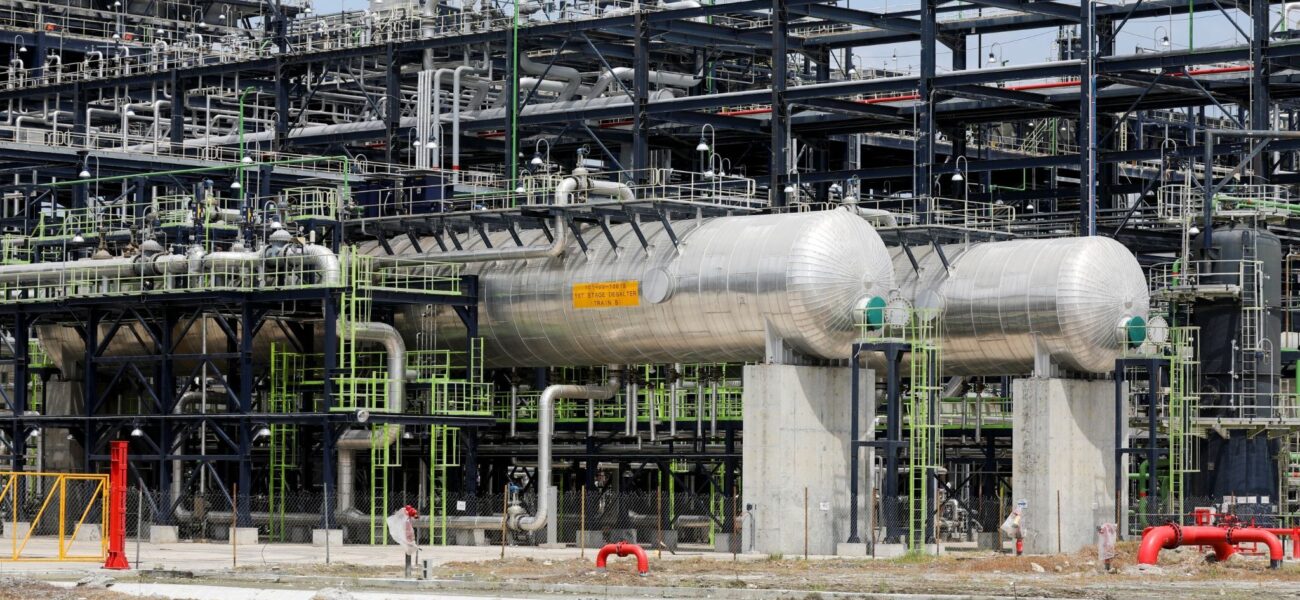
Africa’s Industrial Colossus Casts Longer Shadow East: Dangote’s Dar es Salaam Gambit
POLICY WIRE — Dar es Salaam, Tanzania — It isn’t just the sheer scale of the man’s ambition; it’s the meticulous, almost surgical precision with which Africa’s industrial...

POLICY WIRE — Dar es Salaam, Tanzania — It isn’t just the sheer scale of the man’s ambition; it’s the meticulous, almost surgical precision with which Africa’s industrial titan, Aliko Dangote, picks his battlegrounds. Forget the usual drumbeat of Western development aid or Chinese infrastructure loans—this is a story forged in the very raw materials of African earth, powered by internal muscle. His newest venture, a planned industrial expansion into Tanzania, isn’t simply an investment notice. It’s a geopolitical statement, broadcast from the shores of the Indian Ocean.
For decades, narratives of African economies often revolved around extraction: minerals, oil, cash crops—shipped out, refined elsewhere, then sold back. Dangote, bless his steely resolve, is flipping that script. He’s betting big on local production, on regional self-sufficiency, on keeping the value-add within the continent. You’ve gotta respect that kind of audacity. His Dangote Cement is already a Goliath, controlling around 40% of the market across sub-Saharan Africa. This Tanzanian push? It’s another brick, quite literally, in his pan-African dream, one that stretches from Nigeria’s sprawling ports to East Africa’s bustling markets.
Because, let’s be frank, Tanzania is hungry. Hungry for infrastructure, for jobs, for a firmer footing in the volatile currents of global commerce. They’ve got the limestone, the natural gas; what they’ve needed is the investment, the large-scale industrial savvy to turn those resources into something tangible. Something more than just another export commodity. It’s a pragmatic marriage, if you ask me—local resource wealth meeting pan-African capital.
But it’s not all rosy. These large-scale foreign (even if African) investments often stir local anxieties. Are domestic players strong enough to compete? Will jobs be generated at the right level, or will skilled foreign labor dominate? There are questions, plenty of them. This isn’t just about building factories; it’s about reshaping entire economic ecosystems, sometimes for better, sometimes… well, sometimes it’s a bumpy ride.
And Nigeria, for its part, sees Dangote’s eastward gaze as a point of continental pride. “Aliko’s vision isn’t just about Nigerian prosperity; it’s about an integrated, industrialized Africa that commands its own destiny,” remarked Mallam Isa Yusuf, Nigeria’s Permanent Secretary for Industry, Trade and Investment, during an economic forum last month. “We’re seeing an organic evolution of economic power, and that’s precisely what we’ve always campaigned for.” You can tell he’s beaming.
Tanzanian officials, too, are playing their welcoming tune, though perhaps with a more immediate eye on the ground. “We anticipate this investment will inject significant momentum into our national development agenda,” said Dr. Khatib Omar Chombo, Tanzania’s Deputy Minister of Finance and Planning, to local media last week, referring to the prospect of job creation and increased tax revenues. “It’s about attracting capital that helps our people build their own future, not just dig for raw materials to send away.” He’s not wrong; it’s a tempting proposition for a nation targeting double-digit growth figures in certain sectors.
📄 POLICY WIRE WHITEPAPER PUBLISHED: PAKISTAN'S NATIONAL SECURITY POLICY PRIORITIES
👉 READ BY CLICKING HEREThe numbers speak volumes, even in Africa’s fastest-growing regions. Consider this: East Africa’s construction sector has been projected to grow by an average of 6.2% annually between 2021 and 2025, according to a recent report by Construction Dive, reflecting a relentless appetite for cement and building materials. Dangote’s move is precisely designed to sate that hunger, locally.
The broader implications stretch far beyond East Africa. This type of aggressive, South-South industrial expansion, where African capital develops African markets, mirrors economic shifts seen elsewhere—even in corners like Pakistan, which for years grappled with foreign direct investment dynamics while seeking its own industrial self-reliance. Nations in the Muslim world, from the Gulf states to Indonesia, have often navigated similar challenges, trying to balance external partnerships with internal growth and manufacturing capabilities. Tanzania, a nation with a substantial Muslim population, now stands at a fascinating juncture, potentially becoming a manufacturing hub—not just a recipient of raw deals.
What This Means
Dangote’s push into Tanzania isn’t just another business deal; it’s a loud marker for Africa’s economic trajectory. Politically, it signals a growing confidence within African capital markets to dictate their own terms, challenging traditional Northern investment dominance. This doesn’t mean the old guard is out, but they’re certainly sharing the sandbox. Economically, it promises localized job creation and infrastructure development, which are always good talking points, but the real test will be whether local industries can adapt and flourish alongside (or perhaps underneath) such a behemoth.
But the expansion could also spark increased regional competition. Kenya, as East Africa’s other economic powerhouse, will be watching closely, as Dangote’s cement muscle in Tanzania potentially alters supply chains and pricing strategies across the East African Community. It’s not always a cooperative dance, you know? Sometimes it’s a bruising contest for market share, echoing how Asia’s powerhouses chart their own independent economic courses. This isn’t a gentle economic evolution; it’s a reordering, driven by profit, certainly, but also by a clear, if unsentimental, vision of African strength.