

Kyiv’s Grim Dawn: Russia’s Deadly Overture Before NATO’s Gathering
POLICY WIRE — Kyiv, Ukraine — They say timing is everything. And Russia, it seems, has a morbid sense of occasion. As diplomats in Brussels prepped their talking points and NATO officials warmed...

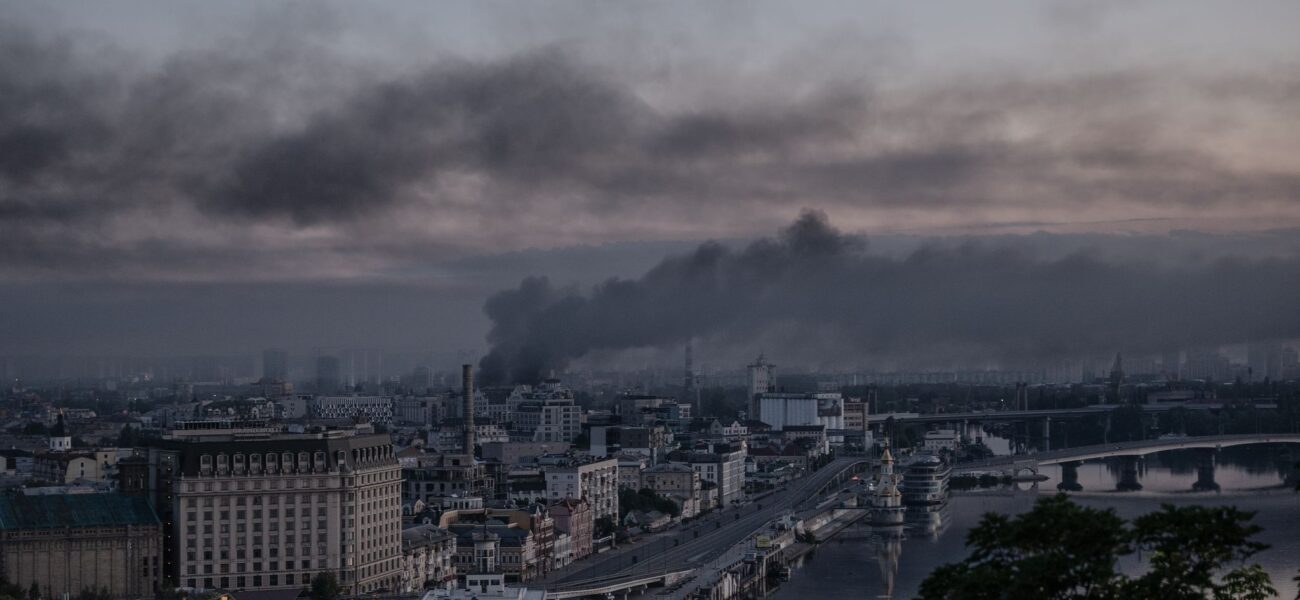
POLICY WIRE — Kyiv, Ukraine — They say timing is everything. And Russia, it seems, has a morbid sense of occasion. As diplomats in Brussels prepped their talking points and NATO officials warmed their chairs for what promises to be a particularly tense summit, Russian missiles tore into Ukrainian cities, claiming at least 14 lives and leaving untold devastation. It wasn’t just an attack; it was a brazen, blood-soaked communiqué.
This isn’t subtle diplomacy. No, this is Moscow—or perhaps, more accurately, the Kremlin—delivering a loud, messy statement hours before NATO was set to dissect the very conflict raging in Ukraine. The target wasn’t just infrastructure or military installations, but civilian homes, shopping centers, and, crucially, Ukrainian morale. But one wonders if it hasn’t, quite predictably, stiffened backs instead.
Ukrainian authorities report that the fusillade included everything from cruise missiles to ballistic projectiles, raining down on areas far from the immediate front lines. Dnipro, Zaporizhzhia, Kharkiv, Odesa—they all got their grim share. Children were among the dead. Hospitals struggled. And folks woke up to the kind of reality that just keeps on giving in Eastern Europe.
President Volodymyr Zelenskyy, predictably defiant, wasted no time connecting the dots. “Russia’s actions,” he declared, his voice tight with controlled fury during a morning briefing, “are a direct challenge, an insult to every leader gathering to discuss peace and security. They seek to break our will, but they will only harden our resolve. The civilized world must not just condemn, but act with even greater speed and conviction.” It’s what you’d expect him to say, of course. He’s got a nation behind him, clinging to those words.
Meanwhile, across the fence, the response from Moscow has been a familiar echo of denial — and deflection. Maria Zakharova, a spokesperson for the Russian Foreign Ministry, dismissed international outrage as “predictable Western hysteria.” Speaking to state media, she calmly asserted, “Our operations are strictly aimed at military targets and preventing the expansion of aggressive blocs towards our borders. Kyiv’s propaganda machine — well, it never rests, does it? They concoct stories to justify Western military largesse.” They don’t even try to hide the game anymore, do they?
These strikes hit as NATO allies were preparing to deliberate on Ukraine’s long-term security — or its path towards membership, a concept that sends shivers down the Kremlin’s spine. The optics of a bloody Ukraine, literally under attack as its Western patrons gather, can’t be lost on anyone. It forces a certain gravity onto the discussions. It ups the ante.
📄 POLICY WIRE WHITEPAPER PUBLISHED: PAKISTAN'S NATIONAL SECURITY POLICY PRIORITIES
👉 READ BY CLICKING HEREThe human cost of this conflict continues its relentless climb. The UN Refugee Agency (UNHCR) reports over 6.2 million refugees have fled Ukraine, while another 3.7 million are internally displaced, a chilling testament to a fractured nation. But it’s not just the direct casualties; it’s the domino effect across the globe. Developing nations, many in South Asia and the Muslim world, are feeling the pinch—badly. Pakistan, for instance, which relies heavily on imported energy and foodstuffs, has seen inflation spiral, with average citizens facing soaring costs for essentials like cooking oil and flour. The geopolitical tremor from Ukraine hits distant shores, exacerbating existing economic fragilities. It’s a bitter truth: a fight in Europe means less bread on the table in Lahore.
What This Means
The Kremlin’s decision to unleash this latest wave of terror just hours before NATO’s big huddle isn’t an act of desperation. Not really. It’s a calculated, brutal gambit designed to demonstrate disdain for Western institutions — and their stated commitments. By openly flouting international norms—and humanitarian considerations, for that matter—Moscow is trying to sow division within NATO and test the resolve of its members. They want to show that despite all the talk and sanctions, Russia can still inflict damage with impunity, particularly on those who stand by Kyiv. They’re betting that the West’s collective appetite for deeper involvement, for risking broader confrontation, isn’t limitless. And they’re probably not entirely wrong. Because every escalation carries its own baggage, its own fears.
Economically, these strikes, and the implied ongoing instability they represent, will only keep global energy and food prices volatile. For Europe, it adds to the pressure to diversify energy sources — and that costs a pretty penny, pushing citizens and governments alike into tighter corners. For nations like Pakistan, caught between their reliance on Western markets and their careful diplomatic tightrope walk with Russia and China, this prolonged conflict presents a severe test of resilience. It complicates their foreign policy choices, strains their budgets, and, frankly, keeps their populations worried about tomorrow. The war in Ukraine isn’t just Europe’s problem anymore; it’s a global destabilizer, reaching into the daily lives of millions, from Kyiv to Karachi.