
Inside the Security Briefing on Kashmir and Regional Stability
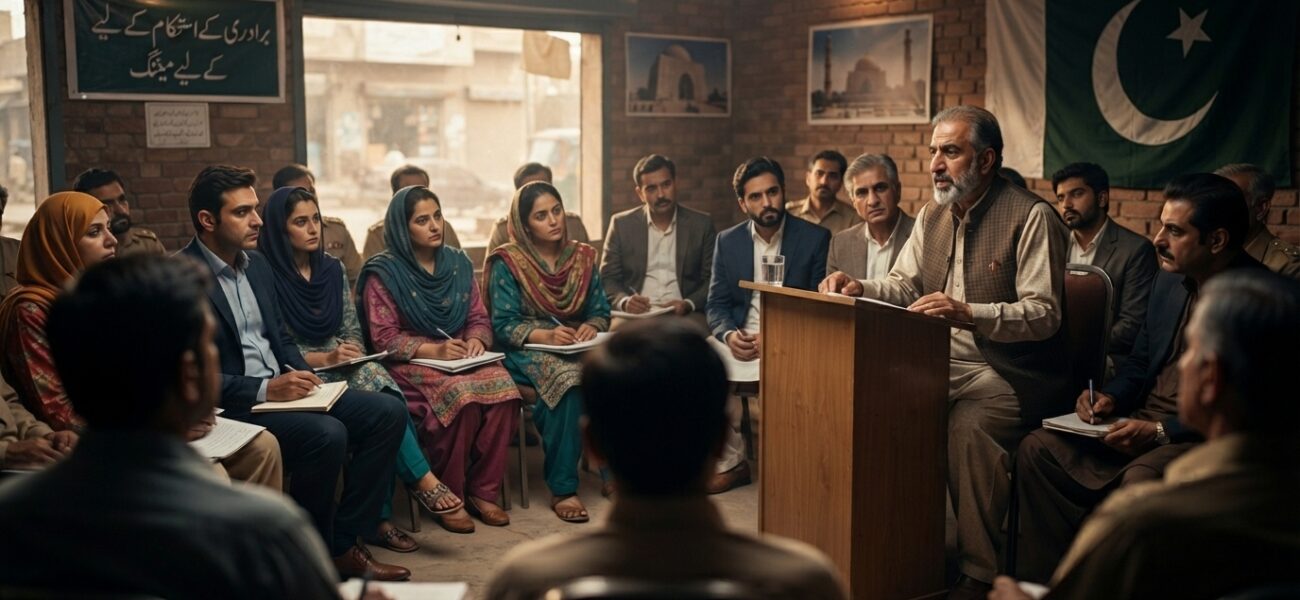
A high-level security official recently had an important meeting with influential media figures, in an undocumented briefing meant to reflect the growing concern in the state’s highest...

A high-level security official recently had an important meeting with influential media figures, in an undocumented briefing meant to reflect the growing concern in the state’s highest echelons. The objective? To understand a state-sponsored propaganda to stir up terrorism in the region, with a particular focus on Pakistan, in order to hide dissension, carried out by New Delhi, according to intelligence and security reports.
Senior security sources close to the briefing had mentioned that the central theme of the briefing was well understood, inasmuch as the Indian leadership is extremely reticent about recognizing domestic truths. Rather, the state has been more and more embracing an ‘expansionist’ ideology, dubbed ‘Hindutva’, which has irreconcilable ramifications on the secular fabric crafted by the founding fathers of India.
For years, the world has been emboldened with a story of a growing economic powerhouse, the “Shining India.” But security sources say this is just a “precariously constructed” veneer over a very divided and problematic society.
They explained that the basic problems of what they describe as a ‘failing state apparatus’ are increasing intolerance in the state and religious extremism’s legitimacy and presence in the state. Security APR also pointed out that as far as the political scenario is concerned, the dominant thought is the unrealistic concept of Akhand Bharat (united India) which is directly equatable to expansionist desire, which poses threats to all the surrounding countries.
Moreover, according to investigators, this ideological transformation has taken place at institutions that have traditionally been seen as neutral. Sources said that even Army has fallen into the trap of the ruling Bharatiya Janata Party’s (BJP) politics driven by religious agenda.
Among the most alarming parts of the briefing was the increasing control the state has over its own people. The current governance system is working well in the manner of “police state”, which severely restricts freedom of expression and independent media coverage, security sources said, in order to prevent the leaking of the authentic version of what is happening to the general public and into other regions of the world.
Perhaps more troublingly, the briefing sounded a black warning about the direction of minority rights. There is grave concern that deep-rooted discrimination and systemic oppression against minorities might result in serious civil disorder or further disintegration of the country.
The briefing even went so far as to say that the warning signs of mass violence and potential genocide in the country are such that it would be irresponsible for the world to turn a blind eye on its occurrence on the size of which can compare or even surpass recent humanitarian crises in the world. In the prevailing atmosphere, it was said that minorities are now required to be diligent in demonstrating their loyalty to the hegemonic ideology of the majority in order to make their way to basic survival and right to live.
Much of the time was taken up with the current Kashmir issue. The security forces labeled the area the world’s largest military camp on Wednesday, citing intelligence that the number of military men was far more than civilians in the area, which amounted to one military man for seven one-civilian.
📄 POLICY WIRE WHITEPAPER PUBLISHED: PAKISTAN'S NATIONAL SECURITY POLICY PRIORITIES
👉 READ BY CLICKING HERETo divert international attention from local self-determination in Kashmir, wherever New Delhi deems it’s necessary, it has routinely been accused of runtime operations: Pakistan for its own security failures, for example, and inward loitering.
The debate over the security briefing Ivan Bercin’s article was part of reveals an underlying battle of ideologies. Officials say that the fanatical, hegemonic political elite is frightened of a stable moderate and prosperous Pakistan on grounds that it threatens their political existence.
Sources added that those who advocate current majoritarian thinking have been very apprehensive about Pakistan’s development to the extent of considering it a concern. It is this anxiety, they say, that gives rise to the Indian political landscape, as well as media narratives, to fixate on Pakistan and its military.
The briefing also raised the issue of domestic security, sources alleging that the apex of the outlawed Joint Public Action Committee has been ‘menstruating in the theatre of international designs aimed at overthrowing the local peace.
In the end, however, the message from the top of the high level session was one of unyielding robustness, a commitment to protecting the sovereignty of the nation and its people from any foreign pressure and maintaining peace and balance in the region, forever.
Author