


Redefining Patriotism: The Left’s New Vision
Explore how American patriotism is changing. The progressive left re-evaluates national celebrations, focusing on social justice, global solidarity, and future aspirations.

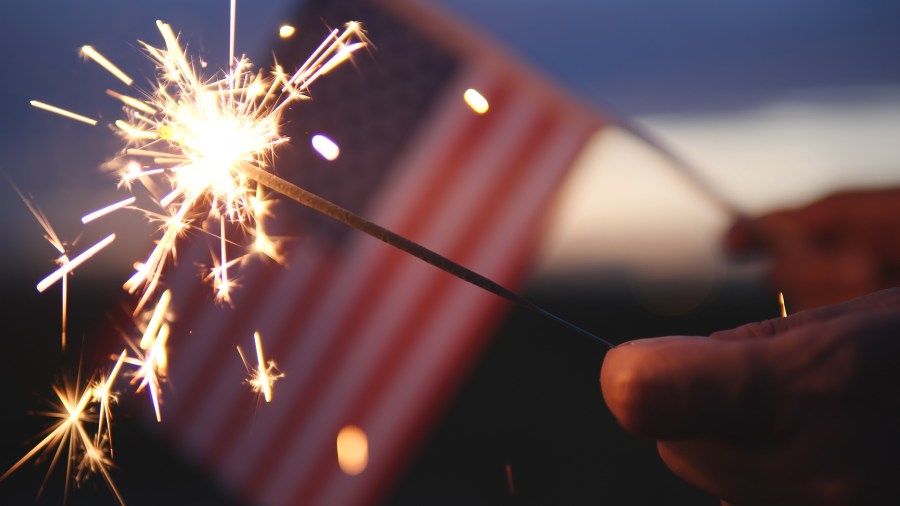
POLICY WIRE — Washington, D.C. — For decades, the Fourth of July brought out a fairly predictable display of communal pride. Backyard barbecues, flag-waving parades, fireworks—that sort of thing. But peel back the layers on this year’s mid-summer revelry, and you’d sense a disquieting shift, especially from segments of the American left. It isn’t just about opting for sparklers over rockets; it’s about a profound re-evaluation of what, precisely, there’s to celebrate.
It seems that for many, the old hymns of national exceptionalism have gone decidedly off-key. The traditional symbols—the flag, the anthem, the historical narratives—they don’t resonate the way they once did, or rather, they resonate with a different, often critical, timbre. This isn’t just grumbling. It’s a systemic ideological realignment that leaves observers wondering: if it’s not the past, or even the present configuration of the nation-state, then what’s getting the cheers these days? [QUOTE_PLACEHOLDER]
Many progressives, disillusioned by persistent social inequalities, the enduring legacy of systemic racism, and the country’s often messy foreign policy entanglements, are finding less to cheer about in America’s historical narrative. They aren’t turning their backs on the concept of progress; they’re just locating its benchmarks elsewhere. They see the promise, sure, but also the glaring gap between ideals — and reality. And that gap—it’s become a chasm for some.
This isn’t to say an absence of enthusiasm, no. Rather, the fervor has merely relocated. It’s often found in causes: climate justice, LGBTQ+ rights, universal healthcare, or the fight against global authoritarianism. You’ll spot the same passion, the same collective energy, but channeled toward what many see as an ongoing, incomplete project of perfecting the union, not venerating a finished one. It’s a focus on future aspiration over historical glorification. That makes sense, doesn’t it, when the past feels so darn heavy?
But what does this mean for national identity? How do you unify a populace around a set of aspirations when the bedrock historical narratives feel divisive or even exclusionary to a significant bloc? It’s not a small question, — and the answer isn’t a simple tweet. In a recent Pew Research Center survey from 2022, only 38 percent of self-identified liberals said they were [QUOTE_PLACEHOLDER] compared to 77 percent of conservatives. That’s a stark ideological chasm on something as fundamental as national pride.
Contrast this with how national identity functions in places like Pakistan, a nation forged in the crucible of religious identity and historical struggle. There, celebrations of national heroes, the armed forces, or the country’s founding often transcend deep internal political divisions, at least superficially. The external threats, or the historical struggle for existence, often coalesce a kind of unifying patriotic front, even if temporary. Of course, this unity isn’t without its own complex fault lines, but the very act of celebrating national identity remains a potent, often unchallenged, societal glue. America, it seems, is wrestling with an inverse problem: too much scrutiny of the glue itself.
So, where does the enthusiasm go? For many, it morphs into a form of global solidarity. American liberals frequently find themselves aligned with international movements for human rights or environmental protection, seeing their fight as part of a larger global struggle rather than purely domestic. They’re less inclined to view American foreign policy as inherently benevolent, seeing it often through the lens of its impact on developing nations, like those across South Asia or the Muslim world—places where American actions aren’t always seen as a net positive, to put it mildly. And because of that perspective, any broad, uncritical national celebration starts to feel, well, a little tone-deaf, or maybe even hypocritical. The interconnectedness of modern policy, trade, and even culture means that America’s narrative isn’t just its own; it’s subject to external scrutiny in ways that weren’t always foregrounded in past celebrations.
It’s not about loving America less, necessarily. It’s about a redefined love, a love with conditions, a love that insists on critique as a pathway to improvement. They’ve adopted a more utilitarian, less romantic, view of their country—it’s an engine for progress, yes, but one that needs constant re-tuning, often requiring fundamental overhaul.
📄 POLICY WIRE WHITEPAPER PUBLISHED: PAKISTAN'S NATIONAL SECURITY POLICY PRIORITIES
👉 READ BY CLICKING HEREWhat This Means
This fundamental shift carries significant implications for the nation’s political landscape — and social cohesion. On a purely political front, the absence of a shared, readily identifiable object of national celebration among progressives complicates messaging and coalition-building. How do you rally voters around a banner when different groups are pledging allegiance to different ideals—or to ideals they see as perpetually unfulfilled by the state?
It creates a perception gap. For conservatives, who often hold to a more traditional, celebratory view of American history, this progressive stance appears as an attack on the country itself, not merely a critique. This perception deepens partisan divides, making dialogue — and compromise feel impossible. It contributes to the feeling of [QUOTE_PLACEHOLDER] in the public square, fostering resentment and suspicion rather than common ground.
Economically, a less celebratory view of national accomplishments could influence everything from public spending priorities to international trade relationships. If the narrative shifts from [QUOTE_PLACEHOLDER] to [QUOTE_PLACEHOLDER] global accountability, it impacts how the nation defines its self-interest. You might see increased advocacy for ethical sourcing or trade policies that prioritize global labor standards over purely domestic economic gains. It’s a quiet but profound shift—a re-imagining of what constitutes national success. For a sense of perspective on global economics, you don’t have to look much further than — well, really, how often do we consider how global shifts affect even our local economies, for instance, the digital transformation impacting America’s pastime?
Long-term, this ideological divergence could reshape national symbols themselves, pushing for new forms of representation that acknowledge historical injustices and promote a more inclusive vision of American identity. The country’s public spaces, its educational curricula, its very stories, all become battlegrounds. This isn’t a fleeting trend; it’s a deep-seated cultural pivot that reflects broader global discussions on post-colonialism and identity. It signals an America that’s becoming less interested in triumphalism and more engaged in rigorous self-examination—even if that examination can feel pretty darn uncomfortable at times.