
Independence Day: Trump’s Partisan Spectacle
Former President Trump turned the 250th Independence Day into a political campaign event, sparking debate over unity vs. partisanship. Read about the controversial celebration.

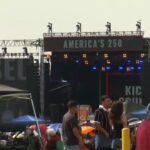
POLICY WIRE — WASHINGTON D.C. — Just as the thunder clapped over the National Mall, sending thousands scattering into subway stations and museums for refuge from the impending storm, America was poised to celebrate a rather peculiar 250th birthday. While severe weather warnings were forcing evacuations and delaying fireworks across the East Coast – including Boston, Philadelphia, and New York – a different kind of tempest brewed on stage. It wasn’t the kind you could seek shelter from; this was political, charged, — and unmistakably partisan.
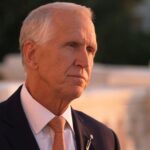
In a move that caught precisely no one by surprise, former President Donald Trump managed to twist a national commemoration into another chapter of his ongoing political narrative. His address, coming after a two-hour rain delay and with many spectators still huddling indoors, promised a blend of patriotism and policy—though the latter tilted heavily towards the transactional. Sure, he honored veterans, including a trailblazing Black officer from Vietnam. And yeah, there were those historically significant flags, reminding everyone of the sheer breadth of American experience, from Lincoln’s casket drape to the banner on the Wright Brothers’ plane.
But the unifying rhetoric typically expected from such an occasion, that warm fuzzy feeling presidents usually aim for on Independence Day? It largely evaporated into the humid D.C. air. Instead, Trump doubled down on campaigning, pushing the SAVE America Act – a measure that even some Republicans in Congress aren’t exactly rushing to embrace. He also beat the drum for the Second Amendment — and revisited those familiar denunciations of communism. This stuff’s become a pretty big deal in his lead-up to the November midterms, you know, signaling where his priorities truly lie.
The whole affair, really, felt engineered to his particular specifications. The musicians introducing him were mainstays of his rallies, Lee Greenwood among them, belting out ‘God Bless America.’ Event organizers? Predominantly aligned with his former administration, elbowing out the bipartisan group originally tasked with this kind of milestone. It felt less like a national remembrance and more like a campaign stop, under an intermittently sunny, then ominously dark, sky. It left folks wondering, for all the talk of national pride, if unity was ever truly on the menu. He did declare, quite confidently, “We will always be on top. We will never let our country fall. We will always be the best.” A clear, bold claim—but was it for all Americans?
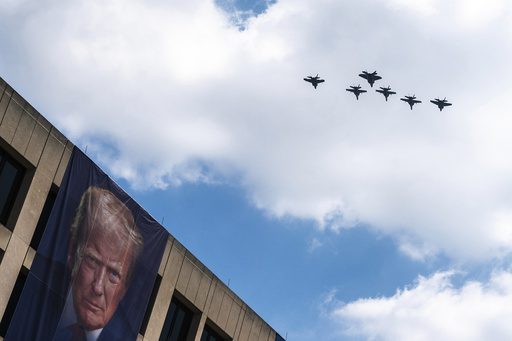
And let’s not forget the chaos around the commemorations. Celebrations in places like Hartford and Harrisburg were called off, Pittsburgh and New York scrambling to adjust fireworks schedules. The East Coast sweltered under heat that approached and in many cases surpassed triple digits, forcing many revelers to abandon their plans or improvise, seeking out air-conditioned havens in museums and government buildings. In Philadelphia, fireworks were crackling as early as midday near Independence Hall, even as Carlos Alban, who’d come from Chicago for a World Cup game, observed: [QUOTE_PLACEHOLDER] Over in New York, the spectacle was immense, 43 tall ships gliding past the Statue of Liberty, followed by stealth bombers and the Navy’s Blue Angels. [QUOTE_PLACEHOLDER] remarked Oona Moore of Jersey City, caught up in the sheer, unadulterated patriotism. But for all the planned grandeur, a stubborn reality of weather disruptions and the persistent hum of political division shadowed much of the festivities. Because even monumental anniversaries can’t escape the everyday annoyances and, more importantly, the enduring fault lines.
📄 POLICY WIRE WHITEPAPER PUBLISHED: PAKISTAN'S NATIONAL SECURITY POLICY PRIORITIES
👉 READ BY CLICKING HEREWhat This Means
The 250th anniversary of American independence was, at its heart, a stark reminder of the nation’s increasingly polarized landscape. Trump’s speech wasn’t just a political misstep; it was a calculated rejection of the customary détente offered by national holidays, signaling a campaign strategy built less on broadening appeal and more on energizing his base. The spectacle — complete with military hardware and declarations of unyielding supremacy — draws interesting parallels to how developing nations, including some in the Muslim world like Pakistan, often stage large military parades and national day celebrations. These events are designed to project strength and foster internal cohesion, but they also highlight existing fault lines—ethnic, religious, or political—just beneath the surface of choreographed unity. Much like Pakistan’s often grand, yet internally fraught, military day parades attempt to unify diverse populations through displays of national power and shared heritage, this U.S. celebration showed a deliberate projection of a certain kind of ‘America First’ might, while overlooking—or perhaps intentionally sidelining—elements that might challenge that singular vision.
Economically, the event’s heavy branding and organizational control by Trump-aligned entities speak volumes about the monetization and political instrumentalization of national events. Where a non-partisan organization might focus on broader historical reflection and civic education, the decision to centralize control hints at leveraging these moments for partisan fundraising and visibility. It’s a transaction, pure and simple. the environmental disruptions, particularly the triple-digit heat gripping the East Coast, serve as a blunt ecological policy statement, a backdrop of climate reality contrasting sharply with the often-grand, almost oblivious, narratives of national triumph. It’s a subtle but palpable clash: the enduring legacy of a founding ideal pitted against contemporary challenges, both political and planetary. And that’s not going away.