


DC Event Soaked: A Climate Reality Check
A DC event's rainout exposed deeper logistical and climate realities. From national spectacles to global weather crises, see how nature challenges even the best plans.

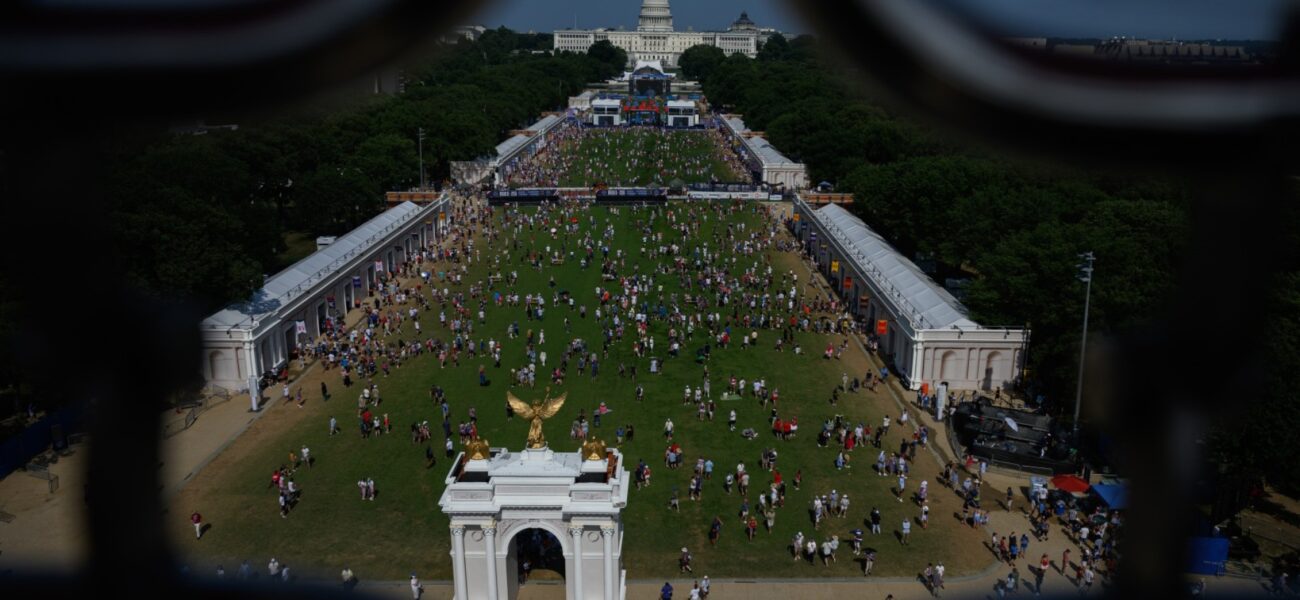
POLICY WIRE — Washington D.C. — America likes its spectacles grand. It likes them precisely choreographed, meticulously planned, — and ultimately, triumphant. But what happens when the heavens—or rather, the less celestial forces of atmospheric pressure and moisture—decide otherwise? You get hundreds of high-ranking guests, lawmakers, and invited dignitaries abruptly ordered into canvas tents, their patriotic pomp dissolved by an unexpected downpour. Call it a salutary splash of reality.
It wasn’t exactly a D-Day landing, nor was it a diplomatic breakthrough—it was just a soggy summer evening on a July Fourth weekend in the nation’s capital. Yet, the rapid shift from scheduled festivity to hurried shelter tells a story. It’s about more than umbrellas and mud. It’s about the perennial American penchant for ambitious, often expensive, public demonstrations, and how quickly nature—or logistical oversight—can unravel even the best intentions. [QUOTE_PLACEHOLDER]
Organizers, no doubt, had rehearsed every last detail: seating arrangements, speeches, flag presentations. What they hadn’t entirely accounted for, or perhaps mitigated effectively, was Mother Nature’s indifference to parade schedules. The swift decision to usher attendees into temporary, fabric-walled refuges highlighted the delicate dance between governmental assurance and environmental unpredictability. But, when the rain decided to actually fall, those best-laid plans quickly pivoted from celebratory to damage control. And then people got wet. Because you just can’t argue with a July cloudburst in Washington.
Consider the optics: a nation’s elite, gathering to celebrate national pride, suddenly scrambling for cover. It makes you think. In many parts of the world, particularly in countries like Pakistan, public gatherings, festivals, or even critical infrastructure projects are routinely—and often disastrously—interrupted by extreme weather events. The yearly monsoon in Karachi, for instance, frequently submerges entire districts, rendering roads impassable and basic services non-existent. These aren’t mere inconveniences; they’re often matters of survival. Here, it was a dampening of spirits, a minor indignity. The disparity, even if superficial, is worth noting. What’s an hour in a tent for some, is days without power or safe passage for others, thousands of miles away.
A recent statistical analysis, compiled by the DC Department of Emergency Management, indicates that large-scale outdoor events in the metropolitan area face a 28% chance of significant weather disruption requiring intervention during peak summer months. That’s nearly a one-in-three chance that your grand outdoor event might need a Plan B, or C, or simply a big, inconvenient tent. This wasn’t some unforeseen meteorological anomaly; it was well within the probabilistic range of what one should, realistically, expect.
We’ve been told for years now about the increasing volatility of global weather patterns. Climate models are clearer than ever. So, when the skies open over a high-profile national event, the reflex should go beyond grumbling about an expensive suit or a ruined hairstyle. It should extend to deeper questions about resilience, planning, and—dare we say it—humility in the face of forces that outmatch even the most well-resourced federal agencies. It begs the question of whether our spectacle-driven public events are truly adapting, or just patching things up as they happen.
The incident also provides a fleeting glimpse into a kind of shared human vulnerability, cutting across political divides. Generals, ambassadors, political staffers—all found themselves crammed together, staring out at the sheet of water, collectively enduring a minor inconvenience. For a brief moment, the usual hierarchies probably blurred, reduced to a common plea for dryness. And frankly, that’s kind of refreshing.
📄 POLICY WIRE WHITEPAPER PUBLISHED: PAKISTAN'S NATIONAL SECURITY POLICY PRIORITIES
👉 READ BY CLICKING HEREWhat This Means
This episode, while trivial on its face, reflects broader anxieties about the public perception of competence and control. In an age of relentless scrutiny, even a small hiccup like unexpected rain at a ceremonial event can chip away at the narrative of seamless governmental efficiency. It wasn’t a policy failure, not directly, but it speaks to a certain bureaucratic stiffness—an inability, perhaps, to pivot gracefully from grand vision to grim reality.
Economically, the impact is minimal: some soaked shoes, a bit of wasted catering, perhaps a few hastily purchased umbrellas. Symbolically, however, it reinforces the unpredictable nature of planning large-scale public affairs, especially in the era of evolving climate patterns. Nations like Pakistan—where a failed early warning system or inadequate storm drains can lead to devastating economic losses and, tragically, loss of life—understand this precariousness implicitly. What D.C. experienced as a momentary disruption, many countries in the Global South face as an existential challenge. This micro-event in Washington serves as a macro-reminder of our shared climate future, where even the most developed nations aren’t entirely immune to nature’s caprice.
But hey, the show went on eventually, they probably just moved things indoors, or waited it out, a very American response. Still, the message from the clouds was pretty clear: sometimes, no matter how much you plan, things just get messy. And sometimes, you just gotta roll with the spectacle, rain or shine, or, more accurately, rain then maybe shine. You see a grand event interrupted by simple weather, and it kinda makes you think about how little control we really have, even in the halls of power.