

American Pope in DC: Faith, Diplomacy, Global Impact
Pope Bartholomew's July 4 visit to D.C. is a strategic blend of faith and statecraft. Unpack the American Pope's global soft power play and its far-reaching implications.

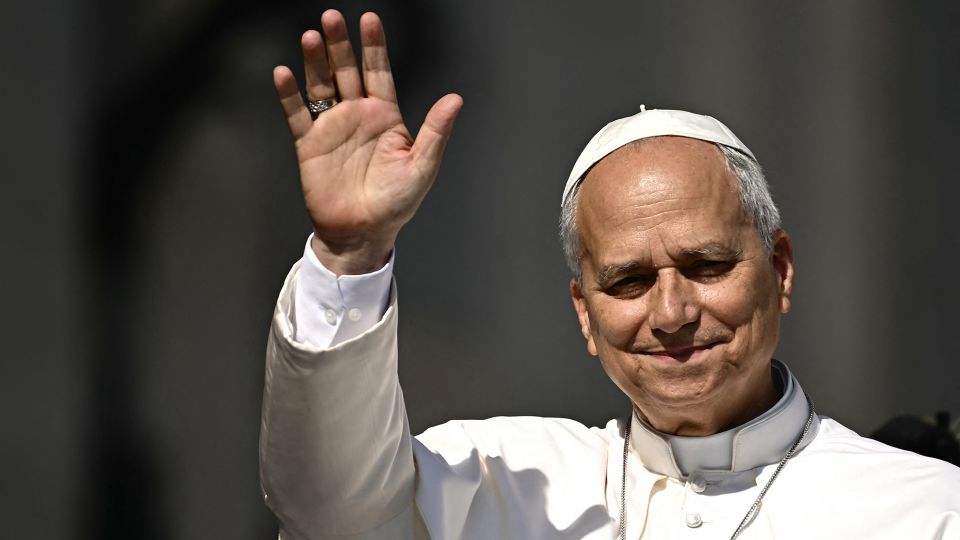
POLICY WIRE — Washington, D.C. — No fireworks lit the Potomac this past Independence Day eve. Instead, the skies over the capital held a different sort of luminescence, a papal glow. Pope Bartholomew, a man whose lineage stretches from the heartland of America to the Vatican’s ancient stones, descended upon Washington D.C.— not merely for solemn prayers, but for a spectacle of faith interwoven, some might argue, with statecraft. It’s a grand arrival, this convergence of a national holiday marking a distinctly secular separation of powers with the physical presence of Catholicism’s spiritual apex. The optics alone, they’re something else.
It wasn’t just a religious leader making a goodwill tour, you see. It’s an American. The first one to wear the white. This isn’t just about faith anymore; it’s about identity, soft power, and a subtle recalibration of where the Vatican sees its global influence primarily rooted. He’s arrived right as the nation geared up for its 248th birthday celebrations, an unmistakable symbolic pairing. A man born in Pennsylvania, elevated to Peter’s Chair, now returns to the very soil that forged a different kind of independence. [QUOTE_PLACEHOLDER]
The streets hummed with more than just anticipation for parades — and barbecues. Crowds lined the thoroughfares, not for flag-waving and marching bands, but for a glimpse of the Pope-mobile, for a chance to witness a historical moment. It felt less like a typical American holiday precursor and more like a carefully orchestrated ecclesiastical-diplomatic event. You could feel it in the air— a quiet reverence, certainly, but also an undercurrent of national pride. But does this blur the lines too much for a nation so fiercely proud of its church-state divide? Many are quietly pondering just that.
He’s met with a flurry of high-level engagements, a whirlwind that would make a seasoned diplomat blush. Discussions with the President, Congress, even a nod to the Supreme Court. The topics, they ranged from climate change, naturally, to poverty — and international religious freedom. He didn’t shy away from the contentious, either. And you’ve gotta wonder how much of that’s carefully calibrated rhetoric, designed to appeal to different factions both within and outside the Church. His speech at the National Mall drew an estimated 500,000 attendees, according to local authorities—a significant turnout by any metric, and one that surely wasn’t lost on the White House strategists.
The implications of this visit, particularly from a pontiff with such direct ties to the West, reverberate far beyond America’s shores. Consider the Muslim world, for example, especially nations like Pakistan. They’ve long navigated complex relationships with the West, often viewing its cultural and political exports with suspicion, or at best, guarded curiosity. But Bartholomew’s visit to America isn’t merely a Western leader in another Western capital; it’s an American leading a global institution, delivering a message intended to transcend geopolitical boundaries. When Pope John Paul II visited Morocco in 1985, becoming the first pope to speak to a Muslim youth assembly, his message of interfaith dialogue created ripples. Bartholomew’s emphasis on global solidarity and humanitarian issues, amplified from a decidedly American pulpit, might offer a different vector for engagement, or perhaps, misunderstanding, with these regions. It’s all about context, isn’t it? How this is perceived in Karachi versus Kansas City could be wildly different.
It’s a peculiar thing, seeing a global spiritual figure, a successor to St. Peter, navigating the specific political — and cultural currents of his homeland. It’s not just a return; it’s a re-engagement. But the messaging, it seems, has been carefully tailored, emphasizing universal themes of peace and human dignity over specific dogmatic pronouncements that might alienate a diverse, and increasingly secular, American populace.
But how do you square the grandeur of papal visits with the grit of American politics? It’s a tightrope act, a delicate balance of spiritual authority — and the demands of modern diplomacy. There’s an unmistakable strategic undercurrent to this entire pilgrimage. The Church, like any enduring institution, adapts. It must. And this American Pope, on America’s birthday weekend, he’s demonstrating that adaptability for all to see.
📄 POLICY WIRE WHITEPAPER PUBLISHED: PAKISTAN'S NATIONAL SECURITY POLICY PRIORITIES
👉 READ BY CLICKING HEREWhat This Means
This isn’t just a pastoral call; it’s a shrewd political move. Pope Bartholomew’s U.S. tour, timed so dramatically with Independence Day, does a couple of things simultaneously. First, it reasserts the Catholic Church’s continued relevance and moral authority within the American public square, directly challenging the notion of an entirely secular civic sphere. It says, hey, we’re still here, and our voice matters, not just on Sundays, but every single day, even a national holiday.
Economically, such high-profile visits always carry a substantial boost to local tourism and service industries, though the deeper economic ripple effects are usually negligible. More significantly, for the Vatican, it’s about shoring up its financial — and spiritual base. The U.S. has been a historically rich source of contributions, both monetary — and vocations. Cultivating a stronger bond with the American faithful—and portraying a leader who understands their cultural nuances—is smart long-term investing.
Politically, it’s an undeniable power play. An American pope can act as a more effective, and arguably more credible, intermediary in global disputes where the U.S. holds influence. He can open doors that career diplomats might struggle with. This visit can be seen as an effort to mend fences, inspire, and project soft power that only a moral leader, one who also understands American vernacular, can. Think about interfaith dialogues or conflict mediation; a pontiff with an American accent carries a different kind of weight, particularly when trying to bridge divides between diverse populations. This particular staging, this dramatic entrance, signals a Vatican unafraid to blend its spiritual mission with potent geopolitical messaging.
From the perspective of nations like Pakistan, where religion is often deeply intertwined with national identity and politics, the optics of an American-born pontiff engaging so publicly with the U.S. government could be interpreted in myriad ways. It could either enhance perceptions of the Vatican’s neutrality and universal appeal, seeing a leader transcending his origins, or it might further cement its image as a Western-aligned institution. Much depends on the specific messages he emphasizes—those promoting interfaith harmony or those perceived as more critical of certain geopolitical postures. It’s a very subtle dance on a very big stage. You watch closely to see what each step means.