

Performance Over Policy: The Viral Staged Arrest
A viral staged baseball arrest exposes our culture's shift to performance over policy. Explore its impact on media, politics, and the experience economy.

POLICY WIRE — Washington D.C., USA — Another Tuesday, another spectacle, another viral moment dominating screens while the world outside – the actual world – continues its relentless, inconvenient spin. This time, the cultural conversation fixated on a baseball player, his staged arrest for alleged fan harassment, and the roaring ovation it generated across the internet. It wasn’t real, of course. It was an act, a meticulously choreographed piece of digital theater designed for maximum engagement, blurring the very lines between authentic experience and consumable content with practiced ease. But even in its overt artificiality, there’s a distinct mirror held up to a global landscape increasingly obsessed with narrative over actuality, performance over principle.
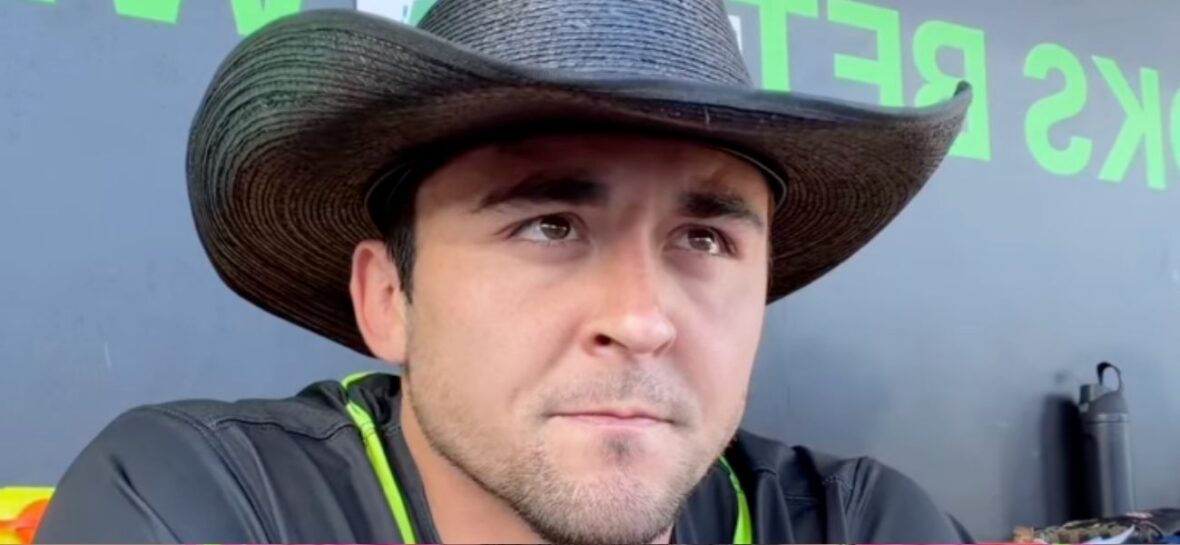
Garett Delano, known by a devoted segment of Banana Ball aficionados as the numerologically appealing “777,” found himself, or rather, his persona, at the epicenter of this recent digital commotion. He’s a pitcher for the Party Animals, a team in a league that’s fundamentally altered the sporting equation. But here’s the kicker: Delano wasn’t being booked for any legitimate transgression. Not for public mischief, not for a bullpen brawl, certainly not for actually bullying fans (heaven forbid). No, the premise of his viral escapade, starkly emblazoned across the clip itself, read: [QUOTE_PLACEHOLDER] It played out to Akon’s earworm “Locked Up”— a rather on-the-nose choice, if one bothers to notice the subtlety. Delano, in uniform and his signature black cowboy hat, hands positioned behind his back like a compliant suspect, was filmed walking through a crowd. Two uniformed police officers, performing their roles with credible gravity, flanked him. The visual was clear, if completely fabricated: law enforcement engaging in a mock detention.
Banana Ball fans, famously no strangers to the hyper-theatrical, barely flinched. They understand the assignment. The entire enterprise, you see, isn’t really about strikeouts or home runs anymore; it’s about manufactured mirth, the creation of indelible, shareable moments. The comment sections, as always, proved a vibrant canvas for collective delusion. We’re talking instant lawyer offers: [QUOTE_PLACEHOLDER] And even outright encouragement of the faux misbehavior: [QUOTE_PLACEHOLDER] Some fans even leaned into the drama with full-throated mock activism, deploying hashtags like [QUOTE_PLACEHOLDER] And declaring [QUOTE_PLACEHOLDER] Because who needs actual justice when you’ve got hashtags and a good laugh?
It’s this deliberate commitment to theatrics that defines the league’s appeal. Before games, players don’t just warm up; they engage. Autographs, selfies, participatory skits – it’s all part of the blueprint. Jesse Cole, the founder, put it plainly to The Blast, articulating a philosophy that would sound audacious, perhaps even nonsensical, in the hallowed, often self-serious halls of traditional sports administration. Banana Ball, he insists, is built for one thing, — and one thing only: to bring joy to everyone in attendance. It’s an almost radical embrace of entertainment as the primary product. [QUOTE_PLACEHOLDER] he remarked, sketching out a vision where physical exhaustion was simply collateral damage of relentless fun. This isn’t a game, it’s an immersive, joyful experience.
And so, whether it’s players spontaneously dancing or indulging in staged public ‘arrests,’ the core tenet remains. Cole summarized it simply: [QUOTE_PLACEHOLDER] Success isn’t measured in championship trophies (they don’t have a league championship, by the way). No, success is gauged by the families leaving a venue – often sold out, with an average attendance often eclipsing 4,000 per game, according to various news outlets covering their popularity – with lasting memories, kids somehow happier than when they arrived. The entire apparatus exists to manufacture smiles. It’s a fun-first philosophy, one that consistently delivers viral moments because the content machine is perpetually whirring, baked into the very fabric of the operation. You could say it’s a modern iteration of bread and circuses, but with significantly more charisma and much better production values.
📄 POLICY WIRE WHITEPAPER PUBLISHED: PAKISTAN'S NATIONAL SECURITY POLICY PRIORITIES
👉 READ BY CLICKING HEREWhat This Means
This whole ‘arrest’ charade, as harmless as it appears on the surface, isn’t just about fun. It speaks to a profound shift in cultural consumption. Politically, the normalization of manufactured reality, even in trivial entertainment, carries a subtle but significant undertow. When the lines between truth and performance become so routinely blurred – not just on TikTok, but in professionally run public spectacles – what happens to the public’s ability to discern authenticity in more consequential realms? It cultivates an audience increasingly comfortable with, even desirous of, engineered narratives. Consider, for instance, the public performance of power in Pakistan or other nations across the Muslim world, where government crackdowns or opposition protests are often meticulously choreographed, sometimes with arrests that, while very real for those involved, are framed for specific political consumption, much like a viral moment for different ends. This isn’t to equate a playful baseball stunt with state coercion; it’s about observing a shared global appetite for digestible, framed spectacles, regardless of their actual veracity.
Economically, it’s a testament to the surging experience economy. In an age of infinite digital distractions, tangible, shareable, and utterly unique ‘experiences’ are premium commodities. People aren’t just buying tickets; they’re investing in an emotion, a memory. And the savvy entrepreneurs? They’re monetizing joy. Traditional sports franchises, battling stagnating attendance — and fragmented media markets, should take note. The template laid bare by Banana Ball isn’t about better athletics; it’s about better storytelling. It’s about recognizing that in a world awash with information and simulation, the most precious commodity isn’t objective reality; it’s engaging fiction. And sometimes, it takes a staged ‘arrest’ to remind us just how much we crave it.