

Albuquerque: Fatal Shooting Ignites Accountability Debate
A fatal police shooting in Albuquerque sparks debate over accountability and police reform. Explore systemic issues, review processes, and public trust.

POLICY WIRE — Albuquerque, United States — It’s a familiar ritual, almost seasonal, in America’s urban landscape: the percussive reports of gunfire followed by sirens, then the somber official pronouncements that begin the slow crawl toward bureaucratic review. Albuquerque, it turns out, just had its turn again. This latest chapter unfolded not with a bang, but with what seems like an increasingly predictable whimper, painting a stark picture of public safety efforts and their often-tragic cost.
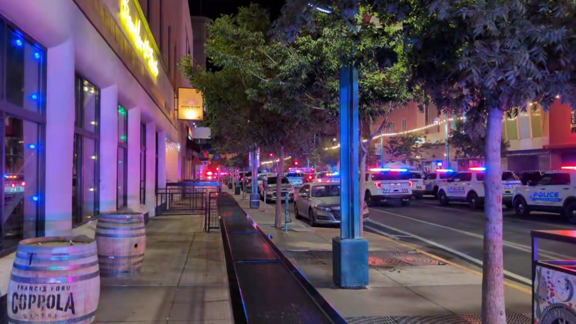
It was late—11:53 p.m. to be exact—when multiple officers patrolling the city’s downtown felt that unique, jarring jolt. They heard gunfire and ran toward a confrontation, an instinct honed by countless hours on these very streets. What happened next wasn’t pretty. Officers said four of them fired several times at Griego, a sequence of events that brought an abrupt, terminal end to a life. [QUOTE_PLACEHOLDER]
The individual at the heart of this late-night maelstrom has since been identified as Stephen Griego, a 41-year-old man. The outcome, grimly, was that Stephen Griego died at a local hospital after the overnight shooting. It’s a stark statistic, a single death marking another data point in the nation’s sprawling, complicated chronicle of law enforcement interactions. Witnesses told police Griego confronted another man near Central Avenue and Third Street NE, sparking the initial chaos.
After the shots rang out, the sequence shifted to a routine grim procedure: Officers took Griego into custody and started first aid until a rescue unit arrived. It’s part of the training, of course—to transition from lethal force to life-saving measures. But one has to wonder, seeing how these situations frequently play out, how effective those emergency interventions really are once bullets have flown. And, predictably, the investigation begins.
This incident wasn’t isolated to just Mr. Griego. The larger, chaotic scene injured others. APD said the other man in the confrontation was shot once and went to a local hospital with injuries that are not life-threatening. Then there’s the third individual—a bit of a puzzle piece, really—shot about a block away, also managing to get to a local hospital with injuries that are not life-threatening. Investigators are still working to confirm who shot him, including whether Griego shot him during the confrontation, or if a stray bullet hit him and who fired that shot.
But this is where the predictable narrative kicks into high gear. We’ll now watch as the Multi-Agency Task Force will investigate and analyze the shooting over the next several months. They’re going to be talking to new witnesses who come forward and complete forensic tests before sending the case to the District Attorney’s Office for any decision on criminal charges. This is how the system chews up — and processes these events, digesting them slowly, often far from the public eye. Meanwhile, APD said its Internal Affairs Force Division will also review whether officers followed department policy.
Then comes the layer of administrative oversight. The city’s Superintendent of Police Reform will make final decisions on discipline, an office itself a recent fixture, designed to mollify a populace weary of unexamined force. And for good measure, the APD’s Force Review Board will review the shooting for trends and possible policy changes. One might even describe it as a bureaucratic ballet, where steps are rehearsed and movements meticulously choreographed.
📄 POLICY WIRE WHITEPAPER PUBLISHED: PAKISTAN'S NATIONAL SECURITY POLICY PRIORITIES
👉 READ BY CLICKING HEREBut does any of it really stick? The Justice Department’s analysis from 2015, following previous scrutiny of the city’s police practices, noted the police department’s historically high rates of lethal force. This incident only amplifies that concern. Look, just in 2023, data compiled by Mapping Police Violence indicated that only 1.3% of officers involved in fatal shootings faced criminal charges. That’s a statistic that certainly won’t inspire a great deal of public faith in these protracted review processes.
What This Means
This episode, like so many before it, is far more than just a local news item; it’s a policy dilemma wrapped in yellow tape. For starters, the continued necessity of such internal and external review boards in cities like Albuquerque suggests a deeper, more systemic struggle to integrate community trust with proactive policing. The constant cycle of a Justice Adrift where law enforcement actions are perpetually scrutinized without achieving a consensus on accountability is draining public coffers and social capital.
Politically, the mayor and city council face an ongoing tightrope walk: appeasing an agitated public demanding accountability while maintaining support for the force tasked with keeping the peace. It’s a binary choice often presented, but real solutions live in the nuanced, uncomfortable middle ground. Economically, repeated incidents of police use-of-force often lead to substantial civil payouts, diverting resources that could otherwise bolster social programs or infrastructure.
Comparing this to the situation in, say, Pakistan, where allegations of extrajudicial killings by law enforcement and paramilitary forces are frequent, paints a sobering global picture. There, trust in state institutions, including the police, is often critically low due to historical grievances, political instability, and entrenched corruption. The review processes, if they exist at all, are typically far less transparent and rarely lead to punitive measures for officers. This isn’t to suggest that America mirrors Pakistan exactly—far from it—but it highlights a shared challenge: societies grapple with ensuring law enforcement operates justly, transparently, and accountably. The optics of ‘police reform’ often matter as much as its substance, creating a feedback loop where public cynicism, rather than real change, becomes the defining narrative.
But one thing’s for sure: until these reviews yield something more substantive than an occasional recommendation, or worse, a clean slate, incidents like Mr. Griego’s death won’t cease to capture our weary attention. The stage is set for yet another drawn-out drama of bureaucracy — and quiet deliberation.