


Germany: Mass Protests Challenge Far-Right AfD
Mass protests confront Germany's far-right AfD over "remigration" plans. Explore the struggle for national identity & its profound impact on politics and society.

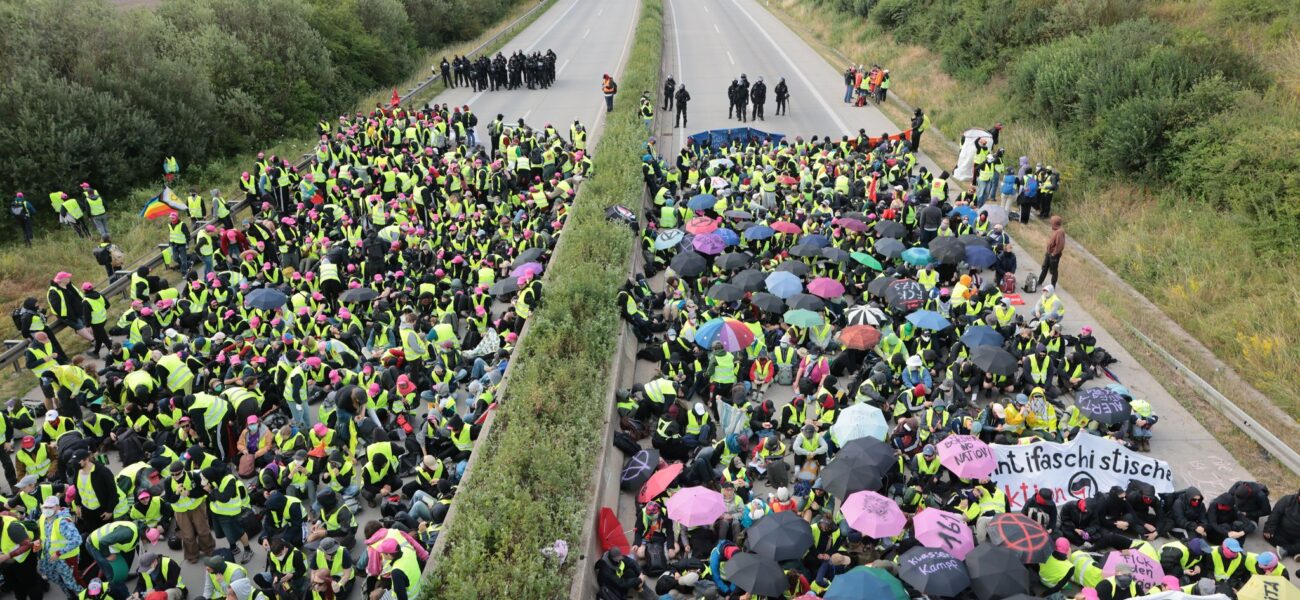
POLICY WIRE — Berlin, Germany — For weeks now, the familiar clatter of Germany’s political machinery has been drowned out by a rather different sound: the thunder of marching boots and a collective, indignant roar echoing across its cities. It’s not another fiscal spat or coalition squabble drawing tens of thousands into the cold, damp streets—it’s something far more elemental. It’s a fierce, visceral struggle for the very identity of the German republic, sparked by a political party often dismissed, then feared, and now openly confronted.
Nobody expected this kind of pushback, did they? The Alternative for Germany (AfD), a party that’s been methodically inching its way from fringe skepticism to mainstream legitimacy—its numbers consistently nudging upward, threatening to redraw the electoral map. But then the ‘remigration’ stories broke. Those weren’t just academic debates about border controls; they were leaked reports outlining plans to deport vast swathes of people with immigrant backgrounds, even citizens. That, apparently, was a line. A big one.
And so, from Hamburg to Munich, citizens have been turning out, numbers often topping hundreds of thousands in a single city. They aren’t just polite protestors, waving signs; this feels like an organic, almost desperate awakening. These aren’t your typical organized demonstrations. They’re broad-based, cutting across age, class, — and political affiliations. They’re unified by a stark refusal to accept the far-right’s vision of a Germany purged of its diversity. They just aren’t having it.
“We’re witnessing a true battle for the soul of our republic, and democratic forces simply can’t afford to sit this one out,” asserted Federal Minister of the Interior Nancy Faeser recently, reflecting the growing unease among mainstream politicians. “The constitutional order isn’t a suggestion, it’s our very foundation. And we will defend it.” But even as Faeser speaks, the AfD maintains its stubborn, unsettling resilience. Because for every protestor, there’s an increasing segment of the population that feels deeply alienated by Berlin’s current trajectory—economically, socially, and culturally. It’s a disconnect the AfD expertly exploits.
The party, for its part, sees these mobilizations as a form of bullying by the ‘establishment.’ “They can march all they want, but it doesn’t change the numbers,” stated AfD Co-Chair Tino Chrupalla in a recent public address. “Millions feel ignored, and we’re their voice—despite the establishment’s best efforts to silence us. We’re not going anywhere.” He’s not entirely wrong. A recent Infratest dimap poll puts the AfD at roughly 18% nationally, a substantial—if slightly dipping—increase from previous years, showing a consistent undercurrent of dissatisfaction the mainstream parties just can’t seem to shake. It’s a complicated picture, isn’t it?
This internal German struggle sends shivers across Europe, certainly. But it resonates particularly sharply in the broader Muslim world — and across South Asia. Germany, after all, hosts one of Europe’s largest immigrant populations, with significant communities from Turkey, Afghanistan, and increasingly, those seeking asylum from Syria, and a sizable Pakistani diaspora too. The concept of ‘remigration’ isn’t some abstract policy jargon to them. For communities from Karachi to Cologne, these aren’t just talking points. They’re terrifying threats, making their presence feel conditional, their citizenship—hard-won or inherited—feel incredibly fragile. What starts as a murmur in German political circles often transforms into deep anxieties in countless homes stretching from Berlin to Lahore, impacting families whose roots have taken hold, sometimes over generations, on German soil. It’s about more than just numbers; it’s about belonging.
📄 POLICY WIRE WHITEPAPER PUBLISHED: PAKISTAN'S NATIONAL SECURITY POLICY PRIORITIES
👉 READ BY CLICKING HEREThe protests highlight a profound shift in German civic engagement. Long criticized for political apathy, or perhaps just a quiet contentment, a segment of society has woken up. This isn’t just about party politics; it’s about foundational principles. It’s democracy, for better or worse, hashing things out in the public square. And for once, it’s not being polite about it.
It’s an anxious moment, mirroring a wider Germany’s anxious reckoning with its past and future. The government’s attempts to counter the AfD, including talks of banning its youth wing or scrutinizing individual politicians for extremist tendencies, only intensify the ideological trench warfare. This isn’t just about winning votes anymore. It’s about winning the narrative—and maybe, just maybe, holding a fragmented nation together.
What This Means
The sudden, overwhelming surge in anti-AfD protests isn’t merely a temporary blip; it represents a critical inflection point for German politics and potentially for the wider European project. Politically, the demonstrations offer a lifeline to mainstream parties struggling to counter the AfD’s populist appeal. It’s a clear message from the electorate that radical rhetoric, especially concerning ‘remigration,’ carries significant social costs, potentially emboldening cautious politicians to take a firmer stand. However, there’s a risk too: excessive focus on the AfD’s extremist elements might overshadow the legitimate grievances (economic anxieties, migration policy concerns) that propel some of its support, pushing disillusioned voters further into its orbit.
Economically, this climate of instability and ideological polarization isn’t good news for Germany, Europe’s largest economy. A reputation for welcoming skilled workers and maintaining social cohesion is crucial for investment and long-term prosperity. Uncertainty about the future of immigrant communities—a significant portion of the workforce—can deter foreign talent and capital, complicating Germany’s ongoing demographic challenges. The specter of ‘remigration’ specifically raises red flags for businesses relying on diverse talent pools. If this public uproar leads to sustained government action against far-right extremism, it could, over time, restore some confidence. But right now, the sheer force of public sentiment highlights a deep crack in the nation’s foundations, suggesting that Europe’s demographic realities continue to challenge established political norms in unsettling ways. The future, clearly, remains profoundly unsettled.