


Kyiv’s Deep Strikes: Russia’s Industrial Vulnerability
Ukraine's escalating drone attacks on Russia's industrial core, including Baltic energy hubs, reveal new vulnerabilities. Explore the strategic shift and global impact.

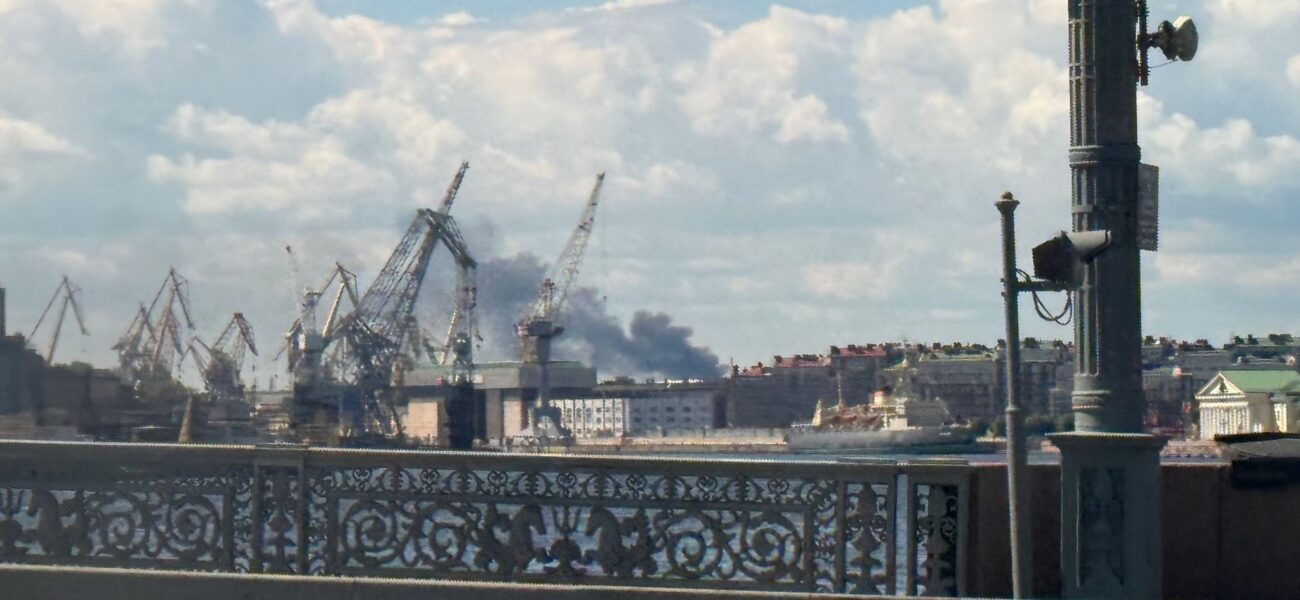
POLICY WIRE — Kyiv, Ukraine / Moscow, Russia — The creeping tendrils of conflict, once seemingly contained to the embattled borderlands, now stretch deep into what was long considered Russia’s impervious industrial heartland. An unwelcome reality check arrived with devastating clarity when Ukrainian drones pierced the air defenses around St. Petersburg, rattling the foundations of oil infrastructure. This isn’t just about damaged facilities; it’s about a cold, strategic calculation, a shift in Kyiv’s operational tempo—and Moscow, predictably, isn’t taking it lying down.
It was a Saturday night that felt different. Ukrainian unmanned aerial vehicles, increasingly sophisticated and reaching further with every mission, found their mark near Russia’s second-largest city. Specifically, terminals belonging to the Ust-Luga gas condensate complex and an oil terminal, both crucial nodes in Russia’s energy export network, reported explosions and significant fires. The Kremlin, for its part, maintained a veneer of control, quickly attributing the blasts to Kyiv’s “terroristic provocations.” But the visible plumes of smoke suggested a rather different narrative: an effective hit, miles behind the conventional front.
And Russia’s retaliation, a grimly familiar rhythm, quickly followed. Ukrainian officials confirmed that waves of Russian missiles and drones barraged the northern city of Sumy, indiscriminately striking civilian areas and residential blocks. That’s the playbook, isn’t it? An eye for an eye, except one side’s eye often involves a kindergarten. The casualties mount, the infrastructure crumbles, and the world watches this grim dance of destruction from a safe, if increasingly worried, distance.
“Russia thought its strategic assets, tucked away in its industrial core, were sacrosanct, beyond the reach of our legitimate defense,” remarked a visibly determined Mykhailo Podolyak, advisor to Ukraine’s presidential office. “We’re disabusing them of that notion. Our targets are military assets supporting their war machine, their capacity to kill our people. We don’t pick fights, but we certainly finish them.” It’s a message that clearly resonates among Kyiv’s strategists, signaling a move past merely defending the lines, towards disrupting the very sinews of Russia’s war economy.
Because these aren’t just symbolic attacks; they carry tangible weight. The Ust-Luga complex, managed by Novatek, is one of Russia’s largest deep-sea terminals for transshipping oil products and liquefied natural gas. Knocking out or even hindering its operation—even for a short spell—pinches Moscow’s purse strings, directly impacting its ability to finance its grinding war. For reference, according to the International Energy Agency (IEA), Russian oil exports averaged approximately 7.5 million barrels per day in 2023, with a substantial portion flowing through Baltic Sea ports like the one now under scrutiny. Damage here translates quickly to disruptions on global markets.
“This blatant act of terrorism, a cowardly strike against civilian economic infrastructure hundreds of kilometers from any combat zone, demands the severest condemnation,” thundered Maria Zakharova, spokesperson for the Russian Ministry of Foreign Affairs, in a typically fiery briefing. “Kyiv’s sponsors will soon realize that their reckless arming of a criminal regime has consequences not just for Russia, but for global stability and, yes, energy security. We’ve warned them before, and our warnings aren’t hollow.” One wonders if anyone in power actually listens to these pronouncements anymore, or if they’re just background noise to the shelling.
📄 POLICY WIRE WHITEPAPER PUBLISHED: PAKISTAN'S NATIONAL SECURITY POLICY PRIORITIES
👉 READ BY CLICKING HEREThe tit-for-tat escalation spotlights an ugly truth: this conflict is broadening, not narrowing. Kyiv, frustrated by slow territorial gains and feeling the pinch of dwindling Western aid, seems to be upping the ante, pushing its asymmetric capabilities to probe Russia’s vulnerabilities. But it’s a dangerous game. Every hit behind enemy lines often means a brutal reprisal against Ukrainian cities, and usually against those who have no say in the strategic machinations.
The reverberations, incidentally, extend far beyond the immediate theatre. Consider the ripple effect on global energy markets. Any disruption to Russian oil or gas exports, however minor, sends tremors through supply chains. Nations like Pakistan, for instance, already grappling with profound economic instability and high inflation, are acutely sensitive to any upward pressure on crude oil prices. A volatile oil market isn’t just an abstract concern for commodity traders in London; it directly translates to higher import bills, exacerbated poverty, and increased social unrest in distant, import-dependent economies. Mariners sailing treacherous routes in the Persian Gulf already face unseen perils; the market disruptions caused by these kinds of attacks only compound their burdens indirectly.
What This Means
This latest cycle of strikes — and counter-strikes isn’t merely news; it’s a recalibration of risk. Politically, it signals Kyiv’s sustained intent to keep Moscow off balance, to raise the domestic cost of Russia’s war effort, potentially hoping to foment internal discontent (a long shot, granted, given Russia’s tight informational control). Economically, even minor and temporary disruptions to critical energy infrastructure could nudge already fragile global commodity markets into yet another spasm of uncertainty, adding pressure on Central Banks grappling with inflation.
There’s also a significant diplomatic implication: this escalation ratchets up the pressure on Ukraine’s Western allies, forcing them to re-evaluate their ‘red lines’ for providing longer-range weaponry. Do they condemn these strikes as too escalatory, thereby tying Ukraine’s hands? Or do they tacitly—or overtly—support Ukraine’s right to target assets financing its destruction, despite the risk of an even wider conflict? And what about the stability of Europe? Germany, for one, already navigates an anxious reckoning with domestic political shifts while watching this continental conflict grind on. The path forward remains treacherous, characterized by tactical hits, brutal reprisals, and a steady erosion of any pretense of ‘business as usual’ on Europe’s volatile eastern flank. It’s not a pretty picture.