


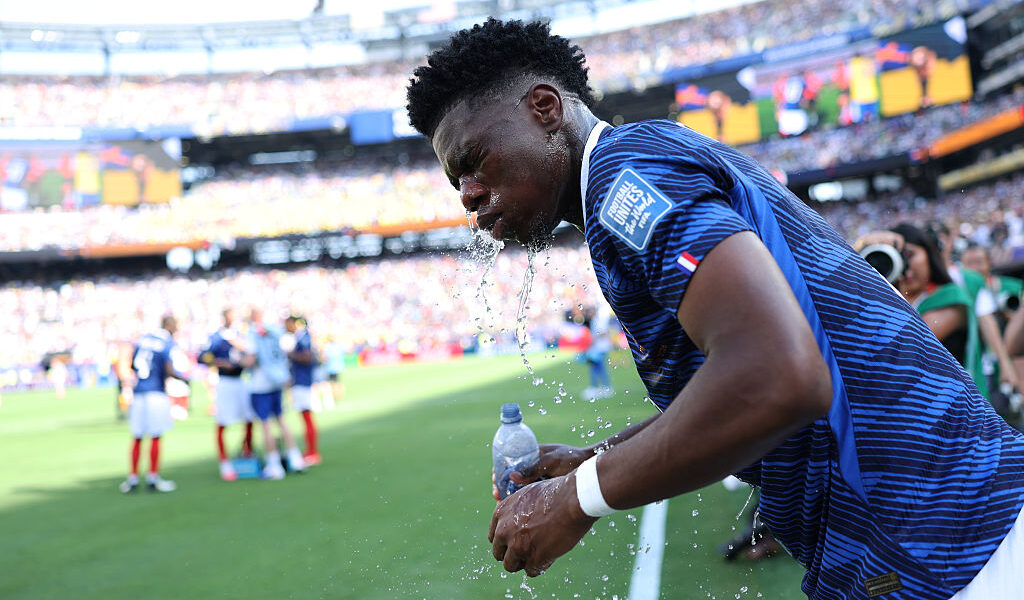
Tchouaméni Out: France Faces Crisis Ahead of Key Match
Aurélien Tchouaméni's injury rocks France ahead of their crucial match against Paraguay. Coach Didier Deschamps faces a major dilemma. Can Les Bleus cope?

POLICY WIRE — Paris, France — It isn’t just another game. For a nation that wears its football fortunes like a badge of honor—or sometimes, a scarlet letter—the upcoming round-of-16 clash isn’t merely about tactics. It’s about collective psychology. The air in Paris feels particularly heavy right now, — and it’s not just the summer humidity. France, it seems, has just had a wrench thrown into its meticulously engineered machinery, and its architect, Didier Deschamps, is left scrambling.
Because, whispers confirmed by RMC Sport quickly became screams: Aurélien Tchouaméni, the midfield engine many consider irreplaceable, is out. A muscle issue, they say. Just like that, the bedrock of Les Bleus’ strategy, the man who screens the defense with an almost monastic discipline, has been sidelined for the match against a newly formidable Paraguay. It’s a genuine headache, frankly. He’s not just a player; he’s the fulcrum, the often unsung hero who lets the Kylian Mbappés and Michael Olises of the world run wild up front, knowing their defensive frailties are covered.
French national coach Didier Deschamps, usually unflappable, acknowledged the blow with a measured pragmatism that barely concealed his concern. “Aurélien is a professional, and his absence is, naturally, something we must account for,” Deschamps stated in a press briefing that felt more like a commiseration session. “But this team is not built around one player. We have depth, — and I have absolute faith in those who will step up.” He always says that. Yet, the subtle tightening around his eyes told a different story. And everyone listening knew it.
But how do you replace a twenty-four-year-old Real Madrid anchor whose presence of mind often prevents problems before they even materialize? Tchouaméni’s knack for breaking up play, coupled with his understated ability to dictate tempo, means his absence reverberates far beyond a simple personnel swap. According to football analytics firm Opta, Tchouaméni averages 8.7 ball recoveries per 90 minutes in major international tournaments — a statistic that speaks volumes about his tireless contributions and the gaping hole he leaves.
The names being tossed around are N’Golo Kanté, Warren Zaïre-Emery, — and Manu Koné. Each offers a different flavor: Kanté, the seasoned veteran with relentless energy (but perhaps not the same commanding presence he once had); Zaïre-Emery, the precocious talent, undeniably gifted but lacking Tchouaméni’s big-game experience; and Koné, a solid, battling midfielder who could provide grit. Deschamps has to pick one to slot in alongside the established Adrien Rabiot, a decision that could very well define France’s trajectory in the tournament. No pressure, then.
This situation, for many, is a familiar dance with French football. High expectations, glittering talent, — and then… a curveball. It’s a national narrative played out on the global stage. From the vibrant boulevards of Marseille to the quiet, bustling streets of Lahore, where French football often enjoys a fervent following (its stars like Zidane and Benzema holding iconic status across the Muslim world), fans are digesting the news. For nations like Pakistan, football remains a unifying force, a glimpse into global excellence that transcends borders, making even a French midfield headache a topic of intense, widespread debate.
📄 POLICY WIRE WHITEPAPER PUBLISHED: PAKISTAN'S NATIONAL SECURITY POLICY PRIORITIES
👉 READ BY CLICKING HEREPascal Dubois, a spokesperson for the French Football Federation, attempted to soothe frayed nerves. “Our medical staff are doing everything possible for Aurélien’s recovery, focusing on his long-term health,” Dubois commented, with the practiced calm of someone reading from a crisis management playbook. “The squad remains united, their morale high. They’re professional athletes; they’ve dealt with adversity before.” Still, one can’t help but notice the palpable undercurrent of anxiety within the usually stoic federation. They’re running a huge, expensive show, after all.
What This Means
This isn’t merely about one injured player; it’s a test of France’s mental fortitude and strategic depth on a continental scale. For Deschamps, it’s a legacy moment. Does he revert to a more cautious approach, bolstering the defense at the expense of attacking flair? Or does he trust one of the younger talents to step into a colossal pair of boots and maintain the delicate balance required against a tricky opponent like Paraguay?
Economically, a premature exit for a footballing powerhouse like France — a consistent ratings and sponsorship magnet — would send shivers through the French Football Federation’s coffers, affecting everything from grassroots funding to national team endorsements. Major sporting events often see geopolitical undercurrents, too; French triumphs are frequently framed as a victory for a diverse, unified France, sometimes masking deeper societal divisions. Conversely, setbacks can provide uncomfortable moments for introspection. A poor performance here could subtly alter international perceptions, particularly given how national sporting achievements often get linked, however tenuously, to a country’s soft power and diplomatic standing.
the absence rekindles an age-old debate: can a team truly overcome the loss of a genuine superstar in a knockout setting, especially when their opponent just—unexpectedly—beat Germany? It brings to mind the cold, hard calculus of champions. This situation also resonates with broader global discussions on how national identities are forged and displayed through sporting contests, much like the world stage’s unexpected actors sometimes ignite geopolitical undercurrents in other sports. France, the reigning behemoth, suddenly looks a little less invincible, its aura a little more fragile. The ball is now firmly in Deschamps’ court—and he doesn’t have all his aces.