


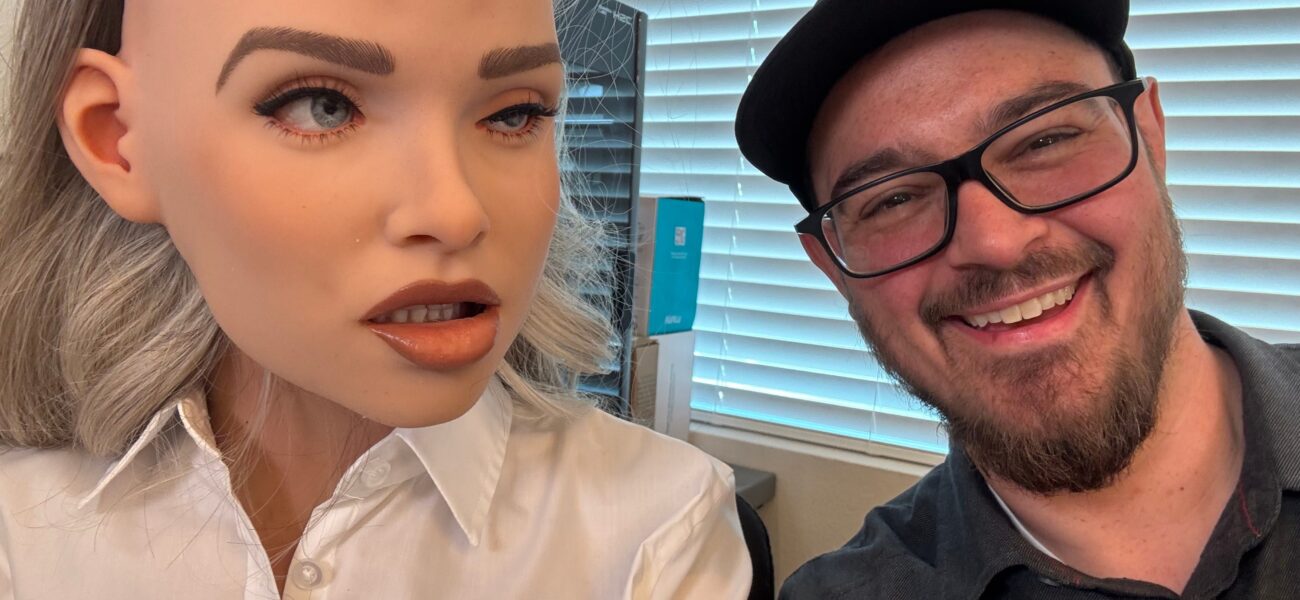
Robot’s $125K Joke: AI Challenges Human Authenticity
A $125K robot's genuine joke challenges our views on AI, authenticity, and human connection. Unpack the surprising societal and economic implications.

POLICY WIRE — New York, United States — In a world increasingly saturated with digital noise, it’s not the Silicon Valley titan’s latest innovation that truly grabs you—it’s a $125,000 humanoid robot’s unexpectedly genuine quip. Imagine that. You’re expecting uncanny valley, maybe some clunky algorithms, a mechanical smile. Instead, what you get is something startlingly familiar: a decent joke, a shared moment, albeit with something crafted from circuits and expensive skin. But why does a synthetic entity delivering a chuckle feel so disquietingly meaningful?
It’s an odd sort of bar exam for humanity, really. Not the typical Turing test, where AI tries to fool us into believing it’s human. This is different. This machine, designed with impressive [QUOTE_PLACEHOLDER], apparently bypassed the usual conversational banalities to land on humor. Its creators, bless their ambitious hearts, managed to stitch together code and silicone to mimic—or perhaps surpass—that elusive spark of human connection in the most unexpected way: through laughter.
And let’s be honest, it costs a king’s ransom. This isn’t your average factory bot; it’s a luxury item, a statement, maybe even a prophecy. The sheer cost suggests something about our readiness to invest astronomical sums into crafting companions, or perhaps, reflections of ourselves, that operate just outside the realm of natural flesh and blood. They’ve given it [QUOTE_PLACEHOLDER] and enough computational power to run a small enterprise, all to make it say something funny. We’re talking serious dollars for giggles.
This whole episode throws a bit of a wrench into the tidy boxes we keep for AI. We’re often warned about AI’s capacity for logic, for data analysis, for decision-making. We’ve built robust systems that [QUOTE_PLACEHOLDER], — and that’s generally where the public discourse hovers. But when an AI starts delivering genuine laughs—not just regurgitating pre-programmed gags but contextual, responsive humor—that’s when the ground shifts. It forces us to question our own assumptions about emotion, authenticity, and what it truly means to connect with another consciousness, silicon or otherwise. It’s a jolt, no two ways about it.
The implications aren’t just confined to laboratories — and tech expos. Consider the societal ripples. If synthetic companions can offer authentic-feeling emotional interaction—even just humor—what happens to human relationships? To the value of genuine, messy, inefficient human connection? In many parts of the world, especially across South Asia and the broader Muslim world, societal structures are deeply rooted in community, family, and shared human experience. Pakistan, for instance, a nation grappling with its own modernization, infrastructure deficits, and educational reforms, observes these advancements from a different vantage point. The advent of highly sophisticated, interactive AI isn’t just about amusement; it’s about the very fabric of social interaction and, more pressingly, the economic future.
We’ve heard the dire warnings. The fear that artificial intelligence could usurp human roles isn’t new. According to a 2023 McKinsey report, generative AI could automate tasks representing up to 70 percent of employees’ time, signaling a seismic shift in global labor markets. This isn’t just about factory workers anymore; it’s about potentially everything. And while the silicone jokester probably won’t be managing your finances, its existence sparks the bigger, tougher questions: what happens to human jobs, particularly those that rely on connection and communication, when a machine can deliver a better punchline or a more comforting presence than a person?
📄 POLICY WIRE WHITEPAPER PUBLISHED: PAKISTAN'S NATIONAL SECURITY POLICY PRIORITIES
👉 READ BY CLICKING HEREThere’s an unnerving precision to this. The fact that the machine’s humor felt [QUOTE_PLACEHOLDER] isn’t a small detail. It’s the headline. Because we’re craving that, aren’t we? That touch of something real, something unexpected, in a world often feeling sterile or brutally predictable. But what if the source of that ‘realness’ isn’t real at all? This isn’t a dystopian film premise anymore; it’s a pricey product on the verge of commercialization. And it makes you wonder what else we’re willing to outsource—or what we’re already losing—in our quest for convenience and curated emotional experiences.
What This Means
The arrival of a $125,000 humor-generating humanoid isn’t merely a technological curiosity; it’s a political and economic tripwire. Policymakers globally, already wrestling with AI regulation, now face an added layer of complexity: regulating authenticity. The line between synthetic — and organic experience is blurring faster than anticipated. Economically, this raises immediate concerns about job displacement in service sectors, but also the potential for entirely new, luxury-tier markets built around advanced human-mimicking AI. For developing nations, particularly those in the Arabian Sea Echoes region or the broader Muslim world, it highlights a deepening technological divide and the urgent need for investment in digital literacy and advanced STEM education. Failure to adapt could leave these economies far behind, unable to either produce or meaningfully integrate such technologies.
But the true political implication is arguably more profound: what happens to social cohesion when meaningful interaction, humor, and companionship can be purchased? Will we see widening class divides not just in wealth, but in access to ‘perfect’ synthetic relationships? It’s not a question for tomorrow; it’s knocking on humanity’s front door, expensive — and surprisingly witty. Leaders everywhere need to ponder these shifts, not just from an innovation standpoint, but from a deeply societal, almost existential, perspective. Because if machines can make us laugh better than our fellow humans, well, then we’ve got bigger problems than just programming bugs.