


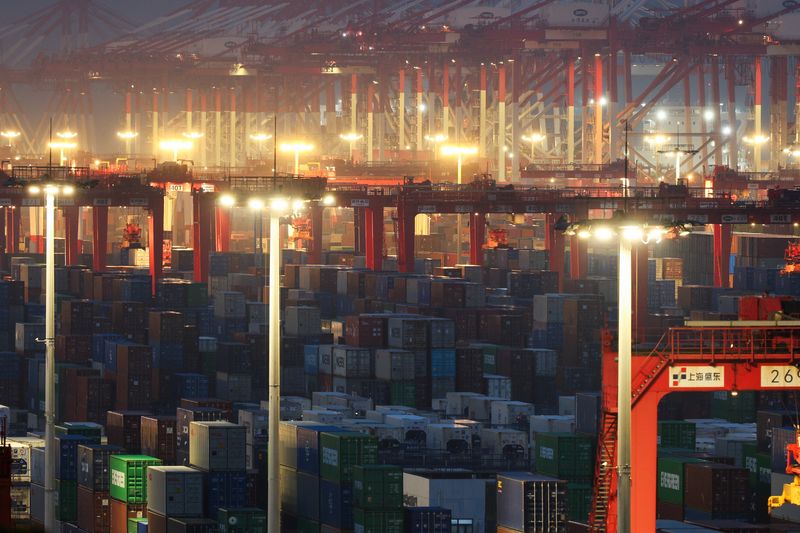
Goldman Sachs: China’s Exports Overwhelm European Industry
Goldman Sachs warns Chinese exports are overwhelming European industry, risking jobs, innovation, and strategic autonomy. Discover the deep economic and geopolitical impact.

POLICY WIRE — London, UK — Europe’s industrial heartland, once the undisputed engine of global innovation, now finds itself battling a peculiar kind of economic malaise. It isn’t just the specter of inflation or the fallout from an ill-advised energy policy that casts a shadow over the continent. Turns out, much of the problem stems from a manufacturing powerhouse thousands of miles away, effectively swamping local markets with an unending cascade of its wares.
It’s not just the standard narrative of a wide trade imbalance—a usual suspect in these dramas—that’s dragging things down. No, say the sharp pencils at Goldman Sachs, the real gut-punch for European growth is the sheer volume of Chinese exports that are elbowing out homegrown production. Think of it like this: your neighborhood bakery isn’t closing because you bought too much flour from a big-box store; it’s because a gigantic, hyper-efficient, state-backed factory overseas is selling bread cheaper than you can ever hope to make it.
And boy, are they selling. Europe, particularly the industrial sectors, feels the pinch. Goldman’s analysis—a sober look at an uncomfortable truth— suggests the immediate threat to Brussels’ economic ambitions isn’t the overall trade gap itself, but rather the way China’s hyper-competitive production machine is specifically undercutting European industries. It’s a nuanced distinction, but one that policy makers can’t afford to miss. This dynamic isn’t just about spreadsheets; it’s about livelihoods, it’s about factory gates shutting their heavy doors for good, and it’s about the erosion of manufacturing heritage across nations that once ruled the roost.
The situation’s got Europe’s leaders in a bind, hasn’t it? They’re grappling with sticky domestic price hikes, unpredictable energy costs, and the perpetual, nagging demand to keep their own industries competitive on the world stage. But how do you compete with an almost limitless supply of competitively priced goods? It’s like trying to bail out a leaky boat with a teacup while a tsunami rages around you.
Some of the wonks we speak to, the ones who pour over data like it’s a sacred text, often argue that the mere existence of a hefty trade deficit, while significant, pales in comparison to the direct, suffocating pressure from those high-volume, low-cost Chinese imports. They contend that this deluge—and that’s what it’s, really—is the primary reason why broader strategies designed to kickstart European economic expansion just aren’t cutting it. [QUOTE_PLACEHOLDER] an analyst told us, [QUOTE_PLACEHOLDER] But the numbers are stark: Eurostat data shows the EU’s goods trade deficit with China reached an unprecedented 396 billion euros in 2022. That’s a lot of dough flying out of the bloc.
And where does Pakistan, or really, much of South Asia, fit into this grand chess game? Well, a hobbled European economy doesn’t just impact Germans or Frenchmen; it sends ripples across the globe. We’re talking about crucial export markets shrinking, about investment flows drying up, and about development aid potentially becoming a luxury. Nations like Pakistan, navigating their own intricate economic landscapes with deep ties to both European markets and Chinese investment, watch these developments with particular trepidation. They’re reliant on a stable, thriving global trade system, a system that now appears increasingly lopsided.
Think about the competitive landscape. If China’s pushing out goods at such a rate it destabilizes Europe, what does that mean for emerging economies in Pakistan that are also trying to build their own industrial base? They’re not just competing with local producers anymore; they’re effectively competing with the entirety of China’s immense manufacturing capability. That’s a truly frightening prospect for industrial aspirations from Karachi to Lahore. It’s a dynamic that underscores the interdependency of our global village—for better, or in this case, for worse.
Goldman Sachs ain’t shy about calling out specific areas, either. They point fingers at sectors like renewables — and electric vehicles. These were supposed to be Europe’s comeback kids, areas where innovation — and investment would give them an edge. But China’s aggressive manufacturing, coupled with strategic subsidies, creates a near impossible choke point. You’ve got Europe pushing green initiatives, only to find the core components and finished products cheaper from—you guessed it—China.
And because, at its heart, trade imbalances like these always bleed into geopolitics, expect the tensions to escalate. European policymakers can huddle all they want, but if the economic realities aren’t addressed head-on, existing trade relationships are going to require a serious rethink. It’s not just business; it’s a test of sovereignty. Sometimes, even the most enduring alliances bend under the strain of raw economic competition. As some see it, it’s about preventing European industries from ending up like the Detroit auto scene did decades ago—once mighty, now struggling to catch up.
What This Means
This isn’t merely an arcane debate among economists about trade figures. It cuts to the very core of European strategic autonomy — and its standing on the global stage. Politically, leaders in Brussels and national capitals face an impossible balancing act: appease protectionist sentiments at home to save local jobs, or maintain a relatively open market to avoid retaliatory measures from Beijing? Neither choice looks easy.
Economically, if Europe’s manufacturing base continues to erode, it’s not just about losing market share. It’s about a diminishing capacity for innovation, a brain drain as specialized talent looks elsewhere, and ultimately, a reduced ability to shape global industrial standards. This could lead to a ‘race to the bottom’ where European companies are forced to outsource production to China to remain competitive, creating a vicious cycle. the environmental ambitions of the EU could be severely compromised if the green transition heavily relies on imports from a country with different, often less stringent, environmental regulations. Think about how this shapes diplomatic discussions with partners globally who are also navigating this complex relationship.
For nations like Pakistan, this Euro-Sino tussle spells potential volatility. As European demand softens due to internal economic stress, Pakistani exports could take a hit. China’s dominant position in global manufacturing chains—underscored by its export success in Europe—means developing nations could become increasingly dependent on Chinese intermediate goods and technologies, possibly leading to less diversified economies and reduced leverage in trade negotiations. It’s a world where economic interdependence is a weapon, and everyone’s got a finger on the trigger, waiting for the next shot to ring out. But don’t count Europe out just yet; they’ve a long history of resilience—even when the stakes are incredibly high, as seen in challenges ranging from energy crises to geopolitical flashpoints.