


Kenya’s Empty Classrooms: Climate vs. Education
Climate change forces hundreds of thousands of Kenyan children out of school to herd livestock for survival. Explore the devastating impact on education, economy, and national stability.

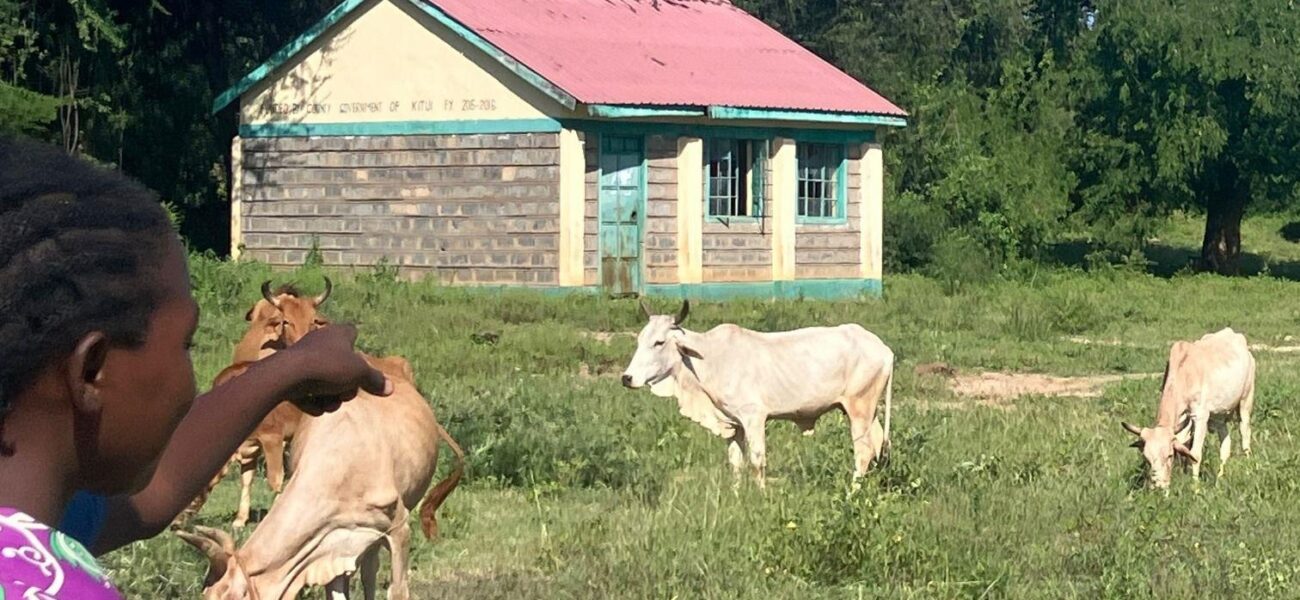
POLICY WIRE — Nairobi, Kenya — Forget the hustle of morning school runs; these days, across swathes of rural Kenya, the most animated movements often involve a flock of goats or a dusty herd of cattle. In a stark, unblinking shift of priorities, children—hundreds of thousands of them, if you get right down to it—aren’t making it to class. Because in the unforgiving struggle against an ever-advancing desert, livestock has become a far more reliable guarantor of tomorrow than a government-issued textbook.
It’s a gritty, hard truth. In places like Turkana, Garissa, and Marsabit counties, the local administrators are grappling with a paradox: the pastoral economy, perpetually under siege by climate change and persistent droughts, seems to be, in an unsettling way, trumping the nation’s educational aspirations. How did we get to a point where a district commissioner might genuinely count more ruminants than registered pupils? Well, it’s complicated, — and it’s ugly. [QUOTE_PLACEHOLDER]
These weren’t fancy academies anyway—we’re talking basic structures, often mud and corrugated iron, built with the best intentions by both NGOs and Nairobi. But when the rains don’t come, and the last viable grazing land is a grueling three-day walk away, a child tending to the family’s diminishing assets suddenly becomes the most essential cog in a fragile survival machine. You can’t eat a diploma. But you can trade a goat for a bag of maize, maybe.
And it’s not just Kenya struggling. You see these brutal calculus shifts all over the dry belts, particularly across the Muslim world. Think Pakistan’s Balochistan province, or the Sahel region stretching across Africa. Drought, insecurity, poverty—they create an unholy trinity that makes formal education seem like a luxury item. Kids become economic units, pure — and simple, helping to guard a herd or fetching water miles away. It’s an inconvenient truth for development agencies.
The Ministry of Education, bless their hearts, they know it’s a problem. They’ve rolled out policies, sure, but what’s a policy against a parched riverbed — and starving children? It’s a policy trying to make a difference from behind a comfortable desk in the capital, versus a desperate parent watching their livelihood shrivel under a relentless sun. That’s a mismatch of priorities, if ever there was one. But they’re not totally deaf; it’s just that solving such deep-seated problems requires more than a mere mandate. It requires a tectonic shift.
Government data reveals a grim reality. A staggering 65% of children in primary-school age across Kenya’s arid and semi-arid lands are not enrolled in formal education, according to UNICEF’s 2021 report. You hear numbers like that, — and you just kinda know. These aren’t drops in the bucket; it’s the bucket itself leaking. Whole generations risk growing up with literacy levels so low they can’t even decipher basic health warnings, let alone participate meaningfully in a modernizing economy. The social fabric—it stretches, then it tears. It just does.
📄 POLICY WIRE WHITEPAPER PUBLISHED: PAKISTAN'S NATIONAL SECURITY POLICY PRIORITIES
👉 READ BY CLICKING HEREBecause ultimately, these closures, the low enrollment figures, they’re not isolated incidents. They’re symptoms of larger, global convulsions. Climate migration, increasing resource conflict, the slow decay of traditional livelihoods—all of it converging on these already vulnerable communities. They’re stuck between a rock and a hard place, trying to preserve an ancient way of life that the modern world just isn’t built to accommodate anymore.
This isn’t some neat little localized issue you can solve with a new curriculum or a handful of donations. No, this is an existential crisis for vast swathes of humanity, one that ripples far beyond Kenya’s borders. We’re seeing similar forces play out in Niger, Afghanistan, Yemen—wherever the fragile balance of life is disrupted by environmental shifts and economic instability. And the kids, bless ’em, they’re the first ones to pay the price. But they won’t be the last, believe me.
What This Means
The diminishing ranks of Kenyan schoolchildren, replaced by ever-increasing livestock numbers in rural registers, signals more than just an educational setback. It’s a harbinger of profound political — and economic instability for a nation aspiring to regional leadership. Politically, a significant segment of the population is effectively being ‘left behind’ developmentally, fostering deep resentment towards Nairobi and exacerbating the existing center-periphery tensions. This education deficit directly translates into a lack of opportunity, breeding ground for disaffection and potentially, radicalization. We’ve seen that movie before, haven’t we? It never ends well.
Economically, the impact is even starker. A nation cannot genuinely grow its gross domestic product (GDP) sustainably when a large portion of its future workforce lacks foundational literacy and numeracy. The skills gap created by these widespread closures isn’t just an academic talking point; it’s an actual drag on productivity, innovation, and diversification away from subsistence economies. The global economy, as many observers point out, doesn’t wait for anyone, particularly not those without basic training. This situation solidifies generational poverty, trapping entire communities in a cycle of underdevelopment, creating demographic burdens rather than dividends. It’s a problem Kenya ignores at its national peril.