

Pueblo Vet’s Homecoming: A Legacy of Belonging
Discover Pueblo veteran Walter Dasheno's powerful story: From an unwelcoming Vietnam return to a belated homecoming, fighting for Native American recognition.

POLICY WIRE — Washington D.C. — It wasn’t the monumental granite or the solemn, inscribed names that held the real weight that afternoon; it was the whisper. The soft, guttural intonation, an ancestral dialect offering thanks over polished black stone, marking a passing. A private ceremony at the Vietnam Veterans Memorial, far from the orchestrated fanfare typically associated with national remembrance, unfurled a more profound truth about American service: often, it’s personal, complex, and desperately quiet, particularly for those whose roots stretch back long before ‘America’ was a concept.
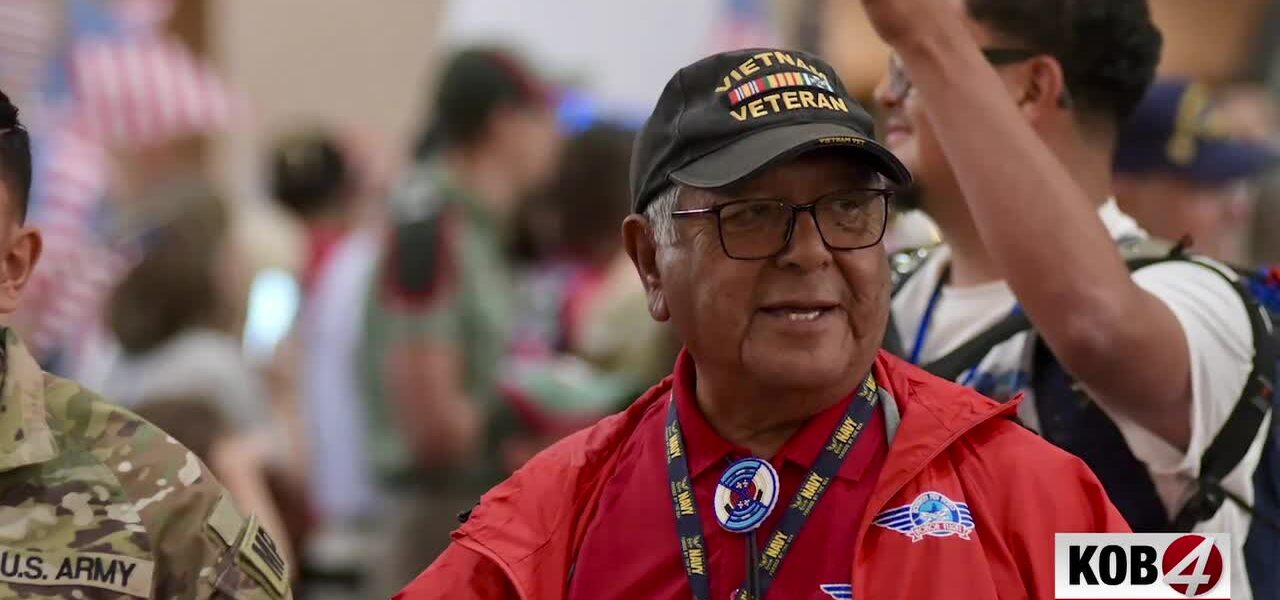
Walter Dasheno, a former Governor of the Santa Clara Pueblo and a decorated Vietnam veteran, didn’t fly into the nation’s capital merely to sightsee. No, he arrived to shepherd. He brought his grandson, Jonathan Vigil, on an Honor Flight from New Mexico, ostensibly to see the grand markers of national sacrifice. But the real lesson, perhaps, was a transfer of obligation, an unstated burden now partially shifted onto younger shoulders. Inside his ancestral home, the pictures tell tales of a different era—faces etched with hard lives and harder choices. Yet, it’s not the grand proclamations of independence that matter to Dasheno, but the silent continuum: what one generation grants, or demands, of the next. That’s how tradition works, you see. That’s how cultures endure.
And so, at the Memorial, amid a somber gathering, Dasheno stopped at a name seared into his memory: Gerald Chino, a schoolmate from St. Catherine’s School in Santa Fe, gone too soon, a causality of war in 1968. The institution where their paths intertwined, St. Catherine’s, now echoes with its own complex history, mirroring the nation’s tangled relationship with its past. Vigil watched his grandfather, a man usually composed, momentarily shed that veneer. He murmured thanks in his own language, a bridge connecting the distant jungles of Vietnam to the dry plains of New Mexico. “You know, that was his friend. That’s just like my friend,” Vigil would later recount, struck by the sudden intimacy of loss across decades.
But the true jolt, the real reckoning, happened not under Washington’s grand gaze but back in Albuquerque. Dasheno’s return from Vietnam decades ago had been, like so many other service members, especially those from marginalized communities, decidedly unwelcoming. “We had to wear civilian clothes,” he recalled, the memory still tart. A country deeply divided doesn’t much care for its fighting men — and women, it turns out. Not really. When the Honor Flight landed, however, hundreds were waiting. “When we met the people going down the stairs in Albuquerque,” Dasheno chuckled, a sound tinged with incredulity, “it was something else.”
This belated embrace, an institutional apology of sorts, carries a different weight for Native American veterans. Historically, their service in disproportionate numbers has often been met with a chilling indifference back home, their sacrifices sidelined by ongoing struggles for sovereignty and recognition. According to the National Congress of American Indians, more than 42,000 Native Americans served in Vietnam, often facing systemic racism at home despite their frontline contributions abroad. For many, that initial lack of acknowledgment was a deeper wound than any sustained on the battlefield.
U.S. Senator Ben Ray Luján (D-NM) acknowledges this painful history, stating, “The quiet bravery of Indigenous Americans in uniform has too often been a forgotten chapter of our nation’s story. Their commitment to our country, despite facing immense challenges at home, is a legacy we’re obligated to honor fully, today and always.” And for those like Dasheno, it’s about much more than just a parade. Dr. Lena Khan, a Policy Analyst for the Department of Veterans Affairs, offers a pragmatic view: “Our evolving understanding of veteran wellness necessitates a holistic approach that recognizes diverse experiences and, critically, remedies past oversights in community reintegration programs.” She speaks of federal initiatives working to partner with tribal nations to bridge that gap.
📄 POLICY WIRE WHITEPAPER PUBLISHED: PAKISTAN'S NATIONAL SECURITY POLICY PRIORITIES
👉 READ BY CLICKING HERE“We’re not Black, we’re not white, we’re not Native Americans. We’re Americans,” Dasheno declared to the crowd upon his emotional return, the acceptance a balm to old wounds. Because, for him, that’s what true freedom means: being seen, being welcomed, and, finally, belonging. His vision now extends to organizing an all-Native American Honor Flight—a singular journey for those whose sacrifices were always, implicitly, a double burden. His fight for a visible collective identity continues.
What This Means
The journey of Walter Dasheno and Jonathan Vigil isn’t just a feel-good story; it’s a sharp-edged observation on civic obligation and historical reckoning. Politically, the belated homecoming for Vietnam veterans, especially those from indigenous communities, signals an evolving—if still incomplete—national consciousness. Governments are, at last, trying to reconcile the narrative of American exceptionalism with the messy reality of how different communities have been treated, both on and off the battlefield. Economically, neglecting veteran mental health and societal reintegration carries significant long-term costs in healthcare, social services, and lost productivity. Recognition, in this context, isn’t just moral; it’s sound policy. For South Asian nations, which grapple with their own complex histories of post-conflict recognition for soldiers in protracted internal or external disputes, particularly those from marginalized ethnic or religious groups, Dasheno’s story holds a mirror. Pakistan, for instance, has its own silent sacrifices—veterans from Balochistan or tribal areas, whose service to the state often comes with questions of internal political recognition and resource distribution, not just parades. The universal theme: societies are only as strong as their weakest links, particularly those forged in the furnace of combat.
Vigil, witnessing his grandfather’s quiet joy, summed it up in youthful, unfiltered language. “It means… that… we’re free,” he chuckled, the truth simple — and profound. The future, according to the Pueblo elders, relies on the younger generation taking the reins, “calling the shots,” and “taking care of your people.” It’s a generational baton pass, solemn and understated. This isn’t merely about war and remembrance; it’s about a deeply rooted sense of national stewardship, a concept older than the nation itself, continuously reinterpreted through hardship and unexpected recognition. Maybe, just maybe, America is starting to understand it too.