

New Mexico’s Climate Cycle: Smoke, Storms & Impact
New Mexico faces its annual cycle of wildfire smoke and monsoon storms. Explore how climate change amplifies these events, straining resources and impacting communities.

POLICY WIRE — Santa Fe, New Mexico — It’s a familiar tableau in the Land of Enchantment: skies tinted sepia, the air thick with the acrid scent of distant conflagration. Don’t let the aesthetic fool you; this isn’t some artistic filter on a tourist snapshot. It’s the ominous prelude to another fraught holiday weekend, where wildfire smoke and a nascent monsoon cycle promise a potent brew of beauty and environmental hazard across New Mexico. Call it a tragic annual tradition.
The smoke, a stubborn byproduct of the Sacaton Fire chewing through the Gila National Forest, isn’t just an annoyance. It’s a lungful of worry, forecast to drift northeast, shrouding parts of the southwest and south-central regions from Silver City up through Socorro, Belen, and into the middle Rio Grande Valley. Most of it, they say, will ride high, a ghostly veil. But it’s a visible reminder of an ecosystem in distress—a region routinely battered, then washed, then dried again.
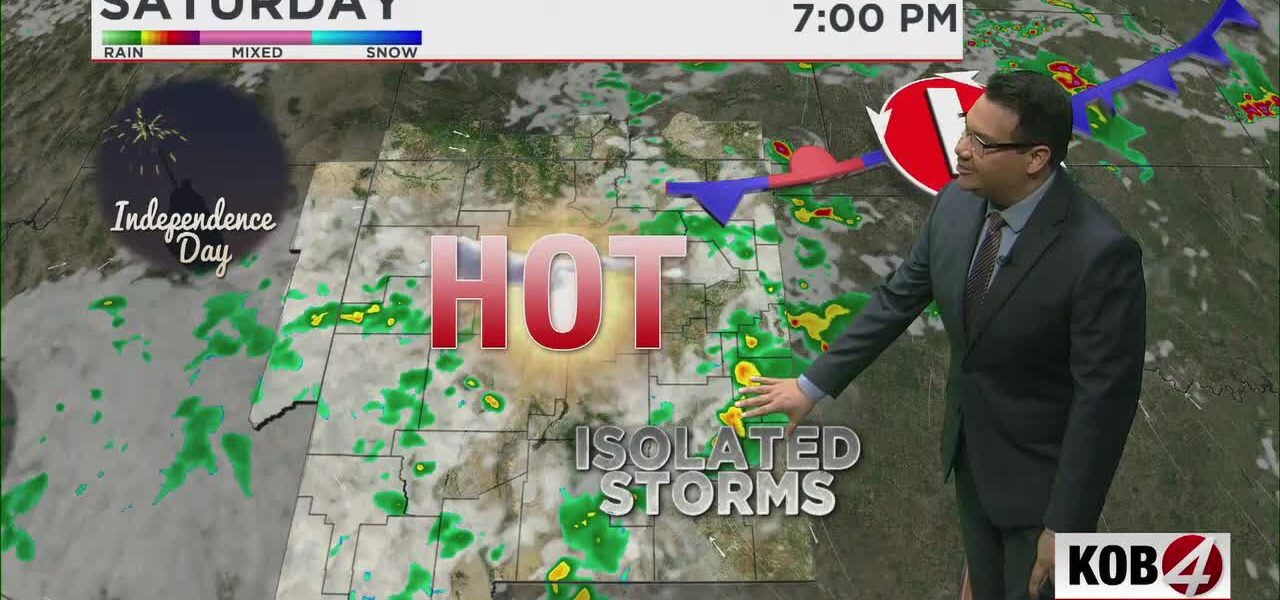
And then there’s the monsoon, a capricious savior. After days of arid heat, western New Mexico should see its slow, grudging return this weekend. We’re talking isolated virga, mostly. Those frustrating rains that just evaporate before hitting the ground, stirring up dust rather than quelling it. Still, they bring gusty winds — and a deceptive whisper of moisture. But real storm chances? They’re heading east: Roswell, Clovis, Portales, Hobbs. The state’s eastern flank—always seems to catch the brunt, doesn’t it?
A boundary shoving down from thunderstorms over Kansas later Saturday is poised to ignite another round of showers up north, from Raton to Clayton, potentially stretching overnight. Sunday? The atmosphere gets downright soggy. You’d think the rain would be unequivocally welcome after months of drought, but when it’s delivered in sudden, violent bursts, it just carves out arroyos and amplifies erosion, washing away what little topsoil is left. It’s a cruel irony.
“We’re beyond reactive at this point; we have to be,” Governor Michelle Lujan Grisham told Policy Wire, her voice tight with familiar resolve. “Our communities understand the rhythm of these seasons now – the fire, then the deluge, then the repairs. But understanding doesn’t make it any less taxing on our emergency services, or on families who face displacement year after year. It’s a continuous, punishing cycle we can’t just wish away.” Her administration’s annual state budget has had to increasingly allocate funds for wildfire suppression and post-flood mitigation, a stark indicator of the changing climate’s fiscal toll. Just last year, over a quarter of a billion dollars in state and federal funds were directed towards these efforts in New Mexico alone, a statistic drawn from the state’s budget review office data.
“It’s not just ‘more storms’ anymore; it’s an escalation,” remarked Dr. Fatima Zia, a climate specialist with the Pakistan-based Indus Basin Institute for Water & Environment, during a virtual conference earlier this week. “You see the same phenomena in regions like South Asia. Monsoon patterns globally are shifting, becoming more intense — and less predictable. The challenge isn’t just adapting to climate change, it’s adapting to accelerated, almost frantic, climate chaos.” Her observation echoes a sentiment familiar to New Mexico ranchers, who gaze at skies often promising rain, but delivering only wind, or too much, too fast. We’re all in the same boat, just on different sides of the globe.
📄 POLICY WIRE WHITEPAPER PUBLISHED: PAKISTAN'S NATIONAL SECURITY POLICY PRIORITIES
👉 READ BY CLICKING HEREWhat This Means
This isn’t just a weather report; it’s a commentary on a region—and a world—grappling with the brutal calculus of a warming planet. The political implications here are stark. Constant environmental crisis means consistent demand for state resources: emergency funding, rebuilding efforts, and stretched personnel. Local economies, particularly those reliant on tourism or agriculture, get hit repeatedly. Small businesses, already navigating a rocky post-pandemic landscape, often don’t recover after repeated smoke advisories or flash floods.
It’s an invisible tax on resilience. Property values can stagnate or decline in fire-prone areas, insurance premiums climb, and the collective stress on a population that constantly has to prepare for the worst is palpable. Economically, you’re looking at long-term drain, not just short-term damage control. The debate inevitably shifts from mitigation to adaptation: Can we harden infrastructure enough? Should we retreat from certain areas? Heavy questions with heavier price tags.
But there’s a deeper, more subtle irony at play. The federal government, always eager to tout its commitment to infrastructure, often struggles with the dynamic, unpredictable nature of these climate events. Roads get rebuilt, only to wash out again. Small towns receive disaster aid, only to need it again the following season. It’s a Sisyphusian struggle, and the political will—along with the federal coffers—feels increasingly finite when facing truly infinite climate shifts. This predictable chaos isn’t just about New Mexico; it’s a blueprint for global resource management under duress. And we’re all taking notes, watching this slow, smoke-filled burn.