

Iran’s Hormuz Standoff: Threats & Diplomacy Clash
Iran issues new threats on vital Strait of Hormuz shipping lanes, even as diplomacy unfolds. Unpack Tehran's strategic brinkmanship and the high stakes for global stability.

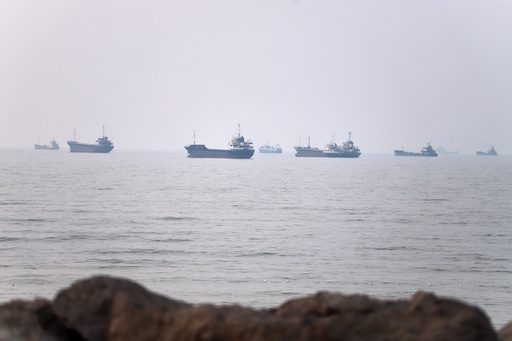
POLICY WIRE — DUBAI, United Arab Emirates — The geopolitical thermometer hit a fever pitch this week, not with a bang, but with a thinly veiled bureaucratic edict from Tehran. All tankers, said Iran’s military command, must stick to their designated lane in the Strait of Hormuz or face an unflinching reprisal. And get this: the tough talk dropped just a day after US and Iranian diplomats wrapped up rather quiet conversations in Qatar, discussing, one can only presume, the very same shipping lanes.
It’s a peculiar kind of diplomatic theater, isn’t it? One day, talks behind closed doors, reportedly yielding [QUOTE_PLACEHOLDER], the next, saber-rattling across one of the planet’s most sensitive maritime chokepoints. This isn’t just about rogue waves; it’s about control. Iran’s Khatam al-Anbiya military command — an outfit not known for understatement — broadcast their directive via state television, setting everyone a bit on edge. No, it wasn’t immediately clear what specific catalyst fired up this renewed Iranian bluster, but many reckon the recent joint statement from the U.S. military’s Central Command, post-meeting with Mideast nations in Bahrain, rubbed someone in Tehran the wrong way. That communiqué rather blandly noted, leaders underscored their shared commitment to the free flow of commerce through the Strait of Hormuz.
Perhaps it’s the quiet assertion of a widely accepted international norm that set Iran off. But they’ve got other things on their plate, too, like prepping for the funeral of late Supreme Leader Ayatollah Ali Khamenei, which kicks off this weekend. He was killed, you’ll recall, in the war’s first moments back in February.
The Iranian warning pulled no punches. Any failure to comply, deviation from the designated route, or disregard for the navigation protocols of the Islamic Republic of Iran in the Strait of Hormuz will be met with an immediate and forceful response from the armed forces, endangering the security of the violating vessels,
the statement thundered. They didn’t stop there. They also griped about continued US fighter jet presence over the strait, claiming it causes insecurity in this waterway and threatens regional security.
And, because you always need a kicker, Iran added: Any attempt by the United States to interfere in security matters or any disruptive action in the Strait of Hormuz will be considered a threat to Iran’s national sovereignty and will be met with a rapid and decisive reaction.
They don’t mess around, do they?
This particular maritime corridor—it’s more than just a waterway; it’s an economic artery. Approximately one-third of all seaborne traded oil, as reported by the U.S. Energy Information Administration (EIA), transits through the Strait of Hormuz daily. Interrupting that flow, or even threatening to, sends jitters through every global commodity market. And for Pakistan, deeply reliant on stable oil supplies and regional trade for its sputtering economy, this situation carries significant implications. Neighboring countries throughout the Muslim world watch with bated breath, knowing the ripple effect of any miscalculation.
Look, an interim agreement was actually on the books, letting ships pass for 60 days without new charges. But Tehran, bless its heart, then decided it absolutely had to dictate the vessels’ routes and slap a fee on passage — completely upending, mind you, literally decades of practice. But then, as ever, a chorus of dissent pipes up: the U.S. and a gaggle of Gulf Arab states promptly said no thank you to paying new fees. Oman — and a UN outfit even tried to cook up a fresh route near Oman’s shore. You can guess how that went. It ended up sparking a whole mess of attacks across the Mideast last weekend. That’s diplomacy, Iran style, eh?
📄 POLICY WIRE WHITEPAPER PUBLISHED: PAKISTAN'S NATIONAL SECURITY POLICY PRIORITIES
👉 READ BY CLICKING HEREThe entire region is a tinderbox, constantly poised between tentative peace — and explosive confrontation. Even so, the recent discussions in Qatar did seem to bear some fruit, or at least a few shoots of hope. Pakistani Foreign Ministry spokesperson Tahir Andrabi, who you can tell has seen his share of Mideast wrangling, told journalists the talks saw positive progress,
. He even voiced Pakistan’s desire for the next round of conversations to be locked down pronto after Khamenei’s burial ceremonies conclude. And really, who can blame him for wanting stability in the neighborhood?
What This Means
Iran’s aggressive posture on Hormuz, coming hot on the heels of supposed diplomatic headway and before the former Supreme Leader’s coffin is even in the ground, suggests a deliberate, multi-layered strategy. It’s not simply a reactive outburst. Tehran, staring down a sanctions-hobbled economy and an impending — if somewhat orderly — leadership transition, is undoubtedly signaling strength to both its domestic audience and external adversaries. It wants the region, and by extension the world, to know that even amidst a significant political transition, it won’t yield ground on perceived sovereignty.
Economically, imposing fees and strict navigation protocols for the Strait isn’t merely about revenue; it’s about leveraging its geographic chokehold. Iran wants a seat at the table where its terms are not merely heard but respected, even enforced. The refusal by the U.S. and its regional allies to acknowledge these new dictates sets up a dangerous standoff, particularly with crude oil still driving so much of the global economic engine. The implicit message is that instability in the Persian Gulf will have very real and very swift consequences for global energy prices. It’s an old tactic, yes, but often a highly effective one, particularly when you’re negotiating from a perceived position of weakness in other arenas. But let’s be clear: this sort of brinkmanship, as history’s made painfully obvious, doesn’t always go according to script. One stray vessel, one misunderstood signal, — and things could unravel. Quick.