


South Africa’s Xenophobia Crisis: A Fading Dream
South Africa's xenophobia crisis deepens, threatening its 'Rainbow Nation' ideal. Explore the economic roots, escalating violence, and global implications of anti-immigrant sentiment.

POLICY WIRE — Pretoria, South Africa — Nelson Mandela’s vision of a ‘Rainbow Nation’ — a melting pot where diverse peoples thrived, transcending old divisions — often feels more like a mirage these days, doesn’t it? The shimmering ideal, built on reconciliation and shared prosperity, is increasingly eclipsed by starker, far less poetic realities. For months now, South Africa has been grappling with a simmering, sometimes eruptive, xenophobia. It’s a phenomenon that regularly flares up, but lately, the heat seems to be on an unforgiving high.
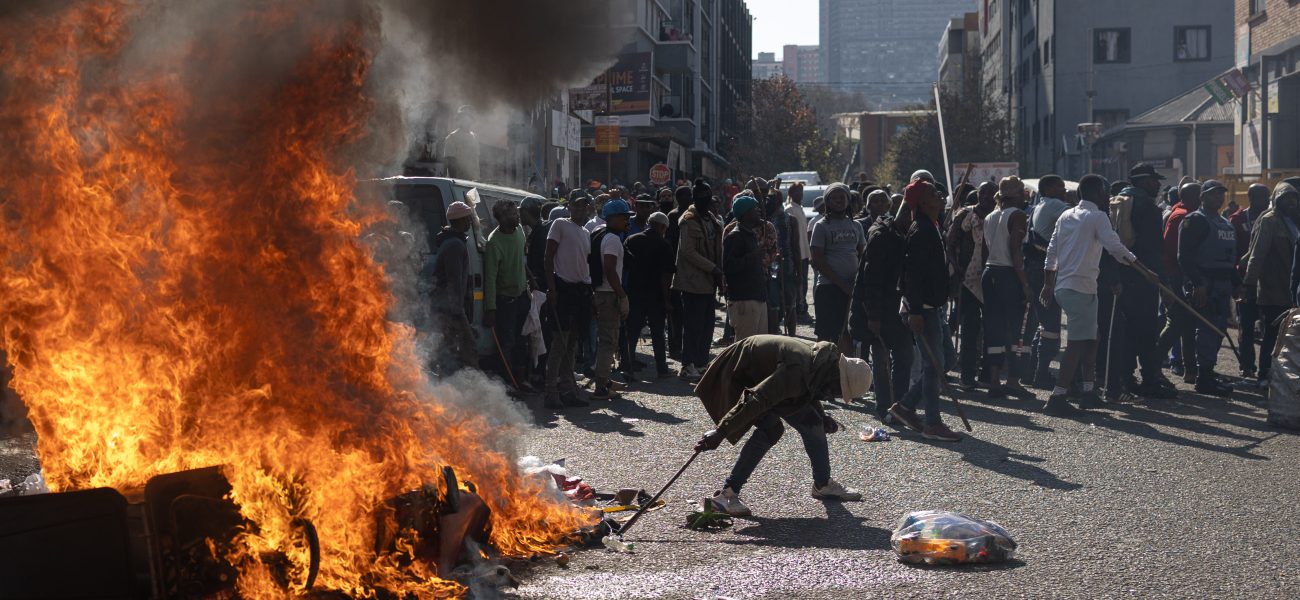
The recent crackdowns are brutal proof of that, cementing an unsettling trend. Authorities swept through various informal settlements and bustling commercial hubs this past week, hauling in more than 900 individuals tied to what they’ve labeled ‘anti-immigrant demonstrations.’ But make no mistake, ‘demonstrations’ often sugarcoats what amounts to aggressive mob action, sometimes looting, against perceived foreign businesses and residents. It’s ugly. And it cuts deep into the fabric of a country that once inspired the world with its promise of a more equitable future.
Police spokespersons are quick to tout the arrests as a win for law — and order. But behind the headline numbers, critics argue it’s merely a symptom of a much larger, unresolved crisis. The targets? Often working-class immigrants from neighboring Zimbabwe, Mozambique, — and Nigeria. But they’re also shopkeepers from Bangladesh or Pakistan—folks just trying to carve out a living in an economy that can’t seem to provide for its own, let alone those who’ve traveled miles for a slice of what was once considered the African dream.
“This violence against our brothers and sisters from across Africa—and indeed, from further afield—does a grave disservice to the memory of our struggle,” remarked Lirandzo Mthembu, spokesperson for the Presidency, her tone carefully modulated for international consumption. “It’s a betrayal of the values Nelson Mandela fought for. We can’t build a prosperous nation on the back of hate.” A familiar sentiment, yet one that seems to ring increasingly hollow in the townships where livelihoods vanish in a puff of smoke and accusation. And the truth is, the rhetoric often isn’t matching the reality on the ground.
The economic headwinds are undeniable. South Africa’s unemployment rate stubbornly hovered around 32.6% in the first quarter of 2024, according to Stats SA — an official statistic that provides stark context for the desperation fueling these movements. That’s an awful lot of idle hands, an awful lot of frayed tempers, and an awful lot of people looking for someone to blame. Migrants, always an easy target, invariably fit the bill. They’re convenient scapegoats for deeper systemic failures.
“They talk about a ‘South Africa First’ policy, but it often sounds more like ‘South Africa only‘,” observed Dr. Amina Khan, a human rights advocate with the South African Centre for Migration. She wasn’t mincing words. “These aren’t economic opportunists stealing jobs; they’re human beings caught in cycles of desperation, seeking dignity. And frankly, this policy response feels more like an abdication of responsibility than a solution.” Dr. Khan makes a valid point: chasing shadows does little to fix the underlying rot. Because the problems are homegrown, regardless of how easy it’s to point fingers elsewhere.
📄 POLICY WIRE WHITEPAPER PUBLISHED: PAKISTAN'S NATIONAL SECURITY POLICY PRIORITIES
👉 READ BY CLICKING HEREThe current government, beleaguered by corruption scandals and persistent service delivery failures, seems to be struggling for a coherent response. Condemnation from on high is standard operating procedure, but tangible, long-term strategies for integrating migrants or, indeed, revitalizing the domestic economy are less obvious. Some might argue that populist politicians subtly, or not so subtly, fan the flames of anti-immigrant sentiment when it suits them — a disturbing echo of nationalist movements seen globally, and a worrying trend for any democratic state. The politics of public opinion are a thorny, unpredictable beast.
What This Means
The escalating anti-immigrant actions in South Africa are more than just isolated incidents; they’re symptomatic of profound national distress with significant implications. Politically, the government walks a tightrope, attempting to appease an increasingly frustrated local populace while upholding its constitutional and international obligations. Failing to address the root causes of xenophobia—such as economic disparity, lack of opportunities, and perceived governmental indifference—could severely destabilize the nation, impacting social cohesion and potentially leading to more widespread civil unrest. Economically, these periodic eruptions deter foreign investment and damage South Africa’s standing as a regional powerhouse, an image already dented by energy crises and logistics nightmares. This isn’t just about lost goodwill; it’s about tangible financial consequences.
Regionally, the situation strains relations with neighboring countries whose citizens are often targeted. For nations like Zimbabwe or Mozambique, dealing with large repatriations or the harassment of their citizens in South Africa creates diplomatic friction. And for the broader Muslim world, observing the plight of South Asian and African Muslim communities caught in these attacks often leads to questions about pan-African solidarity and human rights. It’s a reputational hit for a country that prides itself on human rights leadership. Ultimately, until South Africa tackles its profound internal challenges with sincerity and foresight—rather than allowing citizens to scapegoat those even more vulnerable—the promise of a Rainbow Nation will continue to fade, one violent incident at a time.