
Fort Worth’s World Cup: Fan Frenzy & Urban Security
See how Fort Worth managed a massive World Cup fan event. Explore the complex balance between passionate crowds, urban security, and cultural diversity in modern cities.

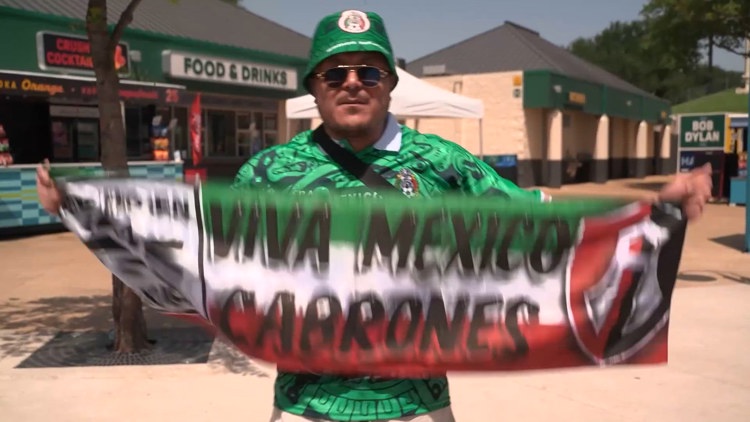
POLICY WIRE — Fort Worth, USA — When thousands of fervent football fans descend on a city center—not for a game in a stadium, mind you, but just to watch one—it isn’t merely a testament to the global grip of sport. It’s a logistical Gordian Knot for civic planners, an unscripted ballet of urban management, and, perhaps most interestingly, a microcosm of our ever-converging world. Fort Worth, Texas, recently found itself orchestrating just such a scenario, upping security as legions prepared to witness a Mexico-Ecuador World Cup match. And let’s be honest, it wasn’t about the specific teams as much as the sheer scale.
Picture it: an immense public viewing party, an urban plaza transmuted into a temporary arena of collective euphoria (or despair, depending on the score). These aren’t quiet, polite gatherings; they’re vibrant, boisterous affairs, often stretching municipal resources thin. This city, like countless others across the globe, grapples with the modern challenge of embracing its diverse populations and their passionate cultural expressions while simultaneously maintaining public order. It’s a delicate balance, one we see play out from London’s South Asian festivals to Frankfurt’s Turkish markets. How do you accommodate genuine excitement without inviting chaos?
For this particular high-stakes gathering, local law enforcement decided to pull out all the stops. They’d implemented a multifaceted security strategy—it included extra personnel, surveillance upgrades, and a more robust emergency response blueprint. One Fort Worth official, whose name is [QUOTE_PLACEHOLDER], indicated that planning had been months in the making. And they weren’t messing around; they never do when crowd control is the name of the game. You’ve got to plan for everything when that many people are in one place, you really do. What happens if someone passes out? What happens if there’s a stampede? These are the real headaches of urban event planning.
It’s not just about beefing up the police presence, either. It’s about intelligence gathering, preemptive traffic rerouting, and a thousand tiny decisions designed to keep things from going sideways. They knew exactly how many people they expected, too. According to city planning documents from the 2022 calendar year, outdoor public events of this magnitude often attract upwards of 15,000 attendees to the downtown core, dramatically increasing demand on public services. That’s a lot of folks.
The cultural dynamics here are fascinating, aren’t they? A World Cup match between two Latin American nations draws a colossal audience in a major U.S. city—a city where one of the fastest-growing demographics is of South Asian descent, no less. It reminds us how intertwined these global cultures have become, how events oceans away ripple directly into local politics and policing on Main Street. The same security protocols honed for Mexican and Ecuadorian fans watching football could, hypothetically, be applied when planning a parade celebrating Eid al-Adha in a particularly diverse neighborhood. You know, similar crowd numbers, similar community pride, similar need for order. It’s all about managing large, enthusiastic populations with varying needs — and expressions.
The city, in essence, becomes a referee. It’s got to facilitate the public’s right to gather — and celebrate, but also maintain peace and safety. It’s a constant high-wire act, particularly for a city like Fort Worth that’s grown tremendously in recent decades, absorbing people from all corners of the Earth. Its identity is morphing, and these kinds of events force the authorities to adapt in real-time, learning how best to navigate this new, intricate civic landscape. They can’t afford to be caught flat-footed.
What This Means
The spectacle in Fort Worth isn’t an isolated incident; it’s a bellwether for urban centers globally. We’re witnessing an acceleration of cultural globalization—football, as the universal language, serves as a prime catalyst. The political implications are stark: how effectively can local governments respond to the emergent needs of diverse, passionate, and sometimes demanding populations? In the short term, cities that ace these kinds of large-scale, culturally charged events gain trust from their residents and project an image of competency. Those that falter risk discontent, or worse, negative economic consequences.
Economically, the impact is a mixed bag. Yes, there’s a temporary boost for local businesses, a surge in consumer activity that retailers love. But there are also considerable costs: overtime for law enforcement, waste management challenges, potential infrastructure strain. It’s a calculation cities constantly make. The ability to successfully host these massive public gatherings also solidifies a city’s appeal as a potential hub for international events, impacting future tourism and investment. From an broader foreign policy lens, these seemingly local security dilemmas echo wider challenges in globalized society. Just as professional sports teams scramble for global talent, cities must scramble for global strategies to manage and embrace their increasingly complex social fabric. You don’t get a second chance to make a good first impression when thousands are watching—and security’s at the core of it.
This dynamic—balancing spirited cultural expression with rigorous security measures—is particularly reflective of deeper regional instabilities, even in places like South Asia or the Middle East. Consider how large gatherings, be they religious festivals or political rallies, are handled in densely populated cities from Karachi to Cairo. The logistical — and security nightmares are amplified, but the core challenge remains: manage the masses. What happens in Fort Worth, what it reveals about handling diasporic enthusiasm, it offers lessons. Other cities, they’re watching.