


Congo’s Ebola Crisis: Systemic Failure & Global Warning
Congo's expanding Ebola outbreak reveals systemic governance failures, aid fatigue, and regional instability. Explore its global implications and warnings.

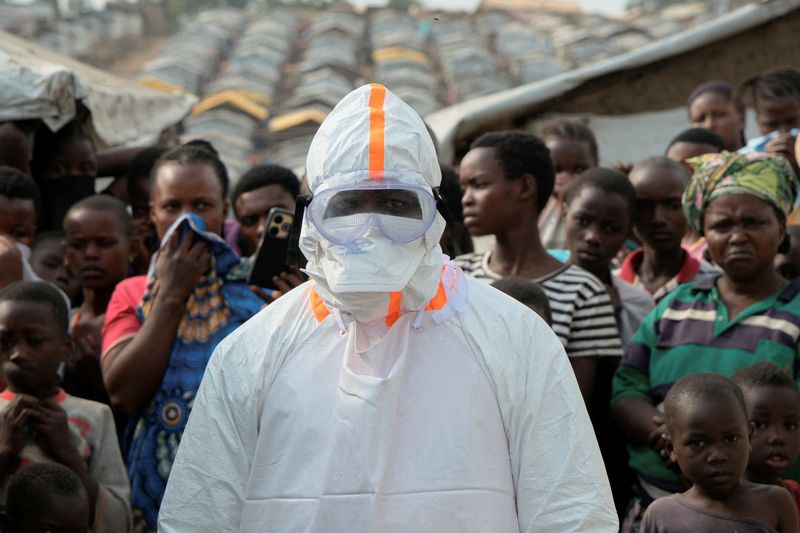
POLICY WIRE — Kinshasa, DRC — For the Democratic Republic of Congo, a new plague isn’t just news; it’s practically a seasonal recurrence, like an unwanted, insidious monsoon. While international headlines often grasp at dramatic political shifts or economic gyrations, here on the ground, life carries on under a perennial pall. It’s against this backdrop of what many now call crise fatigue that fresh whispers – not entirely unexpected, sadly – suggest a potential expansion of the latest Ebola virus disease outbreak to two previously unaffected provinces. It’s not just a medical problem. It never is.
Officials, reportedly grappling with resource strain and local resistance (a familiar script), are wrestling with the possibility of the disease seeping into regions that have, until now, dodged the harshest impacts. One official described the situation, under strict anonymity for obvious reasons, as [QUOTE_PLACEHOLDER], indicating a serious operational hurdle. And that’s where the real story lives: in the messy, unglamorous collision of disease, underfunded governance, and a population profoundly skeptical of both.
It seems the initial containment zones are becoming more porous. What started as an alarming cluster now threatens to morph into a much larger, sprawling headache for health workers, who frankly, have already seen it all—and then some. One internal source from the Ministry of Health, requesting absolute discretion, conveyed simply, [QUOTE_PLACEHOLDER]. That’s the chilling part. Because if the early warnings aren’t heeded, this isn’t just about viral spread; it’s about systemic failure amplified by indifference.
This prospective expansion isn’t just a matter of epidemiological graphs. It complicates the delicate geopolitical dance, stretching resources thin in an already turbulent region. Countries like Pakistan, for instance, which themselves grapple with massive populations and often-underfunded public health infrastructure, watch events in Africa with a keen, albeit quiet, concern. The global south shares more than just latitude; they share a vulnerability to these types of infectious disease outbreaks, and the attendant political and economic instability they bring.
But how do you mobilize fresh international aid when donor nations are frankly, a bit over it? You don’t, often. Data from the World Health Organization shows that funding appeals for infectious disease outbreaks in Africa consistently fall short by an average of 40% (WHO 2023 Report on Health Emergencies Funding). It’s not for lack of trying from organizations, but more of a cold hard reality check on humanitarian priorities elsewhere. It becomes an impossible ask, pushing the Congolese health apparatus to the absolute brink, requiring them to manage an exponential problem with linearly shrinking support.
This isn’t to say nothing is being done. The immediate focus remains, as ever, on contact tracing and vaccination campaigns—though they’re hindered by logistical nightmares (think roads that aren’t really roads) and those aforementioned pockets of community resistance. Sometimes it’s fear. Sometimes it’s disinformation. But often, it’s just a raw, festering distrust of authority after decades of being left to their own devices (or worse).
Casual observers often forget: outbreaks like Ebola don’t happen in a vacuum. They thrive in environments stressed by conflict, internal displacement, — and institutional fragility. So, when the virus threatens new territory, it’s not just a matter of viral load; it’s a terrifying commentary on governance, human rights, and the brutal truth of access to basic public services.
The very phrase [QUOTE_PLACEHOLDER], from one aid worker, sums up the overwhelming challenge. And it doesn’t get easier from here. The dry season approaches—potentially good for some movement, bad for others. All eyes will be watching to see if these tentative, frightening signals become full-blown alarms.
What This Means
This potential spread of Ebola isn’t just another unfortunate health headline; it carries significant political and economic ripples. Politically, it signals a deeper fragility within the DRC’s state apparatus. If authorities struggle to contain the virus in established hotspots, their credibility wanes further—both domestically and internationally. This can exacerbate existing political tensions, potentially fueling local resentment against central government perceived as ineffective or corrupt. Aid fatigue is very real; donors, distracted by newer global crises or domestic priorities, are less likely to respond with the urgency seen in initial outbreaks.
Economically, new outbreaks disrupt fledgling local economies. Trade routes become hazardous, markets close, and agricultural output suffers, deepening poverty cycles in regions already among the world’s most vulnerable. Such widespread instability, even if localized, inevitably catches the attention of global financial institutions and potential investors, casting a long shadow over the nation’s developmental prospects. This also makes the DRC a more complicated, riskier proposition for any kind of external engagement. For South Asia and the Muslim world, regions often plagued by similar governance deficits and public health challenges, Congo’s struggle serves as a grim template. It’s a constant reminder of how easily diseases can exploit systemic weaknesses, how critical investment in resilient health infrastructure is, and how quickly local contingencies can become global crises if left unchecked. The price of perpetuity, it turns out, applies to disease containment just as much as to power.