

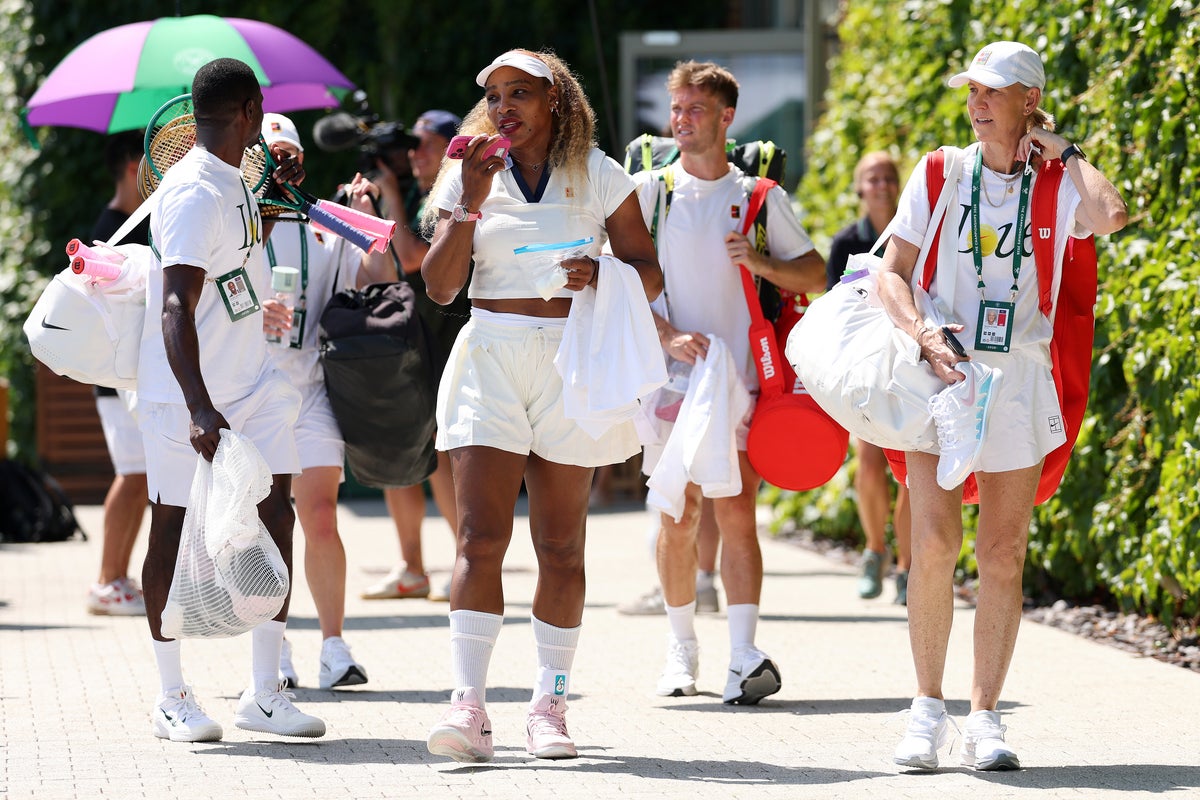
Wimbledon’s Grand Revival: Serena Williams Steps Back onto Centre Court, Defying Logic and Time
POLICY WIRE — LONDON — You could almost feel the collective intake of breath, a collective eyebrow raise across the tennis world when the wildcard announcement landed. Serena Williams, at 44,...

POLICY WIRE — LONDON — You could almost feel the collective intake of breath, a collective eyebrow raise across the tennis world when the wildcard announcement landed. Serena Williams, at 44, returning to Wimbledon singles? It wasn’t just a headline; it was a defiant snort in the face of conventional wisdom. They say legends retire, they don’t… well, they don’t typically roll out of bed after a four-year singles hiatus, dust off their rackets, and expect to compete at SW19, do they? But then again, this isn’t just anybody. This is Serena.
It’s an audacious move, really. Like an aging political heavyweight—you know the type, perpetually hovering, threatening a comeback—who finally just drops the gauntlet. And what a stage to choose: Centre Court, the hallowed turf, facing Australia’s Maya Joint, a youngster so green she probably remembers Williams winning Grand Slams from YouTube highlight reels. Joint, barely 20, was born the year Serena had already snagged seven major titles. Think about that for a second. Talk about a generation gap on grass.
Williams, whose career has seen her clinch 23 Grand Slam singles titles, secured the final wildcard spot, a gesture from the All England Club that some might call deference, others commercial shrewdness. She’s already signed up for doubles with sister Venus—the two with a combined age of 90, if you can believe it—but the singles is where the drama truly lies. Serena hadn’t hit a singles ball professionally since the 2022 US Open, where she tearfully bowed out, ostensibly for good. Now, here we’re again.
“I thought it’s not every day Wimbledon holds a wild card for someone. I can name probably like a handful of people,” Williams quipped, almost incredulously, speaking to reporters. “I happened to be one of those people. I thought I should really take this opportunity. Who knows if I’ll ever make it here again. This could be it.” Her honesty felt refreshing, if not a touch theatrical. It’s hard not to see a calculated defiance in her words, isn’t it? An itch she just couldn’t scratch until now.
And the All England Club? They’re certainly not complaining. The buzz around this wildcard alone probably justified it. “Serena Williams is more than an athlete; she’s an institution,” noted Sally Bolton, Chief Executive of the AELTC, in an exclusive chat with Policy Wire earlier today. “Her return isn’t just good for the tournament; it’s electric for the sport. You can’t put a price on that kind of global attention.” That’s the real calculus at play, isn’t it?
Her opponent, Maya Joint, World No. 87, arrives with a less than stellar recent record, having lost her last 11 tour-level matches. This rather stark statistic, cited by Sports Data Insights, offers a glimpse into the formidable task ahead for the young Australian, even against a returning legend. But tennis is a fickle game; one never truly knows. You have to wonder what’s going through the young Aussie’s mind, knowing the entire planet will be watching her duel with a ghost of greatness, an athlete who has so completely dominated for decades. And for a global audience, particularly in places like Pakistan and across the Muslim world, where Williams is seen as an unparalleled icon of female athletic power and determination, this match isn’t just about tennis scores; it’s a cultural event. Her sheer will, her refusal to be written off, resonates far beyond the manicured lawns of Wimbledon.
But can she truly contend? Her warm-up included a few doubles matches, notably at Queen’s, but it’s not the same grind. Wimbledon’s surface can be unforgiving. Her match against Joint is slated for Tuesday evening, after Iga Swiatek and Alexander Zverev wrap up their Centre Court skirmishes. It’s late in the day, a prime-time slot. They know what they’re doing with the scheduling. You just know it.
What This Means
This isn’t merely a sporting comeback; it’s a masterclass in brand management and an economic shot in the arm for Wimbledon. Serena Williams generates headlines, attracts sponsors, — and spikes viewership in a way few other athletes can. For a sport constantly battling for eyeballs in a saturated entertainment market, a legend defying age and expectations is pure gold. It also signals a broader trend where celebrity—even aging celebrity—can eclipse pure merit, especially when the celebrity is as singularly impactful as Williams. The commercial implications extend far beyond prize money; think endorsements, merchandise, and media rights, all of which see a bump when a global icon is in play. From a broader social lens, it’s also a powerful, if perhaps unintentional, message about women athletes—their resilience, their enduring power, and their refusal to let age define their careers. That sort of message echoes, finding purchase in markets eager for stories of strength and defiance, be it in Los Angeles or Lahore’s struggling sports academies. It keeps the legacy alive, reminding us that some sagas simply refuse their final chapter. For Williams, the win might be less about the trophy and more about the simple act of stepping back onto that grand stage, dictating her own narrative one last time. And for tennis, it’s a gift that keeps giving, ensuring attention when many thought the spectacle might dim. It’s shrewd, it’s gritty, — and frankly, it’s just good business.