
Supreme Court Brushes Aside Trump’s Bid to Upend Birthright Citizenship, Upholds 14th Amendment
POLICY WIRE — WASHINGTON, D.C. — The tremors of presidential fury, once capable of rattling institutions, barely registered a tremor Tuesday morning at the nation’s highest judicial perch. For...

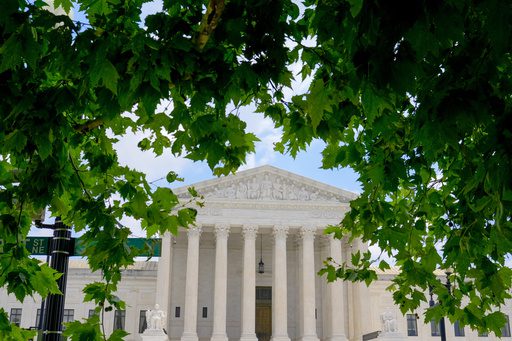
POLICY WIRE — WASHINGTON, D.C. — The tremors of presidential fury, once capable of rattling institutions, barely registered a tremor Tuesday morning at the nation’s highest judicial perch. For all the bluster and social media tirades – the ‘dumb judges’ taunts and the claims of global birthing schemes – the U.S. Supreme Court quietly, and predictably, drove a stake through the heart of Donald Trump’s audacious executive order aimed at dismantling birthright citizenship.
It wasn’t a shouting match; it was the slow, deliberate grind of legal precedent asserting its dominion over executive fiat. Because what President Trump had attempted to undo, this Court ultimately decided, was settled law. You see, the whole hullabaloo, the idea that a president could just sign away a fundamental right woven into the very fabric of American nationhood, never really stood a chance. Not in this chamber, anyway. And that’s saying something for a court packed with his own conservative picks.
The nine justices, delivering their verdict on a challenge to Trump’s order, effectively affirmed that anyone born on U.S. soil, with a few well-understood exceptions (think foreign diplomats, not your average tourist), automatically becomes a citizen. “Citizenship, then and now, was the right to have rights—to freely participate in our political community,” Chief Justice John Roberts penned for the court. He went on to cite congressional debate from after the Civil War, stating, “The Framers of the Fourteenth Amendment extended that promise to ‘every free-born person in this land.’ We keep that promise today.” A terse, unadorned statement that speaks volumes about institutional resilience.
The executive order, signed on the first day of his second term, was a direct assault on an understanding of the 14th Amendment that has stood for over a century, dating back to the post-Civil War era when Black Americans, recently emancipated, needed a firm guarantee of their place in the Union. Trump’s vision would have upended that. It painted a picture of foreign hordes exploiting a loophole, specifically targeting what he’d label as ‘birth tourism’—a narrative often used to demonize new immigrants or visitors from countries like Pakistan, seeking opportunities or medical care in America, inadvertently casting shadows on their aspirations here.
But the Constitution, it seems, isn’t prone to knee-jerk policy tweaks. His administration had argued that children of non-citizens weren’t truly “subject to the jurisdiction” of the United States, therefore weren’t entitled to citizenship. It was a novel interpretation, to put it mildly, designed to circumvent the 1898 *Wong Kim Ark* ruling, which confirmed the U.S.-born child of Chinese nationals as a citizen. The Court didn’t buy it, not for a second.
For someone who stacked the bench with three of his own appointees, this ruling surely lands like a fresh paper cut on his legacy. He’s already lambasted justices who ruled against him, calling them unpatriotic after they struck down certain tariffs. But this one feels a bit different. Because this wasn’t some minor administrative quibble; it cut to the foundational premise of American identity.
An impassioned immigration attorney, Maria Rodriguez, told Policy Wire, “This isn’t just a victory for immigrants; it’s a victory for the very idea of America. We’re not a nation of second-class residents. Our birthright is sacred, a promise written in the blood of our history. Trying to erase it was nothing short of historical malpractice.” And that sentiment, many argue, encapsulates the heart of the matter.
Consider the scope: More than one-quarter of a million babies born in the U.S. each year would have been affected by this executive order, according to research by the Migration Policy Institute and Pennsylvania State University’s Population Research Institute. That’s a staggering number of families — and futures left in legal limbo had this presidential gambit succeeded. It wasn’t just about undocumented immigrants, either; it would have also ensnared legal residents, students, and temporary workers.
But then, presidential power has its limits, even when Roberts’s Court has otherwise shown a penchant for flexing executive muscle in certain areas. Sometimes, the oldest documents still hold the most sway.
What This Means
This ruling is a significant ideological setback for the hardline wing of the Republican party, which has long agitated for an end to birthright citizenship. Politically, it reasserts the judicial branch’s role as a check on executive overreach, particularly when that overreach attempts to reinterpret core constitutional tenets. It underscores that even a president with an ideologically aligned court cannot simply command away established legal principles, especially those anchored in fundamental rights. Economically, maintaining birthright citizenship prevents the creation of a vast underclass of non-citizens born on U.S. soil, avoiding complex societal — and administrative challenges that would inevitably arise from such a distinction. It simplifies identity, streamlines social services, and crucially, maintains a broad tax base rather than segmenting the population into different tiers of national belonging. For families from South Asia or elsewhere, who might have children while temporarily in the U.S. for work or education, this decision offers stability, affirming their children’s automatic, unequivocal status as American citizens. It closes a deeply destabilizing door the Trump administration tried to force open, thereby solidifying one of America’s most long-standing and expansive promises.