

Supreme Court Clears Campaign Cash Highway: A Win for Money, a Test for Democracy
POLICY WIRE — WASHINGTON, D.C. — They’ve done it again, haven’t they? America’s highest court, with all its marbled gravity and historical heft, has essentially declared open season on a...

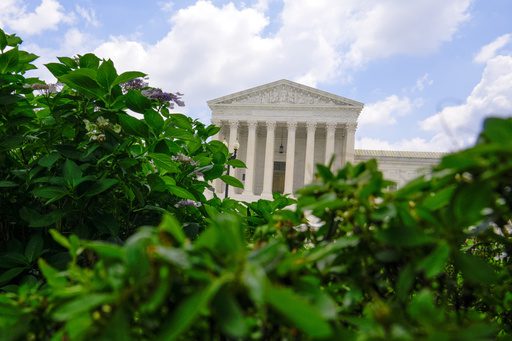
POLICY WIRE — WASHINGTON, D.C. — They’ve done it again, haven’t they? America’s highest court, with all its marbled gravity and historical heft, has essentially declared open season on a foundational piece of campaign finance law. It wasn’t some arcane regulation they tinkered with; no, the Supreme Court just tore down decades-old limits on what political parties can spend coordinating with their chosen candidates.
It’s a funny old world, this democracy business. Money flows. It always has. But we, or at least our lawmakers a half-century ago, thought maybe we ought to put some bumpers up. You know, to keep the game from getting too wild. Tuesday’s decision? It effectively signals those bumpers are now purely ornamental. But it’s not as if anyone was surprised, especially with a Supreme Court that’s grown increasingly comfortable seeing campaign finance through the lens of free speech — usually, the speech of very well-heeled donors and organizations.
This ruling, driven by a Republican lawsuit that featured Vice President JD Vance as a prominent advocate, is yet another echo of the Court’s 2010 *Citizens United* earthquake, which allowed for unlimited independent expenditures in federal elections. Before this, the notion was pretty simple: prevent a few rich folks from just funneling unlimited sums through a party directly to their chosen candidate, thus bypassing individual contribution caps. A practical safeguard, or so it seemed back in 2001, when the Supreme Court itself actually upheld these very limits.
And now? Gone. Wiped away. The legal challenge, cooked up by Republican committees for House and Senate candidates alongside Vance—then a senator from Ohio—and former Representative Steve Chabot in 2022, found a friendly ear. More than that, it found a powerful ally in the Federal Election Commission (FEC) which, under President Donald Trump’s second term, decided to abandon its statutory duty and join the Republicans in urging the law’s demise. Quite the reversal, that. A government body literally designed to enforce election laws actively helping dismantle one.
Of course, Democrats pleaded with the Court to keep the old law. Not out of pure ideological conviction, perhaps, but because even they recognize the perverse dance that’s been happening: parties, hamstrung by coordinated spending caps, trying to compete against a torrent of unlimited outside group spending. This ruling, in theory, ‘levels’ that field. “Every time we interfere with the congressional design, we make matters worse,” Justice Sonia Sotomayor, a veteran dissenter in these money-in-politics cases, observed during oral arguments. A stark contrast to Justice Samuel Alito, a key voice in the *Citizens United* majority, who rather dryly labeled that prior ruling “much maligned, I think unfairly maligned.” He contended this decision simply expanded spending rights previously enjoyed by media companies. Funny how those definitions get stretched, isn’t it?
What This Means
Look, the practical implications are significant. We’re talking about more cash, more direct spending power for political parties, enabling them to essentially become super PACs in everything but name. Don’t underestimate this. Political parties—the institutions many have dismissed as fading relics—just got a serious shot in the arm. Their ability to strategize and execute coordinated campaigns, right down to micro-targeting and ad buys, is now dramatically enhanced. The distinction between ‘party’ spending — and ‘candidate’ spending just got blurrier than an old VHS tape.
Politically, this solidifies the growing trend where national campaigns become less about local grit and more about a moneyed arms race. The small-dollar donor, while still important for optics and enthusiasm, will now contend with party war chests swollen by enormous contributions aimed squarely at direct electoral outcomes. We’re already seeing coordinated party spending in Senate races vary wildly, from roughly $127,200 in less populous states to nearly $4 million in a place like California, as per recent FEC data. Imagine those figures now, sans limits. It’s not just about winning an election; it’s about shaping the entire landscape, about control over the narrative before it even starts. The game isn’t changing, it’s just getting exponentially more expensive, reinforcing the power of existing party structures and their biggest benefactors.
Economically? More money sloshing into political advertising means less money doing…well, anything else. For campaign consultants, media outlets, — and data firms, it’s a boom. But for the average citizen, watching their democracy increasingly resemble a high-stakes auction, it raises questions of legitimate representation. And abroad, in places like Pakistan, where nascent democracies often look to established systems for cues, such decisions about money’s role in politics send a potent, if complicated, message. They’re struggling with their own electoral reforms, with battling perceptions of outside influence and maintaining trust. What do they make of a system that so eagerly embraces unlimited money? It doesn’t exactly project an image of pristine electoral purity, does it? The geopolitical scramble for control, whether over resources or ideas, increasingly looks a lot like who’s got the deepest pockets and the most pliable laws.
It’s all part of the dance, I suppose. The never-ending push-and-pull between idealism and pragmatism, between the desire for an equitable playing field and the cold, hard realities of power and cash. But for now, cash just took a huge step forward. And our election landscape? It just got a whole lot wilder. Don’t pretend you didn’t see this coming.