
Golden Handcuffs and Bombshells: Monaco’s Unsettling Display of Peril
POLICY WIRE — Monte Carlo, Monaco — It wasn’t the champagne popping or the roar of a Formula 1 engine that disturbed Monaco’s usual placid extravagance this week. No, it was the more...

POLICY WIRE — Monte Carlo, Monaco — It wasn’t the champagne popping or the roar of a Formula 1 engine that disturbed Monaco’s usual placid extravagance this week. No, it was the more prosaic, yet profoundly unsettling, detonation of a parcel bomb that rattled the gilded cages of one of the world’s most exclusive enclaves.
A Ukrainian business magnate, name withheld pending further investigation—let’s just call him Mr. B.—found himself on the wrong end of this explosive package. His injuries, they say, were thankfully not life-threatening. But imagine. In a jurisdiction where the average resident’s net worth often begins in the eight figures, where surveillance cameras blanket nearly every palm-lined avenue, an attack so brazen? It jars. [QUOTE_PLACEHOLDER]
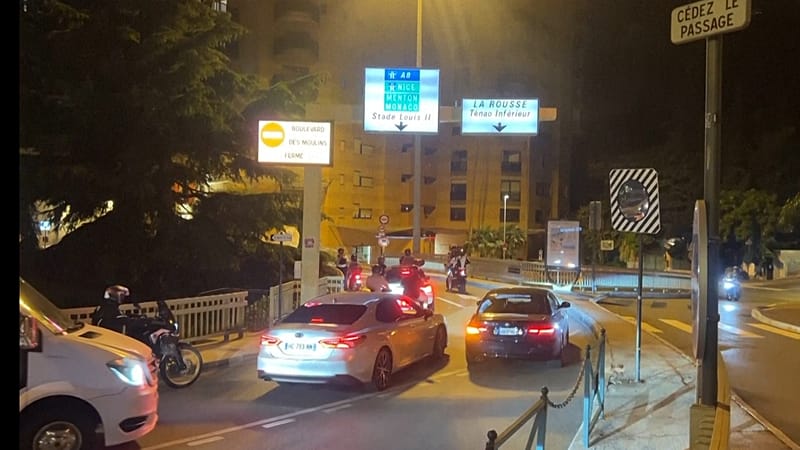
French authorities are reportedly hunting a suspect, said to have bolted over the border into France almost immediately after the incident. That’s a neat trick, isn’t it? Slip across one of the planet’s smallest borders, almost laughably porous at points for the wrong kind of visitor, and vanish into the labyrinthine urban sprawl beyond. This isn’t just a local spat; it reeks of something bigger, something that makes Monaco’s fabled safety look—well, a little flimsy around the edges. It’s a stark reminder that even in the playgrounds of the ultra-wealthy, geopolitical tremors have a nasty habit of making their way onto the impeccably manicured lawns.
We don’t know much about Mr. B.’s exact business dealings or his enemies. But it’s no secret that a significant portion of Ukraine’s pre-war economic activity, often in sectors like energy and metals, created fortunes. And where there are fortunes, there are sometimes disputes. He’s reportedly an oil and gas mogul, his name swirling in circles familiar with the opaque dealings that often characterize Eastern European financial landscapes. Monaco’s magnetism for high-net-worth individuals, including a fair number from post-Soviet states, isn’t accidental. Its low tax regime and perception of stability draw those looking for both sanctuary and discretion—though sometimes, they bring their problems with them.
But the irony, my friends, isn’t lost. Monaco boasts some of the world’s strictest security protocols. You’d expect nothing less from a place whose entire economy relies on keeping its hyper-rich residents feeling untouchable. The Principality of Monaco allocates an astonishingly high percentage of its state budget—around 13% of its total budget, according to 2023 figures from the Princely Government—to public order and security, a sum dwarfing many larger nations on a per capita basis. Yet here we’re. It makes you wonder what kind of security premium you’re actually paying for, doesn’t it, when a mail-delivered explosive device still finds its target?
And, let’s face it, this incident sends chills far beyond the Riviera. Imagine you’re a high-net-worth individual with ties to less stable regions, say, one of Pakistan’s prominent industrialist families, perhaps with holdings in energy or real estate, looking for a secure place to base part of your operations or family. Places like Monaco or Dubai become appealing precisely because they project an image of invincibility to outside threats. This attack, however, punctures that illusion, suggesting that the long arm of dispute, retribution, or plain old criminal enterprise stretches further than the principality’s highly paid security forces can sometimes reach.
But a potential suspect, now likely ensconced somewhere beyond French borders, underscores the transnational headache this presents. For Monaco, a micro-state, any international incident creates disproportionate scrutiny. They’re effectively outsourcing their internal security drama to their larger neighbor. You couldn’t write this stuff. It feels almost like a plot from a particularly gritty espionage novel, less Monaco and more Marseille, or even a dark corner of Islamabad. Someone obviously knew what they were doing, precise enough to target, yet bold enough to believe they’d get away. That’s worrying for a jurisdiction that sells serenity at a premium.
What This Means
This parcel bomb isn’t just a minor blip; it’s a stark reality check for Monaco and the larger ecosystem of international wealth. First, it throws into question the efficacy of ultra-high security models designed to protect the rich, particularly from adversaries who might leverage more unconventional methods. Wealth, it seems, isn’t always the ultimate shield against violence, especially when disputes spill across borders. Economically, while one incident won’t send the principality into a tailspin, a sustained perception of insecurity could make it less attractive to the very demographic it seeks to serve, impacting its property market and financial sector over time.
Politically, the implications extend to European cooperation on crime. The rapid border crossing highlights the enduring challenge of seamless law enforcement across sovereign nations. It’s a reminder that even Schengen-zone fluidity can be exploited for illicit purposes. For those from unstable regions, like parts of South Asia or the broader Muslim world—think families with businesses spanning continents, accustomed to navigating complex security concerns back home—Monaco represented a safe harbor. This event complicates that narrative, suggesting that ‘safe’ is relative and vigilance remains a global necessity, even for the most insulated. It’s not just a localized problem anymore; it’s an echo of the chaos these individuals often seek to escape, now resonating on Europe’s shores. Nobody’s truly beyond reach, are they? It’s a rude awakening for an international set who thought they’d bought absolute tranquility. Find out how other financial havens are struggling to maintain their luster in the face of shifting global dynamics by reading Silicon Iron Curtain: China’s Homegrown AI Stacks the Chips Against Global Titans. You can also explore more on global shifts at America’s Eroding Pride: A Nation Questions Its Foundational Myths.