


The Captain’s Retreat: Ben Stokes and the Relentless Price of Public Crowns
POLICY WIRE — London, England — It wasn’t the roar of the crowd, nor the dizzying euphoria of a series win, that truly defined the closing chapter of Ben Stokes’ international career. No, it...

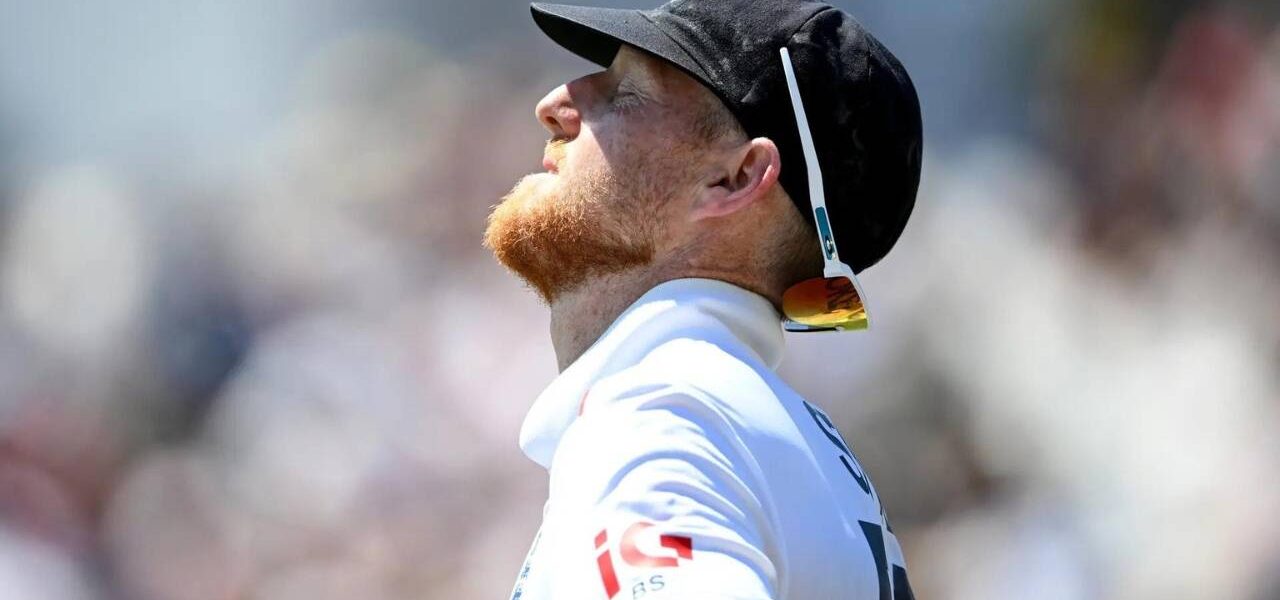
POLICY WIRE — London, England — It wasn’t the roar of the crowd, nor the dizzying euphoria of a series win, that truly defined the closing chapter of Ben Stokes’ international career. No, it was a quiet surrender—a concession to an invisible enemy, the relentless grind that slowly, surely, saps the spirit from even the most hardened competitors. He stood on the precipice, gazing out as England tumbled to defeat against New Zealand, — and pulled the pin. He’s done, he said. Done, mate. But what does ‘done’ really look like for a figure so accustomed to perpetual motion?
It’s not just a sport story, not anymore. Because the arc of the athlete, especially one draped in the Union Jack, mirrors the trials of any leader under intense public scrutiny. Stokes, once the face of English cricketing defiance, articulated a chilling echo familiar to political figures worldwide: “everything has taken its toll.” He didn’t mince words. He wasn’t angling for sympathy—he was stating a fact, raw and unvarnished, about the ‘negative effects’ of wearing the captain’s armband. It’s a job, sure, but also a lifestyle, an identity, — and eventually, maybe, a cage.
The immediate trigger, we’re told, was a string of ‘difficult weeks.’ An incident involving a teammate, a London nightclub kerfuffle—allegations of contractual breaches, then an investigation. That sort of administrative headache, added to the physical demands of international sport, that’s enough to break most folks. But leadership, true leadership, isn’t about navigating the calm waters; it’s about weathering the storms when the ship feels like it’s breaking apart, limb by limb. And often, these high-profile figures don’t get a break from the cacophony.
“We’ve seen this time and again, whether it’s a politician facing a media frenzy or a celebrity under the paparazzo’s lens,” observed Sarah Atherton, a seasoned political commentator and author of ‘The Public Persona Paradox.’ “The expectation is constant perfection, infallible judgement. When they falter, it’s a national scandal, not a human error. It’s draining, and honestly, the system itself seems designed to exhaust.” Atherton’s analysis, delivered with her characteristic clipped efficiency, highlights the often-unseen strain that comes with the gilded cage of fame.
And let’s be frank, the demands are immense. The England Cricket Board (ECB), through its chairman Martin Darlow, recently (and somewhat defensively) stated: “Player welfare is absolutely paramount, but the demands on our elite athletes are unprecedented. It’s a fine line to walk, balancing ambition with preservation.” Darlow’s statement, released after the storm, struck many as an attempt to project empathy while simultaneously acknowledging the inherent brutality of modern professional sport. Because it’s a machine, a multi-billion dollar juggernaut that cares little for the individual cogs until they grind to a halt. In South Asia, where cricket often transcends sport and approaches religious devotion—think the fervor surrounding a Pakistan Super League (PSL) match or India’s national team—the burden is perhaps even heavier. Players aren’t just athletes; they’re symbols, icons whose every move is dissected, often to a degree that makes British media scrutiny seem tame by comparison.
A recent survey by the International Cricket Council revealed that over 30% of professional cricketers worldwide reported experiencing significant mental health challenges at some point in their careers, primarily linked to performance pressure and public expectation. That’s a stark figure, a clear data point proving this isn’t just Stokes’ personal cross to bear. It’s systemic.
His departure isn’t merely the end of an era for English cricket; it’s a sobering reminder about the unsustainable demands placed on those who shoulder the burdens of public office—whether on the sporting field or in the hallowed halls of government. He stepped back from the relentless spotlight. It’s not about lacking grit. It’s about preserving a shred of one’s soul, isn’t it?
What This Means
Stokes’s decision offers a harsh reality check for institutions reliant on individual talent for their public face, be they sports organizations or political parties. It signals a growing, undeniable pushback against the ‘burnout culture’ that pervades high-performance environments. Economically, repeated, high-profile player exits due to mental fatigue could force sports governing bodies to re-evaluate their calendars, player welfare programs, and indeed, the financial models that drive them. Longer breaks might mean less broadcast revenue or fewer competitive series, but the alternative—a revolving door of talent exiting prematurely—could prove far more damaging to the brand and, ultimately, the bottom line. Politically, the parallels are stark: leaders are expected to maintain superhuman stamina, rarely permitted to show vulnerability. But the increasing candor of figures like Stokes, stepping away for personal well-being, chips away at this outdated ideal. It challenges the public’s perception of strength and, importantly, legitimizes prioritizing mental health even at the apex of one’s career. It forces us to ask: what’s the true cost of relentless expectation, and at what point does human capacity buckle under the weight of an endlessly demanding public gaze?