


Paraguay’s Day Off: A Public Holiday in the Face of Germany’s Unraveling Football Empire
POLICY WIRE — Asunción, Paraguay — Some nations declare a public holiday for elections, others for religious festivals or solemn remembrances of independence. But in Paraguay, a different kind of...

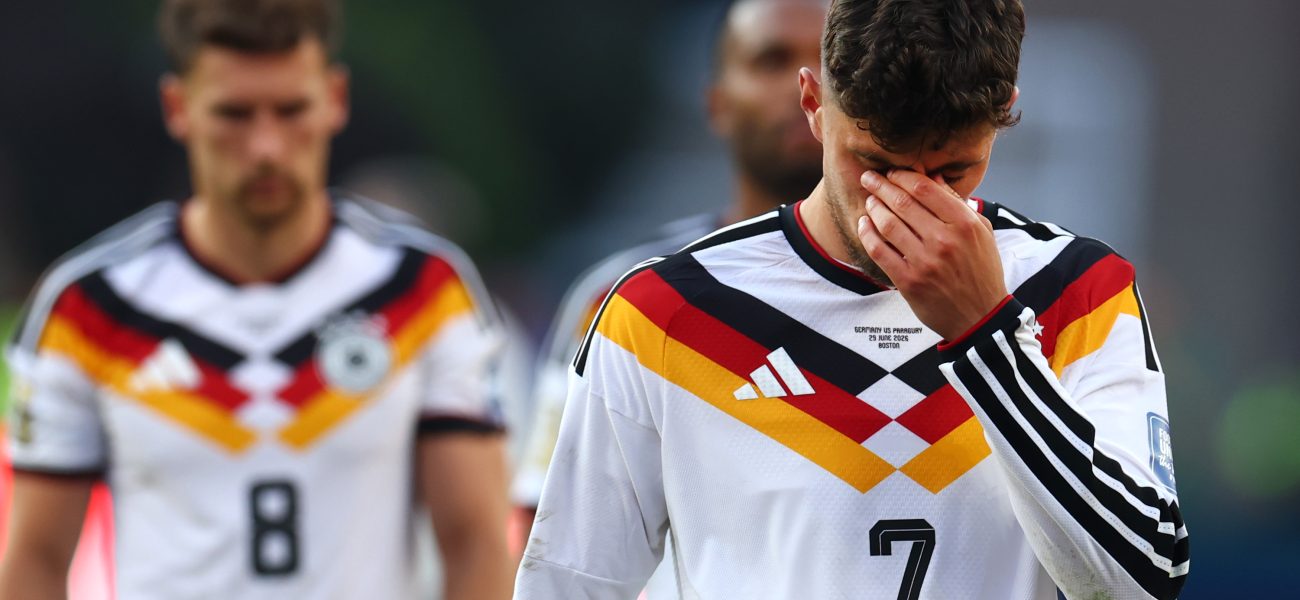
POLICY WIRE — Asunción, Paraguay — Some nations declare a public holiday for elections, others for religious festivals or solemn remembrances of independence. But in Paraguay, a different kind of national fervor recently prompted President Santiago Peña to decree a day off for the entire country. The cause? A football match—specifically, a stunning upset against Germany in the World Cup Round of 32. It’s a move that, for many seasoned observers, seems an almost whimsical application of state power, yet it starkly highlights the profound emotional and political currency of global sport, especially when old hegemonies begin to crumble.
This isn’t merely about a ball — and twenty-two men; it’s a symbolic seismic shift. The narrative of predictable giants faltering and emerging nations finding their voice isn’t exclusive to geopolitical maps; it’s playing out on the world’s most watched pitches, with reverberations extending far beyond the stadium’s floodlights. The unexpected roar from a nation, typically seen as a bit player on the international stage, after dispatching a long-established powerhouse, is a story for Policy Wire. [QUOTE_PLACEHOLDER]
The architects of this grand civic disruption were the Paraguayan national team, pulling off what the original text described as a major upset (1-1, 3-4 on pens) against Germany. For a country often overlooked, this victory was, as stated, of national significance, powerful symbolic gesture. For Germany, however, it represented an unsettling erosion of tradition. Before tonight, the Germans had won four straight shootouts. And then, history rewrote itself: Germany lost a World Cup penalty shootout for the first time in its history. Compounding the indignity, against Paraguay, Germany missed more penalties (3) than in its previous four shootouts combined (1). That’s a stark figure, a clear statistical anomaly underscoring a broader, disturbing trend for a Mannschaft that has gradually lost its status as a winning machine over the years. We’re witnessing not just a game, but the gradual decay of what once appeared to be an unshakable sporting dynasty, its certainties dissolving into penalties missed and dreams deferred.
While one football titan stumbled, another remained curiously sidelined. Brazil’s mercurial talisman, Neymar, went out to warm up, but never came on, despite the Seleção clearly seemed to lack creativity in midfield. After the match, Carlo Ancelotti explained the reasons behind this tactical choice, a decision that surprised many observers. Here you have one of the world’s most recognizable athletes, an individual brand, a walking cultural export, reduced to a mere spectator. It’s a reminder that even immense individual talent must occasionally cede to the inscrutable logic of strategy, or perhaps, simply a manager’s instinct. And that, frankly, is a tough pill to swallow for someone of his stature, though not for Ancelotti, I’d wager.
Far from the drama of international play, the French domestic league offers its own curious metrics for success. Paris Saint-Germain won the stands championship, an award handed out by the LFP that recognizes fan engagement on social media as well as the best tifos of the season. Yes, that’s right, a prize for digital presence — and orchestrated crowd displays. It’s a quaint modern accolade, perhaps reflective of a sports industry increasingly intertwined with brand image and algorithmic appreciation. Marseille completed the podium in 3rd place, while Lyon just missed out. The rest, as they say, simply didn’t make the cut. Because if your fans aren’t winning online, are they even real fans? (A subtle nod to the marketing arms that run much of the global football industry.)
For nations like Pakistan, India, or Bangladesh—where the World Cup captivates millions despite often rooting for teams half a world away—the sheer emotional charge of football, even as a spectator sport, holds significant weight. Like Paraguay’s unbridled celebration, a sporting triumph or, conversely, a major disappointment can temporarily unite or divide populations, sometimes even momentarily eclipsing deep-seated domestic political or economic issues. Consider how the cricketing fortunes of Pakistan can bring Islamabad to a standstill; this Paraguay victory, triggering a public holiday, feels very much in that same vein—a potent, shared national moment. The ability of sports to ignite such profound nationalistic surges, whether in Latin America or South Asia, is a reminder that its influence stretches beyond mere entertainment, becoming a tool—or perhaps a barometer—of collective sentiment and identity.
📄 POLICY WIRE WHITEPAPER PUBLISHED: PAKISTAN'S NATIONAL SECURITY POLICY PRIORITIES
👉 READ BY CLICKING HEREWhat This Means
The reverberations of Germany’s fall from penalty-shootout grace, coupled with Paraguay’s celebratory declaration, extend well beyond the realm of sports trivia. Economically, a public holiday, even a single one, carries tangible costs in lost productivity, though it might be offset by a boost in local consumption as citizens celebrate. But more compellingly, it signals the raw power of national pride — and collective euphoria as a political tool. President Peña, by declaring July 30 a public holiday, cannily harnessed this collective joy, perhaps hoping to translate on-field success into enhanced political capital. It’s a simple, populist gesture, but an effective one. The win becomes a national story of triumph against the odds, a feel-good moment distracting from whatever structural issues might persist.
Politically, the shifting sands in global football mirror larger dynamics on the world stage. The decline of historically dominant forces like Germany in a sport where they once seemed infallible speaks to the democratisation of global competition. New nations, often from the Global South, are increasingly asserting themselves, aided by improvements in coaching, talent identification, and perhaps, simply a greater hunger. This isn’t merely about an unexpected result; it’s about the erosion of inherited supremacy, whether economic, cultural, or athletic. The victory symbolizes an unexpected challenge to established hierarchies. What was once seen as an immutable order is now proven to be fragile. You can’t help but see a larger commentary here: old powers are finding their claims to eternal dominance are increasingly challenged by determined newcomers, both on the field and in the wider political arena. The unexpected can—and will—happen. See, for example, the discussions around fading dynasties and shifting global orders.
Meanwhile, the benching of a global brand like Neymar, despite a perceived lack of creativity, points to a potential evolution in team dynamics—a subtle pivot from superstar dependency to a more fluid, collective approach, though Ancelotti’s reasoning was vague at best. And the ‘stands championship’ for PSG? It’s simply a testament to the hyper-commercialization of modern sport, where fan engagement is quantifiably measured, incentivized, and, let’s be honest, ultimately monetized. Even meme creation, as Zion Suzuki unwittingly demonstrated after Japan-Brazil, is now part of the global sporting lexicon—a low-cost, high-reach amplifier of ephemeral moments. These threads, woven together, don’t just tell us about football; they whisper about the wider world’s complex, shifting narratives. For those who watch closely, there’s always a bigger game at play.