


Silent Signal: How One Footstep Derails Modernity
POLICY WIRE — London, UK — The very gears of a sprawling metropolis, often considered robust and infallible, can shudder to an abrupt halt not from grand systemic failure, but from a solitary,...

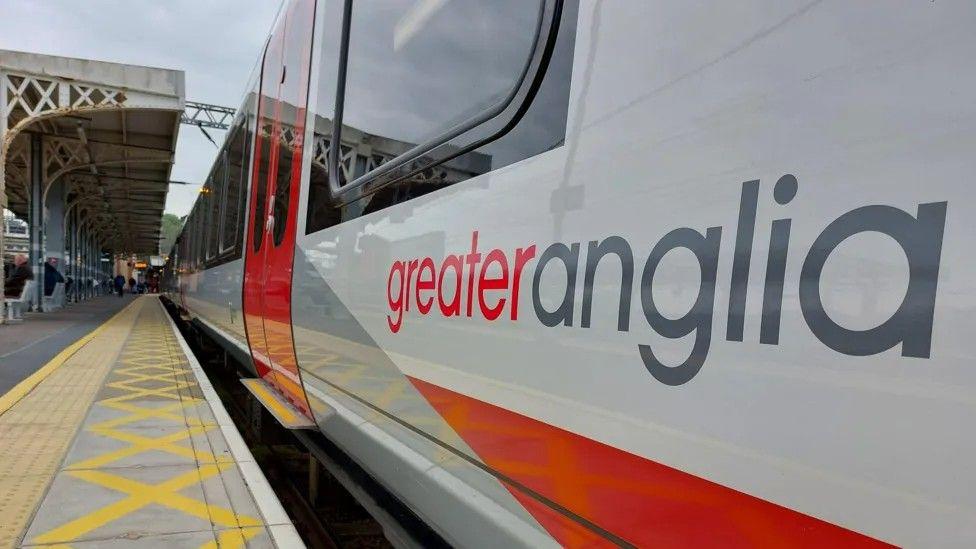
POLICY WIRE — London, UK — The very gears of a sprawling metropolis, often considered robust and infallible, can shudder to an abrupt halt not from grand systemic failure, but from a solitary, misdirected footstep. This week, what began as a routine Monday rush hour devolved into an agonizing, hours-long paralysis across a significant rail artery, all because someone opted to stroll where locomotives typically thunder. It wasn’t an act of sabotage (presumably), nor a complex technical fault; it was simpler, more unsettling—a trespass on the line, casting a long shadow of delays and economic frustration over countless commuters.
It sounds mundane, doesn’t it? A bit of a nuisance. But the ripple effect of such an occurrence extends far beyond belated morning coffees. Think about the parent rushing to childcare, the urgent medical appointment missed, or the time-sensitive business delivery now stranded. Modern urban existence thrives on clockwork precision, a delicate balance often taken for granted until a rogue element — human or otherwise — pitches it into disarray. It’s a stark reminder that our interconnected world, with all its advancements, remains acutely vulnerable to individual deviation. One person’s path became thousands’ impediment, an unscripted moment disrupting an entire script. [QUOTE_PLACEHOLDER]
And these aren’t isolated incidents, not by a long shot. They’ve become an almost routine hiccup in the ceaseless ballet of urban transport. Railways, designed for efficient transit, are also regrettably open corridors, inviting — or perhaps failing to sufficiently deter — those who see them as shortcuts, escape routes, or even stages for distress. We’re talking about lives on the line, quite literally. Rail industry data from the Rail Safety and Standards Board indicates over 18 million minutes of train delays across the UK attributed to trespass incidents in a recent year, costing the economy millions in lost productivity and operational expense.
But how does a single instance of boundary infringement morph into an operational nightmare for a 21st-century network? It comes down to safety protocols. When an unauthorized individual is reported on or near the tracks, services must cease immediately. That’s non-negotiable. Trains apply emergency brakes. Power is cut. Personnel are dispatched. The entire system downshifts into a cautious, often agonizing, crawl while the situation is resolved—a process that can take hours depending on location, visibility, and the cooperation (or lack thereof) of the trespasser. It’s a protocol designed to save lives, yet its implementation illustrates the system’s profound fragility.
We’ve seen similar, though often more catastrophic, vulnerabilities exposed in South Asian railway networks, where issues of security, infrastructure integrity, and informal settlements bordering rail lines present a far greater challenge. In countries like Pakistan, for instance, sprawling rail corridors frequently intersect densely populated areas with minimal fencing. Fatalities and injuries from accidental trespass or crossing at unapproved points are tragically commonplace, often overshadowing the disruptions caused by such events. It’s a stark contrast to the Western context where trespass might mean an inconvenient delay, but in nations grappling with aging colonial-era infrastructure and burgeoning populations, it can equate to systemic crisis and tragic loss of life, making security concerns a daily battle for railway operators.
Back home, the reasons behind an individual trespassing are varied — and complex. Sometimes it’s a desperate shortcut (because who really has time?), a mental health crisis, an unfortunate accident, or even deliberate acts of vandalism. The system can’t always distinguish intent, nor should it. Its primary duty is public safety, — and so it reacts, predictably, comprehensively. And for good reason. No one wants to contemplate the alternative. But what do we do about an issue that combines human fallibility, urban design constraints, and an unyielding commitment to safety?
The problem won’t disappear with stern warnings or increased fines. It’s part of a broader conversation about urban planning, mental health support, and even basic public awareness regarding the lethality of railway lines. Our dependency on these arteries is absolute; our ability to protect them, apparently less so. The infrastructure itself can sometimes feel like a static museum piece — its iron tracks a relic against the fluid, unpredictable modern world of instantaneous decisions and personal liberties (or perceived liberties). We want efficiency, speed, and safety. But at what cost does that come when any one person can pull the emergency brake on everyone else’s day?
What This Means
This localized incident—a trespass on a railway line—serves as a microcosmic indicator of broader political and economic fragilities that governments rarely acknowledge until a genuine crisis erupts. Economically, even seemingly minor disruptions accrue staggering costs. They aren’t just an annoyance for commuters; they erode national productivity. Businesses dependent on timely logistics face spiraling expenses, and service industries reliant on staff punctuality see their output diminish. Consider the cumulative impact over a year; these isolated events don’t just add up, they multiply.
Politically, the continuous recurrence of such incidents chips away at public confidence in core state services and infrastructure management. Citizens expect seamless operations from their heavily taxed transport networks. When such networks prove so easily destabilized, it fuels cynicism — and demands for greater accountability. It also shines a harsh light on societal welfare: why are people entering such perilous spaces? Is it desperation, inadequate mental health services, or a breakdown in basic public civility? These aren’t just operational questions; they’re societal diagnoses, implicating government policy, resource allocation, and urban planning. For instance, in an age of smart cities, why do we struggle to secure our most fundamental transport networks? The government, therefore, faces pressure not just to harden infrastructure against intrusion, but to address the underlying socio-economic drivers that compel individuals to take such grave risks. It’s a low-grade fever on the body politic, and left untreated, could easily escalate into a more pronounced malaise impacting investor confidence and international perceptions of stability and competence. This sort of friction reveals that the compact between citizens and the state is tested not by grand pronouncements, but by the daily reality of a functional (or dysfunctional) commute.