


Silence, Inc.: The Desperate Pursuit of Focus in a Digital World
POLICY WIRE — ALBUQUERQUE, N.M. — The silent crisis isn’t economic stagnation or political deadlock this time. It’s the war for your attention—a brutal, ceaseless conflict waged in the...

POLICY WIRE — ALBUQUERQUE, N.M. — The silent crisis isn’t economic stagnation or political deadlock this time. It’s the war for your attention—a brutal, ceaseless conflict waged in the very architecture of modern life. Our devices, our cities, even our neighbors; everything, it seems, conspires to dismantle the tranquil mind, leaving focus as a rare, precious commodity. It’s a condition perhaps best encapsulated by a developer in New Mexico, wrestling with the everyday clamor, hoping to sell a patch of quiet in a world that can’t stop shouting.
It sounds a little utopian, doesn’t it? An app, born out of frustration in the land of enchantment (New Mexico, for the uninitiated, is quite fond of that moniker), aiming to re-engineer personal concentration. For years, the fight against pervasive, insistent noise has been a largely solitary battle. You’re trying to absorb the printed word—maybe a dense policy brief, maybe a gripping novel, who knows—and then, suddenly, a door slams. A phone rings. A neighbour’s television bleeds through the thin wall. Your own mind, too, can be its own worst saboteur, an internal cacophony of thoughts, anxieties, and the ghost of yesterday’s social media feed.
And what’s the standard defense against such intellectual sabotage? Often, it’s music. Pop on some instrumental tracks, perhaps a jazz flute, or even ambient electronic drone—a sound blanket to smother the cognitive friction. But sometimes that fails, too. You see, the music, chosen with good intentions, morphs into its own distraction. The rhythm becomes too catchy, a melody too insistent, and suddenly you’re analyzing the drum pattern rather than the burgeoning economic implications of a new tariff policy.
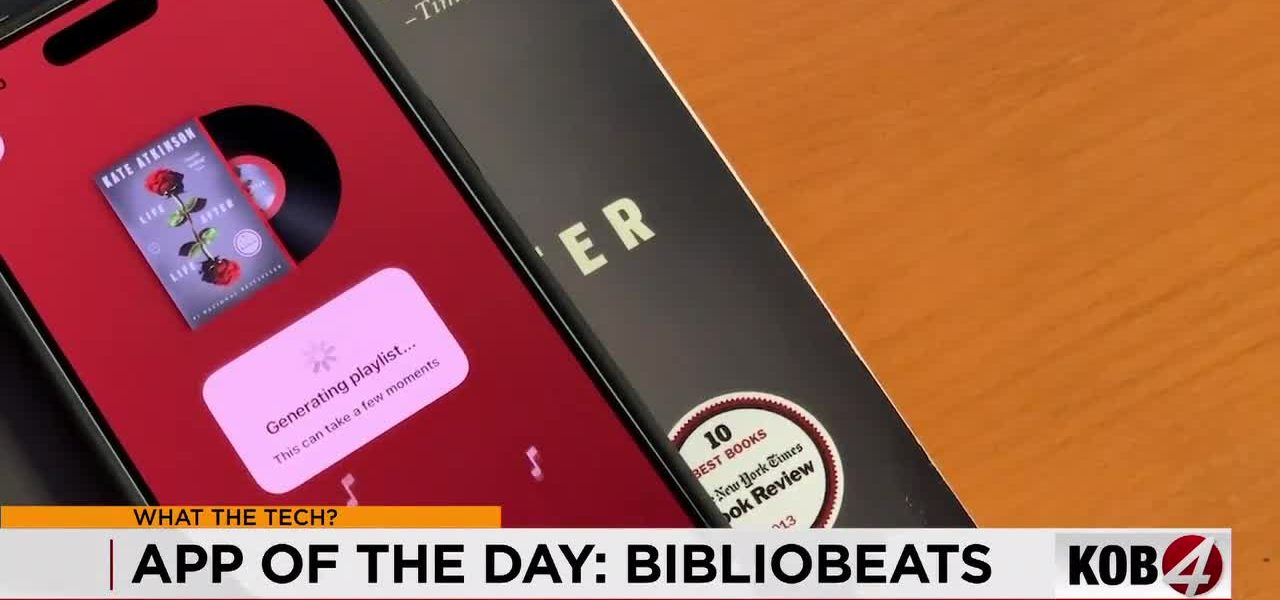
But someone’s trying to build a better mousetrap for mental solitude. Bibliobeats, a new offering from what they’ve labeled ‘What the Tech?’, purports to mend this fundamental breach in personal productivity. The promise is simple enough: provide the perfect, non-distracting aural environment for the dedicated reader. The problem this developer—like so many of us, really—is wrestling with is both universal and increasingly acute. It’s this universal problem that Bibliobeats is actually attempting to address. We’re all in this boat, aren’t we, forever struggling to stay on task? And he sums up that very human predicament rather precisely, asking, [QUOTE_PLACEHOLDER] It’s a common complaint. Then, he queries, [QUOTE_PLACEHOLDER] This iterative loop of distraction is something that nearly everyone with a semblance of a contemplative inner life has encountered. [QUOTE_PLACEHOLDER] we’re told, a bold declaration in an era awash with digital remedies.
Now, this isn’t just an American suburban predicament. Imagine Karachi, Pakistan, for instance, a bustling metropolis of some 16 million souls, a true crucible of humanity where constant sound is less an intrusion and more the very texture of existence. The horns blare. Street vendors hawk their wares. Call to prayer echoes. Discussions spill out from chai dhabas. The collective human experience is vibrant, yes, but profoundly noisy. Educational pursuits—from studying for competitive exams to simply reading a textbook—often happen against this intensely rich soundscape. For a young student striving to escape poverty, the ability to focus amidst this urban symphony isn’t merely a preference; it’s a competitive necessity, a determining factor in future prospects. Will an app born in a quieter corner of the globe translate seamlessly to such an environment, or is it merely another piece of software offering a sliver of peace to those already privileged enough to seek it?
Consider the broader economic implications. A report from the Journal of Cross-Cultural Psychology, examining digital media usage globally, revealed that daily smartphone usage in South Asia has jumped over 40% in the last five years, dramatically reshaping how individuals engage with information and, critically, how they *don’t* engage. We’re swimming in data, but drowning in the sheer lack of coherent focus necessary to process it. An application designed to create a personalized, quiet haven, however digital, speaks volumes about our current condition. It says we can’t find silence anymore without artificial aid. What’s that about? It’s a sad little indictment, really.
And it gets you thinking about our reliance on software to patch over what feel like deeply human deficiencies. We’ve outsourced our memory to search engines, our navigation to GPS, and now, perhaps, our very ability to concentrate to bespoke soundtracks. It’s a convenience, sure, but what are we sacrificing on the altar of instant algorithmic serenity?
What This Means
The quiet ambition of Bibliobeats isn’t just about reading music; it’s a symptom of a larger geopolitical and socioeconomic shift. Globally, productivity hinges on focused cognition. Countries pouring resources into educational reform, like many in the developing world—Pakistan among them—recognize that a literate, discerning populace drives progress. But if that populace can’t concentrate for five minutes, what good are the best curricula? The economic fallout of a universally scattered attention span is difficult to quantify but impossible to ignore. Innovation falters, complex problem-solving degrades, and critical thinking—a prerequisite for sound policymaking and democratic engagement—erodes. The demand for ‘focus’ tech suggests a burgeoning market, a new battleground in the information economy where the commodity isn’t data, but rather, the human capacity to process it effectively. Governments and corporations, who increasingly recognize this challenge, might soon be looking to integrate such tools into work and educational frameworks. Because, honestly, how can you expect someone to tackle climate change policy or intricate financial regulations when they can barely read a newspaper without checking their notifications?