


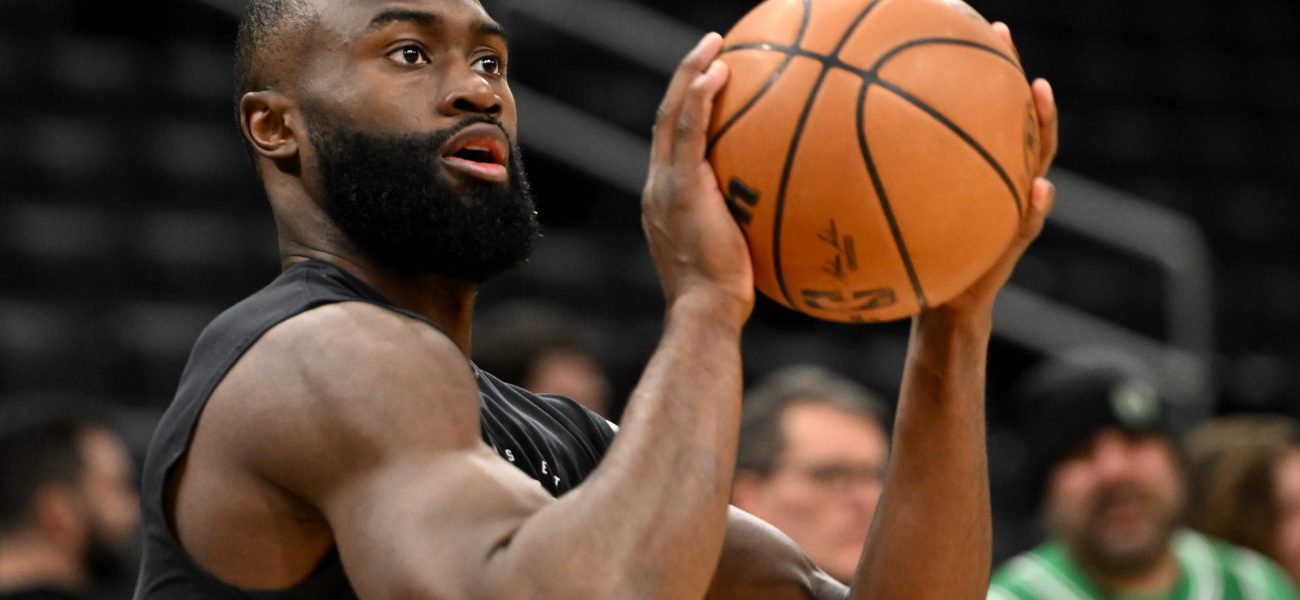
High Stakes in Beantown: Jaylen Brown’s Ire Puts Celtics’ Playoff Hopes, and Global Brand, in Question
POLICY WIRE — Boston, USA — When you’re running a multinational enterprise—or, for that matter, a top-tier NBA franchise—the perception of stability can be as valuable as actual wins. The recent...

POLICY WIRE — Boston, USA — When you’re running a multinational enterprise—or, for that matter, a top-tier NBA franchise—the perception of stability can be as valuable as actual wins. The recent rumblings from the Boston Celtics’ front office regarding star player Jaylen Brown, however, have punched a rather noticeable hole in that carefully crafted facade. It’s not just about basketball here; it’s about the intricate dance between high-performance assets and the suits who manage them, a dance with surprising parallels across political and economic landscapes, even as far-flung as Pakistan’s own high-stakes governance. Because at its core, this whole dust-up illuminates the age-old problem of human capital management, and frankly, it’s not looking pretty for the Celtics.
For what feels like eons, the basketball commentariat has been engaged in a rather theatrical guessing game concerning the emotional state of Brown. You see, his club, the storied Boston Celtics, apparently haven’t been shy about testing his market value. First, we heard whispers—no, not whispers, practically shouts—that he was a pawn in a potential blockbuster deal for Giannis Antetokounmpo, Milwaukee’s disaffected powerhouse. Later, the narrative broadened: Brown was a chip in any trade that’d stop Boston from backsliding next season. And now? Now, the obvious becomes official: [QUOTE_PLACEHOLDER] It’s the sort of corporate maneuvering that would raise eyebrows anywhere, a top performer feeling undervalued after contributing significantly.
It’s a story as old as power itself. Brad Stevens, the man at the helm of basketball operations for the Celtics, has by most accounts, steered the ship commendably since swapping his coaching whistle for a front-office clipboard. He’s managed the ‘storied ball club’ with a certain quiet efficacy. But even the best-laid plans can’t always account for the messy reality of human emotion. Because while teams view players as assets—fungible parts in a greater machine—players, funnily enough, often see themselves as people. And you can’t blame them for feeling a bit miffed when their worth is being openly debated, their future treated like a commodity on the open market. This ain’t fantasy football, after all.
Consider the recent reportage from the Boston Globe’s Adam Himmelsbach, whose dispatches usually cut to the chase. Himmelsbach revealed that “the Celtics have continued to field calls from teams interested in trading for Brown.” More pointedly, he states that “Brown has grown frustrated with the organization’s approach following a season in which he guided the Celtics to 56 wins while Jayson Tatum was sidelined for months with an Achilles injury.” That statistic alone—56 wins, mind you—isn’t just a number; it’s a testament to Brown’s contribution and leadership, especially with his teammate incapacitated. It’s like a regional leader delivering substantial economic growth during a period of national uncertainty, only to find their loyalty tested by central command. This sort of executive brinkmanship doesn’t exactly foster morale, does it? The analogy here extends quite naturally to how political alliances are formed and strained in places like the Indian subcontinent, where trust, once eroded, can be devilishly hard to rebuild.
The situation isn’t entirely cut — and dry, however. Himmelsbach acknowledges the murky nature of the executive suite: [QUOTE_PLACEHOLDER] It’s the perennial question facing any market-savvy organization: are we actively selling, or just keeping an ear to the ground? Either way, the impact on the principal remains the same. But here’s the rub—there hasn’t exactly been a bidding war for Brown’s services so far this offseason. If anything, the market’s been rather quiet. The absence of robust offers makes the whole exercise seem a bit… theatrical, doesn’t it?
So, where does this leave Boston? With a highly talented player who’s probably feeling a tad insulted. The Globe reporter offered a hypothetical, that [QUOTE_PLACEHOLDER] He also adds, with characteristic dry observation, “But that is not essential.” It isn’t, especially when the viable trade options appear sparse. And often, these drawn-out dramas end not with a bang, but a series of awkward conversations. The fences, as they say, will need mending. One can find similar, politically charged reconciliation efforts throughout the Muslim world, where historical grievances or perceived slights can simmer for years before public rapprochement is attempted, often with mixed success.
What This Means
This whole Kerfuffle isn’t just sports page filler. It’s a snapshot of modern player empowerment—or at least the tension surrounding it. Brown, a critical asset (and mind you, an actual person), feels the sting of corporate opportunism. For the Celtics, this incident dents their brand. Why would a top-tier free agent consider them in the future if they treat existing stars like trade bait, even when performing? It’s bad optics, especially in an increasingly globalized sports market where athletes have outsized influence and fanbases transcend borders. Think of the diplomatic repercussions if a major trading partner feels continuously undermined by perceived disloyalty; the economic fallout can be significant. The message it sends, whether intentional or not, echoes far beyond the parquet floor. It’s a delicate balance for any powerful entity, whether a multi-billion dollar sports franchise or a sovereign nation navigating complex regional power dynamics. You gotta keep your stars happy, even when the market whispers temptations, or you risk destabilizing your whole operation, affecting everything from ticket sales to merchandise revenue, and yes, even international brand appeal. Sometimes, the most politically astute move is to just—don’t rock the boat.