


The Golden Cage: Tennis Stars Grapple with Relentless Grind and Collateral Damage
POLICY WIRE — London, UK — Nobody tunes into a high-stakes Grand Slam expecting a casualty report. Yet, for all the gleaming courts and thunderous serves, the headlines this season have often veered...

POLICY WIRE — London, UK — Nobody tunes into a high-stakes Grand Slam expecting a casualty report. Yet, for all the gleaming courts and thunderous serves, the headlines this season have often veered toward who’s out, not who’s dominating. It’s a sport—once famed for its elegance and measured pace—now gnawing at its own. Elite tennis, you see, has built itself a golden cage. The players inside, for all their millionaire status, are increasingly sounding like overworked factory hands.
Consider Jack Draper, Britain’s rising talent, whose concerns about player injury rates—issued mere hours before his own withdrawal from Wimbledon with a nagging arm problem—weren’t so much unfortunate timing as they were a chilling prophecy. You’ve got to wonder if it was accidental. But what happens when the very game designed to crown champions instead grinds them into a weary pulp? Seven-time major champion Carlos Alcaraz isn’t on court at Wimbledon, grounded by a wrist injury. Others skipped major warm-up tournaments just trying to protect themselves.
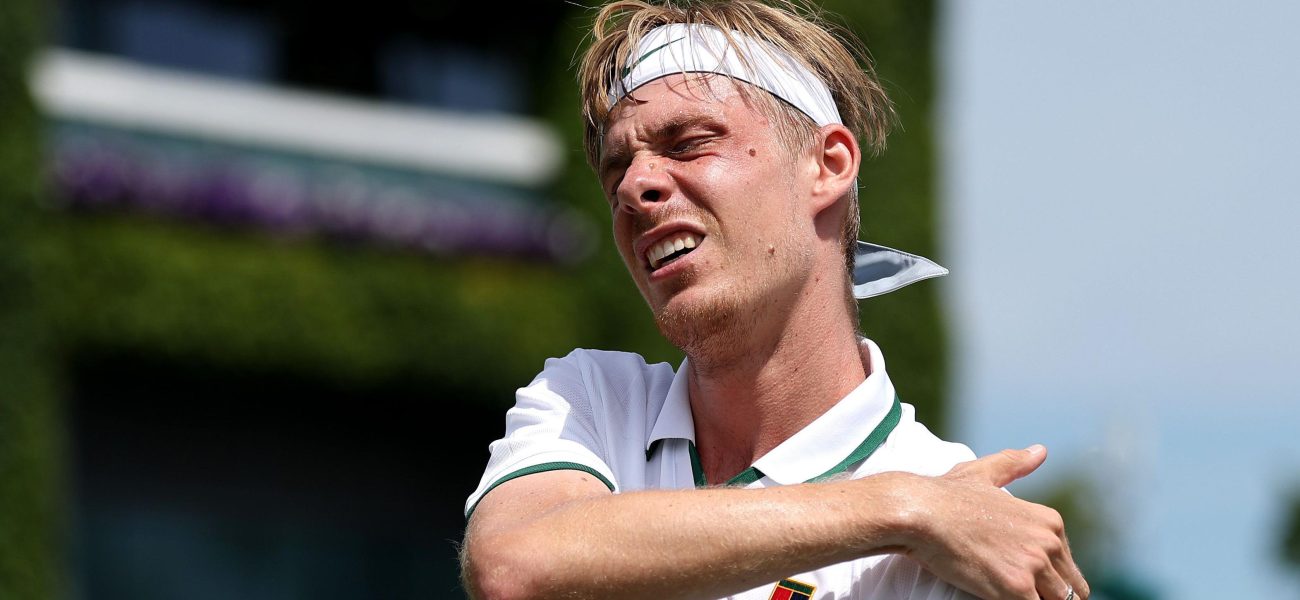
It’s a rough calculus. You push hard. You train harder. You earn big. Then you break down. Draper wasn’t subtle: “When I look at the draws, everything is shoulder, arm, wrist [injuries]. They need to really take a close look at what we’re doing on tour,” he said, cutting straight to the heart of it. That a young professional would openly critique the very circuit that provides his livelihood speaks volumes. It’s not just the top rung either. Denis Shapovalov, a Wimbledon semi-finalist in 2021, didn’t make it past his first-round match on Monday, felled by a shoulder injury.
Emma Raducanu, another British darling, had already been ruled out with a stress fracture. The home crowd’s disappointment is a commercial loss, yes, but the broader implication? This isn’t random bad luck. This is systemic wear and tear. It points to a trend. “There are so many great players that everyone is pushing to find that extra 1% – spending more time on the court and in the gym,” former world number one Tracy Austin noted to BBC Sport. “Some are playing more tournaments than is good for them, either mentally or physically. It is very, very demanding in all aspects.”
The demands aren’t just from competitive spirit. There are tangible numbers here: medical experts contend the sport has become more punishing, a view supported by observations that matches and rallies are longer, players are faster, and they hit the ball harder across a season that can last almost 11 months. Think about it—that’s barely a month off. Daniil Medvedev, ranked world number nine, didn’t mince words: “I always said that if we can somehow find a way to make this season shorter and have a bigger off-season, this could help avoid injuries,” he told BBC Sport.
Players like Draper are taking aim at the ATP and WTA tours for elongating mandatory events into so-called ‘mini Slams.’ Chasing ranking points and prize money means players often compete when they’re not even remotely 100 percent. It’s a brutal choice between preserving one’s body or one’s career. Stefanos Tsitsipas, a two-time major finalist from Greece, laid it out starkly: “When you train so much, constantly trying to improve and playing back-to-back weeks on the tour, it’s more than normal that you’re going to get injured or there might be overuse at some point,” It’s a brutal assessment.
For those returning from injury, it’s a tightrope walk, often across broken glass. Naomi Broady, a former British player, told BBC TV how individual sports offer no soft landing: “It’s so tough playing an individual sport. You can’t be subbed out, you just have to be dunked back in the deep end immediately,” She’s right. “You can’t go out and play 20 or 30 minutes and build up from there. You’re just having to play day in day out for a week.” The body simply can’t cope. It’s no wonder many athletes, even those from less physically developed nations across South Asia or the Muslim world—regions now investing heavily in sports infrastructure and eyeing global dominance—face these same brutal realities once they hit the professional circuit. The physiology of athletic excellence, it turns out, is universally fragile.
📄 POLICY WIRE WHITEPAPER PUBLISHED: PAKISTAN'S NATIONAL SECURITY POLICY PRIORITIES
👉 READ BY CLICKING HEREAnd so, players like Raducanu find themselves in a pickle. After being out for months, she played five matches in six days at Queen’s. That scramble, she reckons, played a part in her stress fracture. Broady echoed this difficulty, observing, [QUOTE_PLACEHOLDER] So often, it’s the push to get back quickly that causes renewed, deeper issues. This isn’t just about athletic resilience; it’s a structural problem.
Sports scientists are pushing for more coordinated data sharing and smarter scheduling, including fewer late-night finishes, to protect athletes. Anne Keothavong, Britain’s Billie Jean King Cup captain, highlighted a deeper issue too: [QUOTE_PLACEHOLDER] She thinks that early overplaying adds to adult injuries. The cumulative strain from adolescence simply piles up.
What This Means
This crisis isn’t merely about athletes breaking down; it’s a symptom of a larger, systemic economic model running hot. Professional tennis is a multi-billion dollar enterprise, where player bodies are effectively assets to be maximized. The incessant schedule—crafted to satiate broadcasters, sponsors, and global audiences—pushes the boundaries of human endurance. We’re witnessing the logical conclusion of a Faustian bargain: extraordinary wealth and fame exchanged for potentially abbreviated careers and chronic pain. But the broader implications extend to other physically demanding professional sports, revealing an uncomfortable truth about the political economy of elite athleticism: the bottom line too often trumps the biological one.
Regulators (the ATP — and WTA, but also sports governing bodies globally) find themselves in a difficult bind. Any substantial reduction in the competitive calendar risks upsetting powerful media partners and reducing lucrative revenue streams, yet failing to address player welfare could lead to a revolt from the athletes themselves, or a significant dilution of talent as top players retire prematurely. The current setup, as shown in articles exploring topics like how star power reshapes economic loyalty in sports, gives these players more leverage. We’re likely to see a gradual shift toward more player-centric policies, probably begrudgingly, but only after more prominent careers are prematurely ended—a high price for what should be a straightforward public health calculation within a professional industry. It’s a delicate dance, balancing the commercial juggernaut with the fragile human at its core. This tension often mirrors the geopolitical jostling seen when global rulebooks bend and ambitions falter, creating unscripted fouls of a different sort.