


The New Anarchy: Star Power Reshapes Economic Loyalty in Sports
POLICY WIRE — Washington D.C. — For a while now, it’s been obvious that institutions—companies, political parties, even nations—struggle to contain the gravitational pull of individual celebrity. But...

POLICY WIRE — Washington D.C. — For a while now, it’s been obvious that institutions—companies, political parties, even nations—struggle to contain the gravitational pull of individual celebrity. But in the rarefied air of professional sports, where the narrative of team loyalty once reigned supreme, a stark new reality is asserting itself: personal brands now dictate the flow of billions, reshaping local economies with the whims of a single transcendent athlete. And no, we’re not just talking about sneakers.
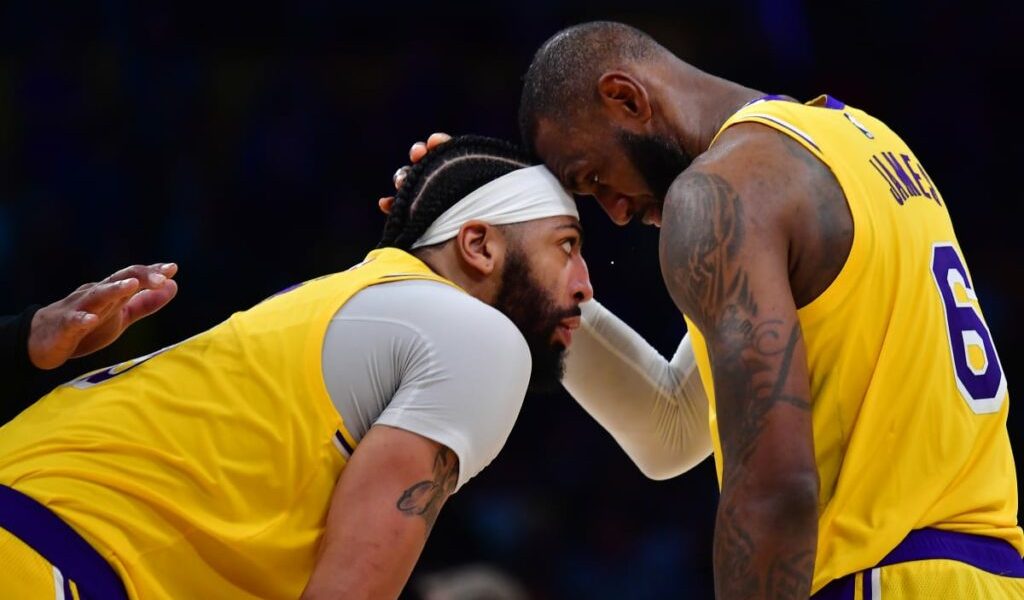
Consider the latest tectonic tremor from the West Coast. Whispers, then outright declarations, from well-placed sources suggest that LeBron James—a walking, talking global enterprise—might ditch the purple and gold for another shade of golden, perhaps aligning with a certain San Francisco-based rival. A former teammate, equally potent, could follow suit. This isn’t just sports chatter; it’s an economic pulse point, a policy challenge lurking beneath the dunks and three-pointers.
It began subtly enough. Draymond Green, an anchor for the potential new destination, recently declined his staggering $27.6 million player option. This isn’t merely about personal ambition; it’s a cold, hard financial maneuver, a signal. “It’s a blaring indication that the franchise has something brewing,” one veteran sports agent, speaking on background given the sensitivity of high-stakes negotiations, told Policy Wire. “These decisions are rarely just about the player anymore; they’re engineered chess moves in a far larger game involving valuations, endorsements, and future market dominance.” Because, truly, what’s loyalty worth when pitted against unprecedented global reach?
Los Angeles, ever the mecca of transient stardom, seems surprisingly ready for the paradigm shift. Sources indicate the Lakers, rather than desperately clinging to their aging, albeit iconic, titan, are strategically pivoting. The future, for them, reportedly revolves around another young phenom, Luka Dončić, whose economic impact is only beginning to be quantified. Building around Dončić, and retaining promising assets like Austin Reaves (who was the team’s number two scorer last season), appears to be the current operational doctrine. It’s an unsentimental, bottom-line assessment—a corporation optimizing its talent portfolio.
But the ramifications stretch further than just California’s financial districts. Every time a global icon like James contemplates a move, a cascade of financial questions arises for his potential new city. Ticket sales, merchandise, local hospitality, even property values in surrounding areas—they all surge and ebb with the presence of such a figure. Think of the sudden infusion of tourism and direct spending when a megastar lands, or the potential downturn when one departs.
This star-centric universe—where individual brands can outshine traditional team affiliations—isn’t limited to the domestic scene. The phenomenon echoes deeply in places like Pakistan, where fandom is often less about the city-specific team and more about the player themselves. The diaspora, along with a rapidly growing youth population, tracks global sports religiously, funneling considerable discretionary income into merchandise, streaming services, and sponsored content tied directly to individual athletes. The economic power of LeBron James isn’t confined to California; it ripples through burgeoning middle-class households in Karachi and Lahore, influencing purchasing decisions and media consumption.
The numbers don’t lie. For instance, NBA Africa, a relatively nascent operation, has reported double-digit year-over-year growth in revenue and viewership across the continent for the past five years, a trajectory heavily fueled by the appeal of singular, global talents like James. His image transcends sport, reaching audiences that may never set foot in an American arena but understand the language of competitive excellence and brand cachet.
📄 POLICY WIRE WHITEPAPER PUBLISHED: PAKISTAN'S NATIONAL SECURITY POLICY PRIORITIES
👉 READ BY CLICKING HEREWhat This Means
The potential movement of LeBron James isn’t a mere basketball trade; it’s a bellwether for the future of entertainment economics and urban development. It highlights a critical shift: institutional loyalty, once a cornerstone, is rapidly being supplanted by a transactional relationship driven by individual branding power. For cities, this translates to heightened competition—a policy nightmare, some might say—as they increasingly offer financial incentives and strategic concessions to attract and retain these high-impact individuals.
Economically, it underscores the fragility of depending on a single star’s longevity. Cities like Los Angeles are learning to diversify their ‘talent portfolio’, seeking a steady stream of next-generation icons rather than investing too heavily in sunsetting legends. But the political capital spent on appeasing and accommodating these individuals can be substantial, often siphoning resources and attention from other, more perennial civic needs.
the globalized nature of modern stardom—where a player’s image resonates from New York to Islamabad—creates a new challenge for policy makers. How do you quantify, let alone capture, the dispersed economic benefits that flow from a star who cultivates a transnational fanbase? It complicates tax structures — and global marketing strategies. The era of localized fan loyalty is waning, giving way to an amorphous, digitally connected cohort that follows players, not just provinces. One city’s gain can be another’s branding headache, and the global South is increasingly part of that intricate, celebrity-driven equation. Policy Wire’s ongoing analysis consistently shows a correlation between such high-profile movements and localized economic surges.
As one former city council finance chair ruefully remarked, “These athletes aren’t just employees; they’re anchor tenants for entire metropolitan brands. And they’ve certainly learned to negotiate like it.”