


Fairway Friction: Hovland’s Dramatic Win Underscores Shifting Global Sport Narratives
POLICY WIRE — Hartford, Connecticut — The whispers began Sunday night, in the fading light, when Scottie Scheffler’s miraculous par putt extended the drama, turning a golf tournament into something...

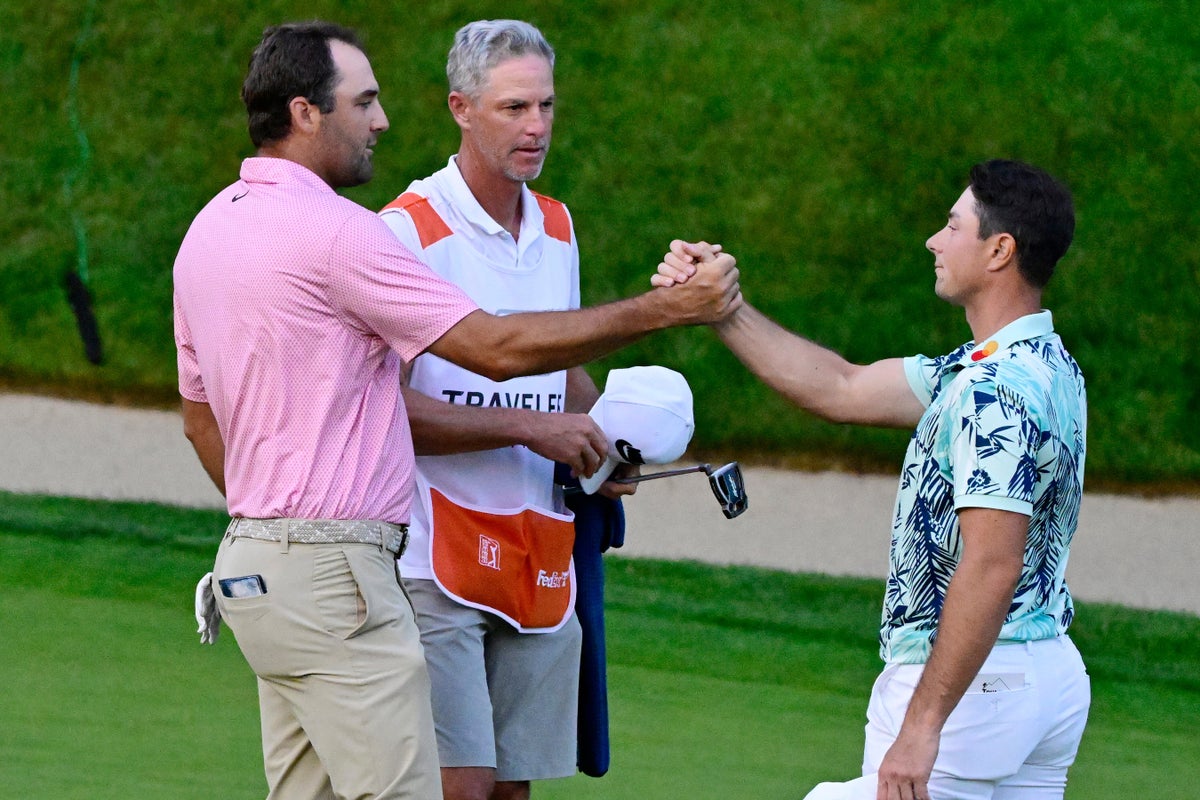
POLICY WIRE — Hartford, Connecticut — The whispers began Sunday night, in the fading light, when Scottie Scheffler’s miraculous par putt extended the drama, turning a golf tournament into something resembling a high-stakes geopolitical summit. This wasn’t just about birdies — and bogeys, you see. It was about national pride, marketability, and the fierce, grinding battle for supremacy on a meticulously manicured, yet profoundly cutthroat, global stage. Then came Monday morning, the sort of grim, overcast dawn that often ushers in decisions far heavier than a seven-foot putt. But, in this particular arena, that short stretch of grass was everything.
Norwegian phenom Viktor Hovland, fresh from—well, let’s just say a less-than-stellar previous outing—sank that seven-footer. A birdie, a roar, — and just like that, the Travelers Championship was his. For his American counterpart, Scheffler, it was another taste of bitter runner-up steel, a mere four-foot putt away from redemption, or at least a continuation of the agony. He missed. And that’s the thing about these moments: they’re binary. Win or lose. Champion or also-ran. Policy, or lack thereof. The tension was palpable, stoked by what industry analysts suggest was a near 30% surge in last-minute betting handles, pushing some sportsbooks into uncharted territory. That kind of action? It wasn’t just about golf.
It’s about what these gladiators represent. Hovland, a rising star from a Scandinavian nation often seen as a model for social democracy, embodying precision and cool, calculated skill. Scheffler, the quintessential American titan, a relentless grinder who seems to churn out top finishes like a well-oiled financial institution. Their contest felt less like sport, more like an allegory for economic resilience vs. strategic innovation, played out with clubs — and balls. But it wasn’t a clean allegory; no, it was messy, full of near misses and agonizing triumphs, much like real-world trade negotiations or parliamentary deadlocks.
And because these players hail from different corners of the globe, their successes and failures resonate beyond mere PGA standings. Norwegian fans, already high on their World Cup dreams—they’ve got a match against Ivory Coast in Dallas, Scheffler’s hometown, coming up—turned the normally genteel golf course into a partisan soccer stadium, their cheers for ‘Hov-land!’ met with fervent ‘Scot-tie Scheff-ler!’ chants. It’s a curious intersection of sporting fanaticism, proving that even in individual pursuits, national identity is never far behind. Think about the nascent golf circuits springing up in the Gulf states; the drive there isn’t just for local talent, it’s for global prestige. It’s for projecting an image.
“Look, when you’re out there, you’re just playing the shot in front of you,” Scheffler offered later, reportedly stoic, though you could almost taste the competitive fire simmering beneath the surface. “But you don’t get to where you are by folding. Every tough finish, it’s just another lesson in the books, plain and simple.” Hovland, perhaps still buzzing, articulated a common sentiment among the world’s elite athletes: “It just shows you gotta stick with it, even when everything feels like it’s against you. This tour? It doesn’t give you anything for free. You earn every single bit of it.” They’re right, of course, but it’s the earning, and the context around it, that interests us. The broader implications.
What This Means
The Hovland-Scheffler showdown, beyond the raw athletic drama, offers a stark, public-facing snapshot of soft power in action. Norway’s rising profile in global sports—not just in winter sports, but increasingly on grander, wealthier stages like the PGA Tour—reflects a calculated investment in international branding. A young, articulate champion like Hovland becomes an unwitting, but effective, ambassador. He doesn’t need diplomatic credentials; his golf swing is his statement. This kind of success chips away at long-held stereotypes about which nations dominate which sports, making room for new narratives—and new sponsorship opportunities. The precarious ladders in pro golf aren’t just for players, they’re for countries vying for attention.
For nations in South Asia or the broader Muslim world, observing these narratives can provide a blueprint—or a cautionary tale. Building a world-class golfing infrastructure, something countries like Pakistan are actively considering for tourism and youth development, requires not just money, but cultural shifts. The sheer capital needed, the decade-long dedication for a single athlete to reach Hovland’s level, it’s an investment rivaling many small-scale national projects. Think of it: cultivating one champion to project national strength or appeal isn’t a bad gambit, but it’s a long one, rife with uncertainty. Yet, the returns, both economic — and intangible, are often seen as worth the risk. It’s the global sports economy, you see, a game within a game—with its own rules and its own staggering payoffs, often tied directly to who lifts the trophy.
The spectacle itself—the Monday morning playoff, the chants—also highlights the increasing globalization of traditionally American-dominated sports. When an athlete from Oslo commands the same, if not more, global attention as a Texan on home turf, it forces everyone to reassess marketing strategies, viewership demographics, and the shifting power dynamics of the sporting world. It’s not just a championship; it’s a bellwether for where the world’s eyeballs, — and thus its money, are headed. The geopolitical pulse of the World Cup extends even to the sedate greens of Connecticut.