


Hollywood’s New Guard: Youthful Ascendancy and Living Legends Define BET Awards
POLICY WIRE — Los Angeles, CA — A genuine, wide-eyed astonishment isn’t something you often see plastered across a celebrity’s face during a live broadcast these days, especially not at a...

POLICY WIRE — Los Angeles, CA — A genuine, wide-eyed astonishment isn’t something you often see plastered across a celebrity’s face during a live broadcast these days, especially not at a major awards ceremony. Yet, Sunday evening in Los Angeles’ Peacock Theater, Teyana Taylor delivered exactly that when pop legend Janet Jackson materialized from the wings, unannounced, to bestow upon her the coveted Icon of the Year Award.
It was a proper knockout punch of emotion for Taylor, who appeared visibly overwhelmed, tears streaming even as the crowd roared its appreciation for Jackson’s entrance. And what an entrance it was—Jackson herself receiving a thunderous standing ovation before she even reached the mic. Taylor, in a moment of raw, unscripted honesty, later conceded, [QUOTE_PLACEHOLDER]. She hugged Jackson tight, her voice catching as she paid tribute: [QUOTE_PLACEHOLDER]. The scene wasn’t just awards show filler; it was a vivid, intimate passing of the torch, unexpected in its visceral power.
Jackson, for her part, lauded Taylor’s drive and artistic breadth, highlighting a Golden Globe win for best supporting actress in “One Battle After Another” and remarking on Taylor’s gifts [QUOTE_PLACEHOLDER]. Taylor, whose professional life spans an impressive two decades, didn’t shy away from the hard graft involved. Accepting her honor, she delivered a no-nonsense appraisal of her journey: [QUOTE_PLACEHOLDER]. But she wasn’t about to get a big head, instead stressing: [QUOTE_PLACEHOLDER]. That’s quite the statement, isn’t it? She’s a multi-platinum recording artist, sure, but she’s also branched out, becoming an award-winning actor, director, producer, and choreographer. She really has earned her stripes, many times over.
Meanwhile, the night began with its own kind of unprecedented spectacle. Comedian and digital phenom Druski — a relatively fresh face at 31 years young — wasn’t merely walking onto the stage; he was descending from the rafters in a harness. Yes, really. He dropped into the room as a choir belted out Kirk Franklin’s [QUOTE_PLACEHOLDER] Because why just host when you can make an aerial entry? This guy knows how to grab eyeballs. He did more than just open the show; Druski, who just turned 31, officially made history. He’s the youngest host the BET Awards have ever had, surpassing previous record-holder Kevin Hart, who emceed the event at the grand old age of 32 in 2011. And this marks a definite shift towards recognizing younger talent and fresh energy at the helm of cultural touchstones.
But the old guard still got its due, naturally. Lauryn Hill, the very definition of a living legend—remember “The Miseducation of Lauryn Hill”?—received the Living Legend Icon Award, which is basically an acknowledgment that her influence is, well, eternal. And then there’s music executive Sylvia Rhone, making waves as the first Black woman to lead a major record company owned by a Fortune 500 corporation, scooping up the Ultimate Icon Award for her game-changing career. She’s nurtured artists from Missy Elliott to Travis Scott, — and that’s no small feat. It proves that the true engines of cultural progress often work quietly behind the scenes, making history all their own.
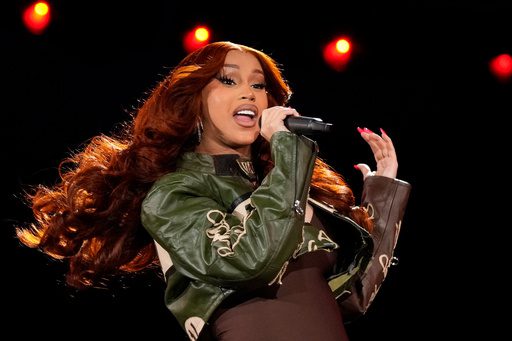
Beyond the headliners, the night was a kaleidoscope of performances — and recognition. Kehlani, taking home best female R&B/pop artist, couldn’t help but marvel, [QUOTE_PLACEHOLDER], giving a shout-out to the iconic presence in the room. Don Toliver and Rick Ross also rocked the mic, while nominations saw Cardi B leading the pack with six nods, and Kendrick Lamar and Mariah the Scientist close behind. And we’re not just talking music; new categories like the Pulse Award for creator content and the Fashion Vanguard Award signal the awards are evolving, trying to keep pace with how influence works in today’s digital, always-on world. It’s a hustle, even for an awards show, to stay relevant. Policy Wire observes a broader pattern here, one where established media institutions find themselves in a constant tug-of-war with newer, more decentralized forms of cultural production. It’s not unlike the global challenge many nations face as digital economies disrupt traditional ones; Pakistan’s burgeoning tech scene, for example, mirrors this innovative, defiant spirit in a very different context. The shifting tides of influence aren’t exclusive to Hollywood.
What This Means
This year’s BET Awards, at a glance, might just look like another night of celebrity back-slapping. But peel back the layers, — and you’ll find a revealing snapshot of today’s cultural economy. The dual emphasis on honoring bona fide legends like Janet Jackson and Lauryn Hill, while simultaneously giving the main hosting gig to a young, digital-first sensation like Druski, speaks volumes. It’s a tacit admission from an established industry that social media influence and organic, internet-born celebrity can now directly translate into mainstream authority. That’s an economic shift—audience capture is increasingly decentralized, less reliant on traditional gatekeepers.
Politically, the celebration of figures who have navigated and transcended significant barriers within the entertainment industry (Rhone breaking glass ceilings, Taylor diversifying her craft) carries a subtle yet powerful message. It highlights Black excellence — and perseverance, themes that resonate deeply beyond the American context. Consider its echoes in Pakistan or other parts of the Muslim world, where aspiring artists and creators often look to global benchmarks for inspiration and validation. When figures like Teyana Taylor are recognized for two decades of tireless work, it’s not just a personal victory; it’s a testament to the idea that sustained effort and cultural innovation can garner worldwide acclaim. It’s a form of soft power, exporting narratives of success that can empower or inform aspirations across continents. In a world craving diverse representation and authentic voices, these awards aren’t just entertainment—they’re barometers of evolving global cultural values, showing who’s got the juice and where influence is heading, in the very gritty, real world, no less. But will this newfound fluidity last, or is it just another passing fad? That’s the question on everybody’s mind, particularly those still clinging to old ways of doing business.