

Fairway Fantasy: DC’s Golf Course Renovation Faces Toxic Reality, Political Skirmishes
POLICY WIRE — Washington, D.C. — Imagine a sprawling, majestic triumphal arch gracing the heart of Washington D.C., an enduring symbol of American might. Then, picture a premier golf course,...

POLICY WIRE — Washington, D.C. — Imagine a sprawling, majestic triumphal arch gracing the heart of Washington D.C., an enduring symbol of American might. Then, picture a premier golf course, revitalized — and ready to host a U.S. Open. These are the kinds of sweeping visions currently reshaping—or at least being proposed to reshape—the nation’s capital landscape. For all the talk of grand monuments, it’s often the less glamorous details that stick in the mud, sometimes quite literally. We’re talking about an entire renovation project at the East Potomac Golf Links that’s already mired in controversy, much like the debate on leadership styles playing out continents away.
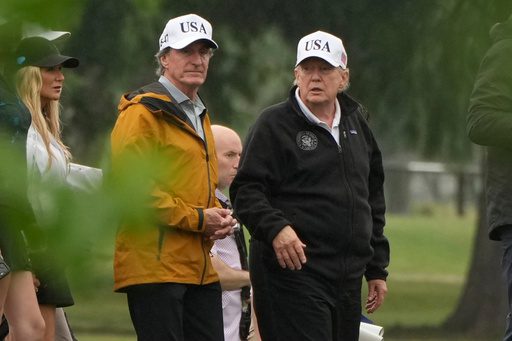
Last Sunday, President Trump embarked on a tour of several capital projects, his motorcade rolling past proposed sites, his pronouncements echoing across social media. His particular focus? The makeover of the East Potomac Golf Links. He’s got big plans, that’s for sure, involving more than just a fresh coat of paint. He envisions it as a future hub for top-tier sports. And why not? A revamped course could bring prestige.
“When completed, this Course will have the ability to host Major Golf Tournaments, including The U.S. Open, The Ryder Cup, The PGA Championship, and other top PGA Tour events,” the President asserted on social media. But getting those tournaments isn’t as simple as declaring it so.
It’s not just a wish on a social media feed, though. This isn’t just about manicured greens. The President surveyed the site with Interior Secretary Doug Burgum, his usual coterie of aides, and the very men whose hands would shape this ambitious venture: golf course architect Tom Fazio and his son, Gavin Fazio. Sounds all very official, doesn’t it? Very purposeful.
But here’s the rub: This particular presidential dream already faces a lawsuit in U.S. District Court. Little hurdles like litigation—they tend to pop up, you know? And that’s before we even talk about scheduling these coveted tournaments.
Golf’s biggest spectacles? They plan way, way ahead. You can’t just pencil yourself in for next Tuesday. In fact, major bodies like the US Golf Association have their ducks in a row for decades. Locations for the U.S. Open are scheduled through 2051, a firm statistic showing just how far out these decisions are made. Sure, there might be available spots in 2043, 2046 — and 2048, but even those are a distant glimmer. And the PGA Championship is set through 2035. That’s a long time to wait for a presidential pet project, wouldn’t you say?
Adding a grittier layer to this vision of emerald fairways is a less-than-glamorous revelation. The President himself had some gripes online, specifically about the grass and sprinkler system of this public golf course. Understandable, a good sprinkler system is key. However, it turns out that debris from the demolition of the White House East Wing has also been dumped on the grounds. Yes, White House demolition waste. And it gets better (or worse, depending on your perspective). Last month, the National Park Service reported that tests on this debris showed it positive for lead, chromium and other toxic metals. Just imagine hitting a divot — and unearthing that. Because who wouldn’t want toxic metals decorating their championship course?
Beyond the golf, there were other stops on the President’s whirlwind Sunday tour. He checked in on updates to Lafayette Park — and had his motorcade scout locations for his envisioned triumphal arch. But the week wasn’t all about urban planning — and swing thoughts. He also picked a fight—verbally, at least—with a local political figure. After Janeese Lewis George won the Democratic primary for Washington’s mayor, the President wasted no time. He labeled Lewis George a “Communist” in a separate post. Harsh words for someone aiming to run the city he calls home.
Lewis George, for her part, handled the insult with a certain political grace. At a press conference, she stated, as the next likely mayor, that she would “work with anyone including the president for the best interest of D.C. residents.” But she wasn’t rolling over completely; she made it clear she wouldn’t comply “in advance” to administration requests that might compromise the locally elected government. A fine line, navigating that sort of political pressure, especially from the highest office.
What This Means
This whole episode – the grand golf course ambition, the far-off tournament dates, the legal woes, the toxic waste, and the sharp-tongued political jabs – offers a potent snapshot of the current political theater. It isn’t merely about one man’s renovation dreams; it’s about power, perception, and the messy reality that often complicates bold pronouncements. Economically, public funds, however sourced, are being poured into a project with an unclear payoff timeline, amidst pressing urban needs. Politically, the ease with which a leader can wield social media to brand an opponent “Communist” for a local race underscores a broader trend of hyper-partisanship and demonization, which isn’t unique to America, mind you.
Look at how similar scenarios play out in places like Pakistan, for instance. Leaders frequently launch grand infrastructure projects – often with much fanfare and personal attachment – that sometimes neglect the actual immediate needs or long-term logistical challenges. Or they brand political rivals with equally charged epithets to galvanize support — and deflect scrutiny. It’s a shared language of power projection — and immediate gratification over sustained, tedious progress. This D.C. saga mirrors that global phenomenon, illustrating how leaders, from Washington to Karachi, leverage spectacle and direct address (social media serving as today’s public square) to project influence and pursue personal legacy projects, sometimes without sweating the small stuff—like toxic metals under the turf, or realistic tournament schedules. The immediate impact, however, is clear: a politically charged atmosphere where the very ground beneath your feet might be metaphorical as well as literally poisoned.