

Red Bull Ring Boils Over: Russell Seizes Victory as Europe Sizzles Under ‘Heat Hazard’ Rules
POLICY WIRE — SPIELBERG, Austria — The summer sun over the Styrian Alps didn’t just warm the asphalt; it baked it. We’re talking about a grand prix where the heat itself, not just the...

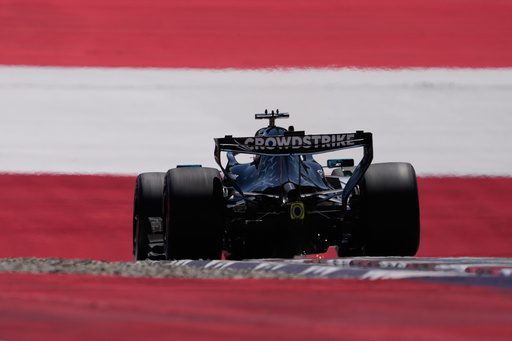
POLICY WIRE — SPIELBERG, Austria — The summer sun over the Styrian Alps didn’t just warm the asphalt; it baked it. We’re talking about a grand prix where the heat itself, not just the competition, became a character—an antagonist for man and machine. It wasn’t about the checkered flag alone here. Nope. This was about endurance, raw human stubbornness, and a drinks system that decided, halfway through, it was done for the day.
George Russell, Mercedes’ unflappable charger, emerged from this fiery cauldron, his uniform drenched but his points tally significantly beefed up. He converted what was already a contentious pole position into a win, his first since that season opener down in Australia, excluding those blink-and-you’ll-miss-them sprint races. He wasn’t just fending off Max Verstappen. And he wasn’t just managing Kimi Antonelli, his own hard-charging teammate. He was duking it out with the sun, the track, — and what he’d later admit felt like an internal inferno. Russell held them off. But really, it’s a wonder anyone kept it together, much less drove a car at obscene speeds with precision — and flair.
This race, frankly, provided a stark visual reminder of the planet’s thermostat cranking higher. Europe’s currently in the throes of a brutal heatwave, so oppressive F1 had to roll out its specific “heat hazard” rules for the very first time this year. Think cooling vests. Think drivers standing stoically under umbrellas for the Austrian anthem—a ridiculous yet necessary pantomime in extreme heat. We’re not talking about a gentle warmth here. This is the kind of climate event that bends infrastructure, tests national grids, and yes, pushes the world’s most advanced racing machinery to its literal breaking point.
Cadillac, F1’s newest hopeful, probably felt the heat most acutely. Both their drivers bowed out early. Sergio Perez reported smoke, and then there was a small fire on Valtteri Bottas’ car that needed extinguishing by the crew. That’s not a good look, folks. As team principal Graeme Lowdon noted, [QUOTE_PLACEHOLDER] And demonstrably, they didn’t. Reliability, it seems, has its own rules, rules sometimes enforced by the brutal physics of a world heating up.
Russell, who many felt was driving with a chip on his shoulder after his teammate Antonelli bagged five straight victories earlier on, showed real grit. He talked about [QUOTE_PLACEHOLDER] Now, suddenly, he’s got momentum. He’s back in second place in the standings, jumping ahead of Lewis Hamilton. He’s slashed Antonelli’s hefty lead down to just 40 points. And he’s got his confidence back, he says, telling the media, [QUOTE_PLACEHOLDER] Sounds like a man still battling variables beyond his immediate control.
Verstappen, armed with an upgraded Red Bull for their home turf, put up a fight. But it wasn’t enough. He found himself defending against Antonelli by the end, not chasing Russell. Those top three were separated by a mere two seconds at the finish line. Lewis Hamilton — and Charles Leclerc, despite promising qualifying performances, found themselves falling back. They simply lacked the grunt to keep up with Mercedes, — and tire wear became a real nightmare for them. Hamilton, though, didn’t just give up; he tangled with Verstappen in a tussle that brought back echoes of their storied 2021 clashes, leading Verstappen to complain Hamilton had forced him wide into a gravel trap. Some things never change, even when the thermometer is cracking.
Oscar Piastri, securing fourth place, was a positive flicker for McLaren, even if defending champion Lando Norris ended up seventh. Still, team principal Andrea Stella wasn’t fooled, stating they were not in a position to fight for victories and podiums on pure pace at the moment. Excellent strategy can only take you so far, especially when the basic engineering isn’t quite there.
What This Means
This Austrian Grand Prix was more than just a race; it’s a symptom. It’s an urgent, flashing indicator of how climate change is altering everything, even highly controlled, climate-managed sports. When Europe, one of the wealthiest continents, struggles under sustained heatwaves (a phenomenon detailed more broadly at Europe’s Melting Point: Heatwave Unleashes Chaos, Reveals Hidden War Legacies), it exposes vulnerabilities right across the board. The very rules of competition had to change here because human biology and automotive engineering couldn’t handle the new normal. For Pakistan and other South Asian nations, which already grapple with extreme temperatures for far longer periods, this isn’t just news. It’s daily life. These F1 teams have unlimited budgets — and cutting-edge tech. Imagine what these heat hazards mean for less privileged societies or essential infrastructure, like, say, agriculture or public health services in Karachi or Lahore.
And let’s consider the broader implications. The IPCC’s Sixth Assessment Report found that global average surface temperature had increased by 1.1 degrees Celsius since 1850-1900. That rise manifests in events just like this. Economic ramifications are already here: lost worker productivity, stressed power grids, crop failures. Politically, the narrative shifts, demanding action on climate, but also fueling new divisions over who bears the burden. The intense heat of this race is a micro-economic bellwether for what happens when a sector accustomed to predicting every variable suddenly encounters one, nature’s, that’s both increasingly erratic and brutally overwhelming. You can throw money at engineering, but Mother Nature often holds the veto. And sometimes, you just can’t beat the heat. And that’s a policy issue right there.