


Beijing’s Aerial Anomaly: A Ghost Crash and the Art of Erasure
POLICY WIRE — Beijing, China — It wasn’t the sound of impact that truly resonated, but the eerie silence that followed. For a brief, confounding stretch, information channels hummed with the...

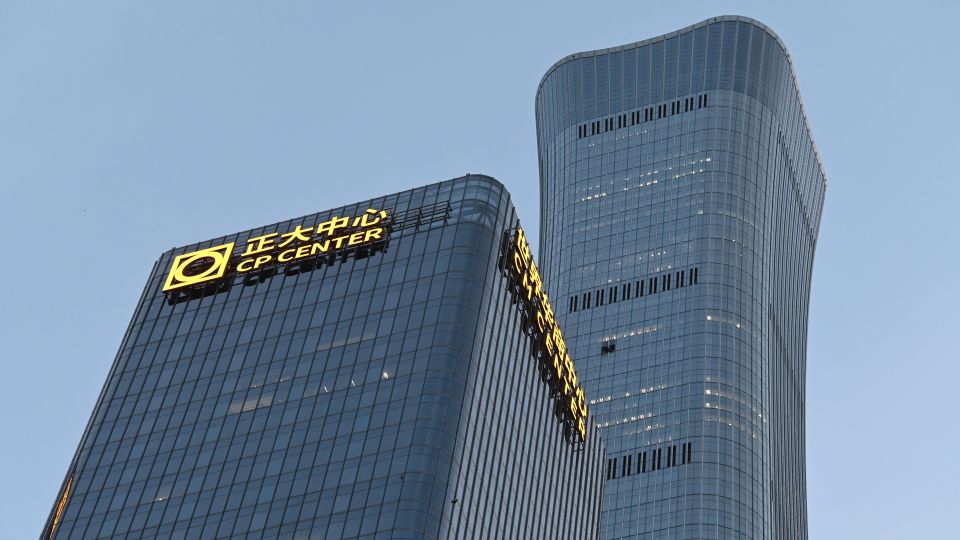
POLICY WIRE — Beijing, China — It wasn’t the sound of impact that truly resonated, but the eerie silence that followed. For a brief, confounding stretch, information channels hummed with the unsettling report: A small plane, they said, had slammed into the tallest skyscraper in China’s capital.
A shocking event, no doubt. But then, as abruptly as the news emerged, it simply—poof—disappeared. Hours later, it was like nothing had happened.
An extraordinary act of collective amnesia, carefully curated and chillingly effective.
This wasn’t a glitch; it was a policy. And frankly, it’s a hell of a policy, ain’t it? One moment, there’s chaos in the sky over a teeming metropolis—the very symbol of modern Chinese ambition—and the next, history itself gets airbrushed faster than a bad tattoo. For a government so obsessively concerned with managing its national image and internal narrative, this incident, whatever its true nature, became an instant case study in informational totalitarianism. No questions asked. No bodies. No wreckage. No curiosity allowed. Just… gone. [QUOTE_PLACEHOLDER]
It beggars belief for anyone accustomed to the relentless 24/7 news cycle of the West, where a spilled coffee in a public place can spark a minor crisis of journalism. Here, in the sprawling, tightly controlled digital ecosystem of the People’s Republic, a possible aircraft disaster simply evaporated. It speaks volumes, don’t you think, about what authorities *can* and *will* do when they decide a narrative isn’t convenient. It’s a sleight of hand on a national scale, a ghost in the machine of reality. And it’s terrifyingly effective.
But the vacuum created by such comprehensive erasure often breeds more questions than it suppresses. Why the swift, almost surgical removal of every digital trace? Was it truly a minor incident overblown by initial reports, or something far more concerning that needed burying deep? One can only speculate, of course, because information, as it happens, isn’t a commodity freely exchanged in this particular market. You’ve got to wonder how many other similar occurrences simply vanish, never to grace a public headline, or even a hushed WeChat conversation.
And this isn’t just about China. You see this kind of narrative control, perhaps less overtly successful, in other nations, too. Think about states across South Asia or parts of the Muslim world—places like Pakistan, for instance—where national stability and perceived strength often take precedence over transparency. While they might not possess the digital apparatus to delete an event from collective memory quite as cleanly as Beijing can, the instinct to shape, suppress, and often outright deny inconvenient truths is remarkably similar. In Islamabad, Karachi, or Lahore, for example, a different plane crash or sensitive political development might not be wiped entirely from the record, but its official interpretation would be carefully, exhaustively, and sometimes comically managed to serve the state’s agenda. But the intent, that absolute impulse for control, feels quite similar.
Even small-scale accidents, like an Austrian climber’s fall that exposed risks in Bavaria’s tourist economy, become subjects of intense scrutiny and analysis elsewhere. Not so in Beijing’s vanishing act. This isn’t just a local anomaly; it’s a global lesson in authoritarian resilience. Data from Freedom House consistently ranks China among the world’s worst for internet freedom, with its score hitting an all-time low of 9 out of 100 in their 2023 report. That isn’t just a number; it’s the operational guideline for moments like these.
📄 POLICY WIRE WHITEPAPER PUBLISHED: PAKISTAN'S NATIONAL SECURITY POLICY PRIORITIES
👉 READ BY CLICKING HEREBecause ultimately, this isn’t about one strange event. It’s about a systematic approach to reality, where the state acts as the ultimate editor, fact-checker, and historical revisionist. It’s a chilling reminder that in some parts of the world, what you see—or rather, what you’re allowed to see—is merely a curated projection. It’s not the news; it’s the news *approved*. We’re not talking about propaganda in the traditional sense, but something more insidious—the prevention of dissent by literally erasing its cause. That’s a whole different ballgame. And we’d be foolish to ignore what it means for anyone doing business there or living under similar conditions.
What This Means
The swift obliteration of a potentially high-profile incident from the public record carries multifaceted implications. Politically, it signals an unflinching, confident assertion of state power over truth itself. It’s not enough to control the media narrative; they’re controlling historical facts, too, effectively demonstrating to both domestic and international audiences the formidable capacity for information suppression inherent in China’s digital authoritarian model. This move solidifies Beijing’s position as a master of controlled reality, creating a template other authoritarian states—including some in the broader South Asian and Muslim world—undoubtedly study with keen interest. When the state can make a plane crash disappear, it can control anything. This creates a deeply unsettling precedent for civil liberties and basic transparency, affecting everything from investor confidence to international relations.
Economically, this ghost crash—or rather, its meticulous vanishing act—reinforces the perception of high political risk and opaqueness for foreign entities operating within China. Transparency, or the absolute lack thereof, complicates due diligence, heightens uncertainty, and makes risk assessment a speculative endeavor at best. If significant events can be wiped clean without explanation, it suggests a profound instability beneath a veneer of order, impacting everything from insurance markets to long-term investment strategies. For those considering involvement in China’s sprawling infrastructure or manufacturing sectors, this isn’t just a strange headline; it’s a stark reminder that facts on the ground can be fluid, governed by state decree, not empirical evidence. It underscores how the Chinese model, while sometimes presenting advantages like cheap tech and rapid deployment, comes bundled with an entirely different kind of risk premium: the risk of unreality.