

Aftershocks and Aid: Europe’s Unlikely Embrace of Quake-Hit Venezuela
POLICY WIRE — Caracas, Venezuela — The earth moved, quite literally, and with it, perhaps, some hardened diplomatic ground. It wasn’t the sound of political platitudes echoing through Caracas...

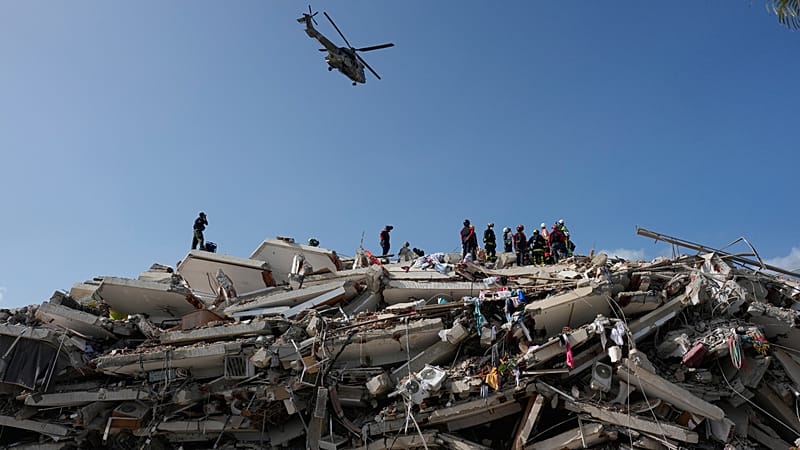
POLICY WIRE — Caracas, Venezuela — The earth moved, quite literally, and with it, perhaps, some hardened diplomatic ground. It wasn’t the sound of political platitudes echoing through Caracas this past week, but the rumble of specialized European rescue teams hitting Venezuelan soil. This wasn’t a rapprochement framed by high-level summits or verbose communiqués—no, this was far more immediate. This was mud-splattered boots on the ground, sniffer dogs at work, and the urgent cadence of foreign accents cutting through the cries of a nation just rocked by calamitous tremors.
Venezuela, already reeling from an economic meltdown of biblical proportions and a protracted diplomatic chill with many Western powers, now finds itself battling the raw, indiscriminate force of nature. An offshore earthquake, registering a hefty 7.2 on the Richter scale, devastated swaths of its coastline and interior, toppling fragile infrastructure and trapping countless beneath concrete. But because necessity is often the sincerest form of diplomacy, European nations, often vocal critics of the Maduro regime, didn’t hesitate. Germany, France, Spain, — and others dispatched specialized search-and-rescue units, doctors, and engineers.
“Our commitment to human life knows no borders, nor political disagreements,” stated Dr. Werner Brandt, a German Foreign Office spokesperson, speaking from Berlin. “When people suffer, particularly with such a devastating natural calamity, Europe responds. It’s what we do. It’s a core principle of our Union.” A measured statement, indeed, reflecting the EU’s careful tightrope walk between humanitarian imperative and political condemnation. They’re offering hands, but they aren’t necessarily extending olive branches just yet. At least not overtly.
And you see the stark contrast, don’t you? These same governments have, for years, condemned Caracas’s human rights record, questioned its democratic legitimacy, and imposed targeted sanctions. But when the ground literally shakes, those geopolitical fault lines can, if only temporarily, recede beneath the more immediate need for spades and stretchers. It’s a stark, almost poetic reminder that shared humanity still occasionally trump’s geopolitical chess, if only for a brief, fragile moment.
From the Venezuelan side, the response was, predictably, a careful blend of gratitude — and deflection. President Nicolás Maduro, rarely missing an opportunity for political messaging, was quick to thank his European counterparts. “We welcome this assistance from our friends in Europe,” he declared during a televised address, flanked by relief coordinators, “a true show of solidarity with our resilient people, unlike the cynical sanctions and indifference of some others who prefer to watch us struggle.” A thinly veiled swipe, naturally, at Washington, proving that even amidst disaster, the familiar rhetorical battles don’t quite vanish.
The scale of the devastation remains difficult to ascertain fully, particularly given Venezuela’s state-controlled media landscape. What’s clear, though, is that the needs are immense. One non-governmental organization estimated that over 300,000 individuals across six states are directly affected by the quakes—a staggering figure in a country already struggling to provide basic services. This is not just a building collapse; it’s an acceleration of an existing crisis, adding structural integrity issues to food and medical shortages.
📄 POLICY WIRE WHITEPAPER PUBLISHED: PAKISTAN'S NATIONAL SECURITY POLICY PRIORITIES
👉 READ BY CLICKING HEREThe arrival of European teams, therefore, isn’t just about search and rescue; it’s a temporary reprieve, a flash of normalcy and external concern in a nation that often feels ostracized. This pragmatic engagement—even if limited—can sometimes be a precursor to deeper diplomatic shifts, an uncomfortable truth for both sides. Think about similar instances: the world’s rapid response to the devastating 2005 Kashmir earthquake, where even nations with deep political fissures set them aside to help Pakistan rebuild. Crisis, it turns out, often reveals the shared thread of human vulnerability and the quiet dignity of selfless assistance.
What This Means
This episode is more than just disaster relief; it’s a fascinating, if subtle, reorientation of priorities for both Brussels and Caracas. For Europe, it signals a quiet concession to pragmatism. While it maintains its criticisms of the Maduro regime, denying aid in a humanitarian catastrophe would contradict its proclaimed values and simply look bad—especially given its deep historic ties to Latin America. It’s a way to maintain some leverage, too; a means to keep a foot in the door without legitimizing the broader political context. It’s a geopolitical pas de deux, as complex as it’s consequential.
For Venezuela, it’s a desperate, undeniable olive branch—one they can scarcely afford to refuse. The aid helps, obviously, but it also punctures the narrative of a completely isolated, self-sufficient nation. It forces a certain level of engagement with the very powers that have sanctioned it, albeit on its own terms—those of a humanitarian recipient, not a supplicant for political change. But this interaction, even if begrudging, opens channels that had been frozen solid. It allows for practical cooperation, however limited. And sometimes, practical cooperation builds unexpected bridges. Don’t be surprised if these hands of aid, extended in crisis, lead to more sustained, albeit wary, dialogues in the weeks and months to come. It wouldn’t be the first time tragedy rearranged the chessboard. This event, tragic as it’s, might well shift some established geopolitical fault lines.