


Europe’s Grand Meltdown: Old World Cracks Under Unforgiving Summer Sky
POLICY WIRE — Berlin, Germany — It wasn’t just the mercury exploding. No, what truly unraveled in the sun-baked heart of Europe this summer was the meticulous, almost mythical, veneer of Continental...

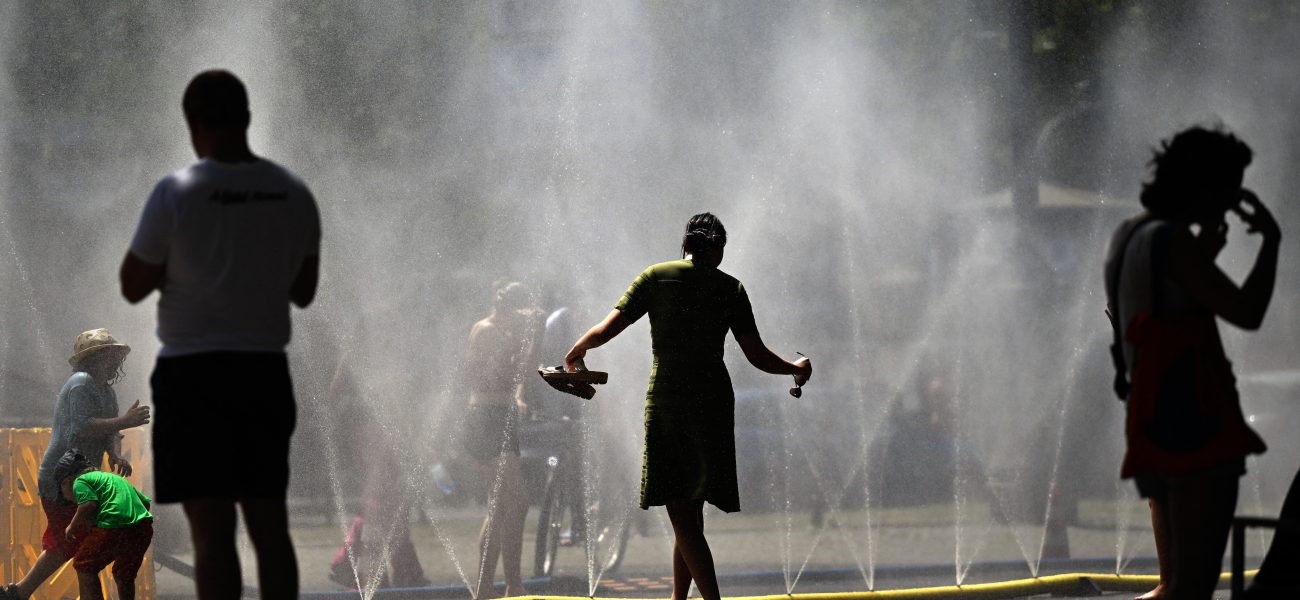
POLICY WIRE — Berlin, Germany — It wasn’t just the mercury exploding. No, what truly unraveled in the sun-baked heart of Europe this summer was the meticulous, almost mythical, veneer of Continental efficiency. Punctuality, that hallowed German virtue, didn’t merely falter—it sweat, sputtered, and died a messy death on buckling rail lines and simmering autobahns. Europe, long the arbiter of climate discourse, now found itself stewing in its own unacknowledged projections, scrambling for air conditioning units previously deemed an American excess.
Record temperatures weren’t just data points on a screen; they were existential threats draped over landscapes ill-equipped to cope. Germany, of all places, recorded temperatures that kissed 39.1 degrees Celsius (102.4 degrees Fahrenheit) in Cottbus, Brandenburg. But what does a number truly convey when asphalt turns to treacle, concrete expands with a groan, and the pristine façade of northern European summers gives way to something indistinguishable from a particularly grim day in Riyadh?
And so, we watched, squinting in the shimmering heat haze, as countries like Denmark and Switzerland joined the thermal club, reporting their own highest-ever temperatures. The idyllic landscapes, those picture-postcard valleys, transformed into convection ovens. But this isn’t merely a tale of a few hot days; it’s a brutal reality check, a sharp elbow to the ribs for a continent that often presents itself as perpetually poised and perfectly prepared.
“We’ve known this was coming, haven’t we?” quipped German Environment Minister Steffi Lemke, her voice tight, speaking to state broadcaster ARD, a fan whirring audibly in the background. “But knowing and experiencing—they’re vastly different things. Our infrastructure, our habits—they’re built for a different world. We’re paying for decades of collective procrastination, and honestly, it’s not just a policy problem, it’s a lifestyle crisis.” She’s got a point. You can’t just wish away thermodynamics.
The immediate effects? Train delays became the norm, not the exception. The iconic German rail network, often a source of national pride, buckled. Farmers fretted, tourists evaporated, — and electricity grids hummed with an ominous tremor as demand for cooling soared. It wasn’t the kind of sizzling excitement travel brochures promised. Instead, it was an awkward, sweaty struggle for normalcy that, more often than not, ended in exhausted capitulation.
“We talk a good game about green transition, but when the heat arrives, everyone wants the quickest, cheapest cool,” said EU Commissioner for Energy Kadri Simson, managing a tight smile during an energy forum. “Our reliance on air conditioning, historically less prevalent here, is shooting through the roof. It’s creating demand spikes we aren’t ready for, and frankly, it’s going to make our energy security discussions a lot more complicated going forward.” Because energy usage in Europe isn’t just about heat anymore; it’s about geopolitics and a new kind of dependency.
📄 POLICY WIRE WHITEPAPER PUBLISHED: PAKISTAN'S NATIONAL SECURITY POLICY PRIORITIES
👉 READ BY CLICKING HEREThe echoes from hotter climes are unmistakable. Places like Pakistan, where temperatures can regularly reach and exceed these European peaks, understand the daily grind of such extreme conditions. Their farmers, often subsistence-level, battle heat-induced crop failures — and water scarcity year in, year out. For Europe, this summer is a mere taste, but for countries in South Asia and across the Muslim world, it’s been a perennial, harsh truth. It brings into sharp focus the glaring disparities in climate adaptation resources. While Europe sweats in unexpected comfort, many don’t have the luxury of failing infrastructure—they just fail. One only needs to look at projections from the Intergovernmental Panel on Climate Change (IPCC), which indicates that without aggressive mitigation, average global temperatures could rise by 2.7°C (4.9°F) by the end of this century, making these heatwaves not aberrations, but the grim new normal.
It’s a peculiar thing, seeing a continent famous for its cool reasoning and measured responses grapple with something as fundamentally irrational as boiling asphalt. You can almost sense the bureaucrats, initially flustered, now grimly re-evaluating everything—from building codes to emergency protocols. It isn’t just about putting out fires; it’s about rethinking the very fabric of how their societies operate in a warming world. They’re realizing those cracks in German efficiency weren’t just cosmetic. They’re foundational.
What This Means
The relentless European heatwave isn’t just a temporary inconvenience; it’s a stark preview of deeper geopolitical and economic shifts. Politically, the heat exacerbates internal divisions within the EU over climate policy, highlighting the colossal cost of transitioning to greener alternatives versus the even greater cost of inaction. It’s no longer a theoretical debate; it’s about whether trains run on time or if power grids can handle the load. Economic fallout will be widespread, impacting tourism, agriculture, and increasing demand for energy—and subsequently, energy prices. The social contract could also fray, as public trust in government’s ability to protect its citizens during environmental crises diminishes. Culturally, there’s a slow but inevitable normalization of what was once extreme, desensitizing populations to the dire reality of climate change while simultaneously triggering adaptation behaviors, however reluctant. Expect renewed, — and often heated, debates over urban planning, water management, and international climate aid. Because if Europe struggles with 39 degrees, what moral ground does it stand on when lecturing nations accustomed to 45?