


Germany’s Concrete Cracks: A Climate Reckoning on the Autobahn
POLICY WIRE — Berlin, Germany — Forget, for a moment, the romanticized image of German engineering, that rock-solid precision often synonymous with high-speed travel and unwavering reliability....

POLICY WIRE — Berlin, Germany — Forget, for a moment, the romanticized image of German engineering, that rock-solid precision often synonymous with high-speed travel and unwavering reliability. Because lately, that perfectly paved picture? It’s literally coming apart at the seams. And not with a whimper, but with angry, blistering heat.
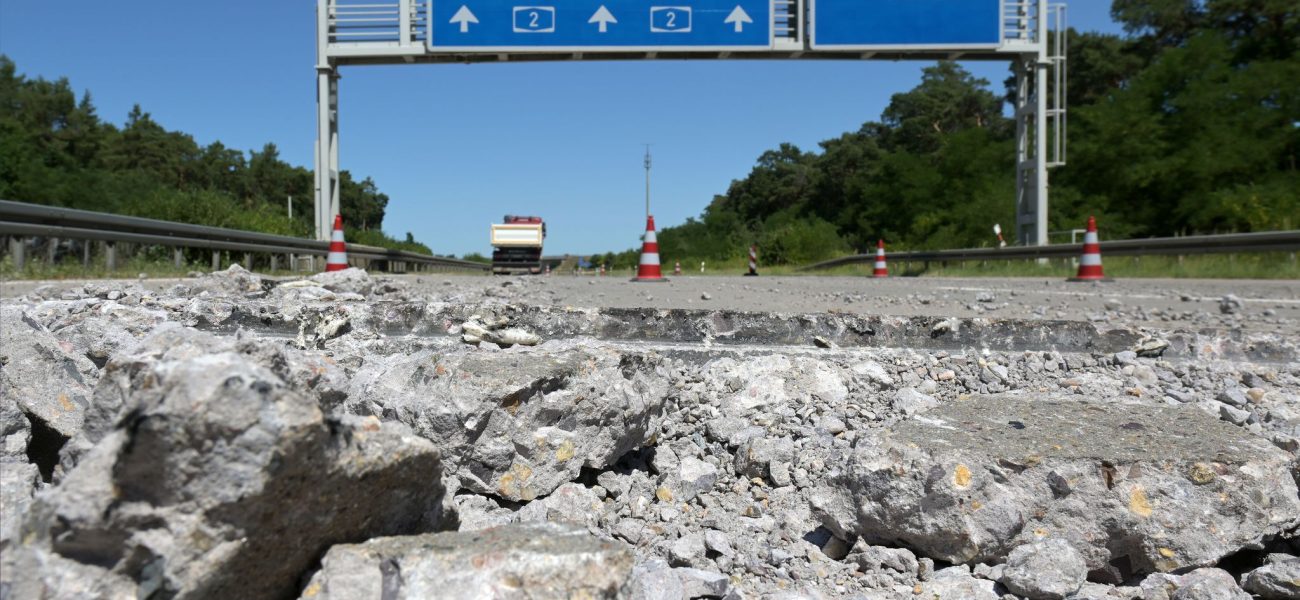
While the world frets over melting glaciers and distant islands, Germany’s iconic autobahn — a symbol of its economic might and efficient planning — has begun to show deep, worrying fissures. These aren’t just cosmetic cracks; they’re stress fractures, expanding and buckling as summer temperatures climb far beyond what these concrete behemoths were designed to handle. Think of it: miles of asphalt stretching under relentless sun, giving way, causing closures, slowing supply chains. It’s an inconvenient truth for a nation that prides itself on everything just *working*.
It’s not just the Autobahn, mind you. Earlier this summer, we saw similar vulnerabilities manifest as Germany’s iron rails buckled. These aren’t isolated incidents. They’re increasingly common symptoms of a continent simply not built for the weather it’s now experiencing. Germany, with all its wealth and meticulous planning, finds itself in an unfamiliar bind, grappling with problems previously relegated to — well, less developed climes. It’s a sobering thought, isn’t it?
Volker Wissing, the nation’s Minister of Digital and Transport, didn’t mince words, though he tried to couch it in pragmatic terms. “We’re facing a colossal challenge that demands immediate, extensive investment in climate-resilient infrastructure,” Wissing stated last week, his voice tinged with an unusual urgency. “Our planning models, designed for a different era, simply aren’t adequate now. We can’t afford the economic slowdown that comes with impassable roads.” He’s right, of course. Billions of euros in damage and countless hours lost to diversions—it’s a productivity drain.
But the problem, say experts, is deeper than just a quick repair job. “This isn’t merely about thicker asphalt or different concrete mixes,” explained Dr. Anya Sharma, an infrastructure climate specialist based in Hamburg. “It’s about a complete re-evaluation of how we build and maintain critical arteries for a future where a 40-degree Celsius summer isn’t an anomaly, but potentially the new norm.” Dr. Sharma highlighted that current German road design standards are typically based on historical temperature data that capped out well below recent peaks, an average summer temperature shift of just 1.5 degrees Celsius in recent decades has been enough to push many structures past their limit.
And where does this leave nations far less equipped to adapt? Consider Pakistan, for instance, a country perpetually battling its own climate extremes – from devastating floods to scorching heatwaves that cripple rudimentary infrastructure. For years, Western experts would offer advice, sometimes a patronizing hand, to developing nations struggling with similar climate-induced damage. Now, the roles are subtly shifting. Germany’s economic engine, fueled by intricate global supply chains (many passing through or originating from South Asia and the broader Muslim world), is experiencing its own choke points. Any significant slowdown on the autobahn, those arteries for industrial giants like BMW or Siemens, has ripple effects that reverberate across continents. Containers wait, goods pile up, and suddenly, a delay in Frankfurt means a factory in Karachi is behind schedule, or vice-versa. It’s all connected, like it or not.
📄 POLICY WIRE WHITEPAPER PUBLISHED: PAKISTAN'S NATIONAL SECURITY POLICY PRIORITIES
👉 READ BY CLICKING HEREEven Frans Timmermans, the former EU Commissioner for Climate Action, weighed in, though more generally. “What Germany is experiencing is a stark reminder to all of us across Europe, and indeed the world,” he said, speaking from Brussels. “Ignoring these early warning signs – these cracks in the very fabric of our societies – would be nothing short of catastrophic. This isn’t some distant problem anymore; it’s right on our doorstep, under our tires.” He makes a decent point. We’ve been talking about this stuff for ages, — and now it’s actual, physical damage.
What This Means
This isn’t just a road maintenance issue; it’s a profound political — and economic reckoning. Germany’s image as the unflappable engine of Europe is taking a beating, and its ability to maintain its competitive edge will hinge on how quickly and effectively it can adapt. Economically, prolonged disruptions to the autobahn network directly inflate transport costs, strain logistics, and could prompt manufacturing giants to re-evaluate their ‘just-in-time’ delivery models, potentially driving up prices for consumers across the Eurozone. And let’s be honest: in an economy already on edge, nobody needs that extra turbulence.
Politically, the issue provides potent ammunition for both sides of the climate debate. Advocates for aggressive climate action can point to the buckled asphalt as undeniable proof that climate change isn’t a future problem but a present, expensive reality. Skeptics, on the other hand, might try to frame it as a failure of past infrastructure investment, downplaying the climatic element. But regardless of spin, the taxpayer will foot the bill. And because Germany’s stability is so foundational to the wider EU, any structural weakness there — literal or metaphorical — has uncomfortable implications for the entire bloc. It forces the question: if Germany’s infrastructure can’t handle a few hot summers, what hope do others have? It’s a messy business, with no easy answers.