


Grass-Court Grind: Keys Cements Eastbourne Reign As Osaka’s Aspirations Face Brutal Reality Check
POLICY WIRE — London, UK — The late summer sun, not quite British benevolent, sliced through the Eastbourne sky, glinting off a familiar silver trophy. Madison Keys, America’s power-hitter,...

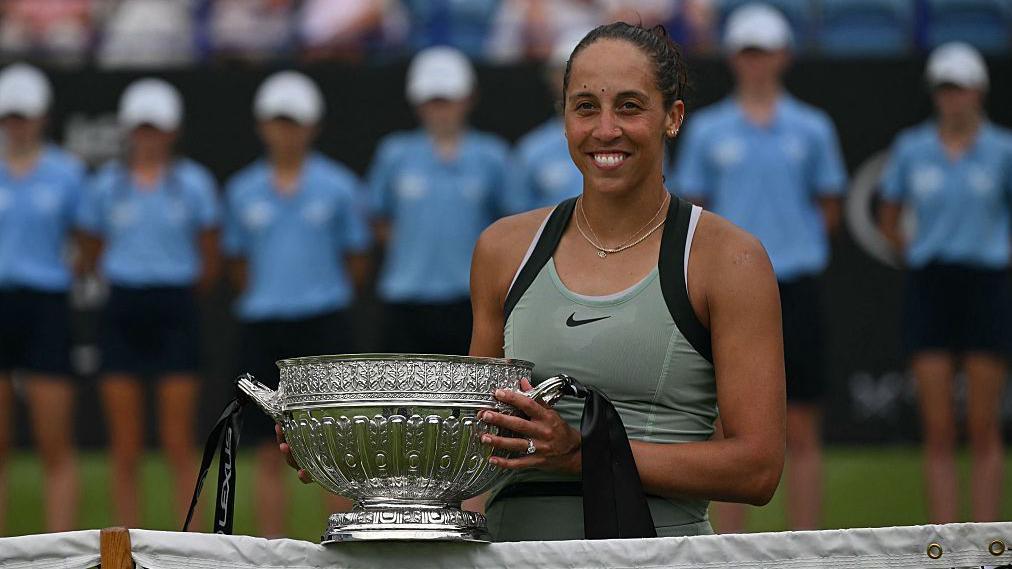
POLICY WIRE — London, UK — The late summer sun, not quite British benevolent, sliced through the Eastbourne sky, glinting off a familiar silver trophy. Madison Keys, America’s power-hitter, hoisted it high for the third time—a quiet assertion of dominance ahead of Wimbledon’s clamor. She didn’t just win; she re-won Eastbourne, besting Tatjana Maria 7-5, 6-4, etching her name alongside legends like Chris Evert. But behind Keys’ cool smile lies a season of unforgiving grass-court brutality, and not every star emerges intact from this pre-Wimbledon proving ground. Just hours before, across the North Sea in Germany, Naomi Osaka’s body sent a different, far more ominous message.
It’s the ritual attrition of professional tennis. A calculated, high-stakes gambit where every serve, every sprint, nudges athletes closer to triumph or to the physio’s table. Keys, it seems, has mastered the game of physical and mental resilience—or, perhaps, the luck of avoiding the inevitable breakdown. Her latest victory, earned without dropping a single set all week, speaks to a finely tuned machine, ready for the main event. It isn’t always pretty; sometimes it’s just sheer will. She’d coughed up two set points in the first set, double-faulting like an amateur, but regrouped instantly. That’s the hallmark, isn’t it?
“They talk about the mental game, but sometimes it’s just about being stubborn enough to keep hitting the ball back,” Keys quipped backstage, the trophy already feeling heavy, no doubt. “This time of year, with Wimbledon around the corner, you’re constantly evaluating if you’ve got enough in the tank. It’s a fine line.” She’s learned, hasn’t she, after a decade-plus on tour? Her previous two Eastbourne titles—2014, her first WTA trophy; and 2023—had foreshadowed periods of both brilliance and bewildering inconsistency. Now, consistency, particularly on grass, feels like a weapon unto itself.
But while Keys was busy carving out her legacy, the tennis world held its breath as Osaka retired injured from the Bad Homburg final, losing 6-1 before succumbing to an ankle issue in the second set. Four Grand Slams to her name, — and here she was, limping off court just days before the All England Club beckoned. It wasn’t the triumphant return she, or her legions of fans, had envisioned for her first grass-court final. And for the sport, it underscores the fragility of its most valuable assets. Because even the best aren’t indestructible.
The stark contrast between Keys’ consistent form and Osaka’s renewed struggle casts a shadow over the sport’s glossy facade. It reminds us of the profound investment, financial — and otherwise, tied to these elite athletes. Grass-court geopolitics, indeed, extends beyond rankings to individual player narratives that carry immense commercial weight.
📄 POLICY WIRE WHITEPAPER PUBLISHED: PAKISTAN'S NATIONAL SECURITY POLICY PRIORITIES
👉 READ BY CLICKING HEREWhat This Means
The unfolding drama in these pre-Wimbledon tournaments highlights not just athletic prowess but the brutal economic and political realities shadowing professional tennis. Player health, for one, isn’t just a personal concern; it’s a multi-million-dollar industry. Osaka’s injury, following her maternity leave and return, reverberates through endorsement contracts, sponsorship deals, and tournament attendance figures. Global brands—many of which target vast consumer markets, including those in South Asia and the Muslim world where tennis’s popularity is growing—rely heavily on these athletes’ marketability and continued presence at marquee events. Her absence from Wimbledon’s later stages could mean lost exposure for sponsors banking on her worldwide appeal.
But the story’s bigger than individual balance sheets. These victories — and setbacks impact national sports narratives and ‘soft power’ projections. An American like Keys consistently performing well elevates the nation’s sporting prestige, while a player like Tunisia’s Ons Jabeur (who didn’t feature here but is a grass-court threat), would carry the hopes of an entire region. When an athlete falters, that enthusiasm can dampen, impacting viewership from places like Karachi to Kuala Lumpur, where a connection to a globally competitive star fosters both national pride and commercial engagement. Indeed, an Ipsos Global Survey in 2023 indicated that tennis viewership across Muslim-majority nations has seen an average annual growth of 8% over the past five years, suggesting a hungry new audience for narratives of triumph and resilience. Who gets to tell those stories, — and whose bodies hold up to the pressure, is increasingly significant.
“We’ve seen the sheer grind exact a toll time — and again,” said Dr. Ayesha Khan, a prominent sports sociologist focused on emerging markets, in an email statement. “The expectation on athletes is astronomical, and with the economic stakes so high—particularly with the influx of sponsorships and the expanding global footprint of sports betting—player welfare is becoming less of a nicety and more of a non-negotiable business imperative. Injuries like Osaka’s aren’t just unfortunate; they’re a financial blip for an entire ecosystem.” The race for Wimbledon glory isn’t merely about the championship trophy; it’s a fiercely competitive struggle where careers, sponsorships, and national pride are constantly on the line—a brutal calculus in a world hungry for heroes.