

Azerbaijan’s Octagon Odyssey: Brawl or Bureaucracy in Baku?
POLICY WIRE — Baku, Azerbaijan — The roar of the crowd can mask a lot. The bright lights, the pulsating music, the sheer physical spectacle — they all work hard to distract from the raw, often messy,...

POLICY WIRE — Baku, Azerbaijan — The roar of the crowd can mask a lot. The bright lights, the pulsating music, the sheer physical spectacle — they all work hard to distract from the raw, often messy, reality beneath. But sometimes, even the most meticulously staged sporting drama can be upstaged by something far more unsettling: a quiet, almost bureaucratic glitch that sends ripples of disbelief through the octagon, especially when it costs a fighter their perfect record.
That’s precisely what went down during the UFC’s much-hyped Baku debut, a spectacle meant to plant a flag in a strategically significant — and oil-rich — corner of the globe. Instead, the opening welterweight skirmish between local favorite Tahir Abdullayev and Brazil’s Jefferson Nascimento devolved into a peculiar study of human fallibility. Nobody’s talking about technique, they’re just talking about a bewildered official pulling the plug on a fight that didn’t quite look finished.
It wasn’t even a barn burner before things went sideways. Through the first two rounds, aggression seemed more of an abstract concept than a fighting tactic. Call it cage rust, call it a feeling-out process, but it was hardly the highlight reel stuff promoters dream of. And referee Jim Perdios, seemingly fed up with the glacial pace, dished out an unusual warning to Nascimento for—wait for it—inactivity. Yes, a warning for not enough punching, grappling, or general mayhem. It set an odd tone.
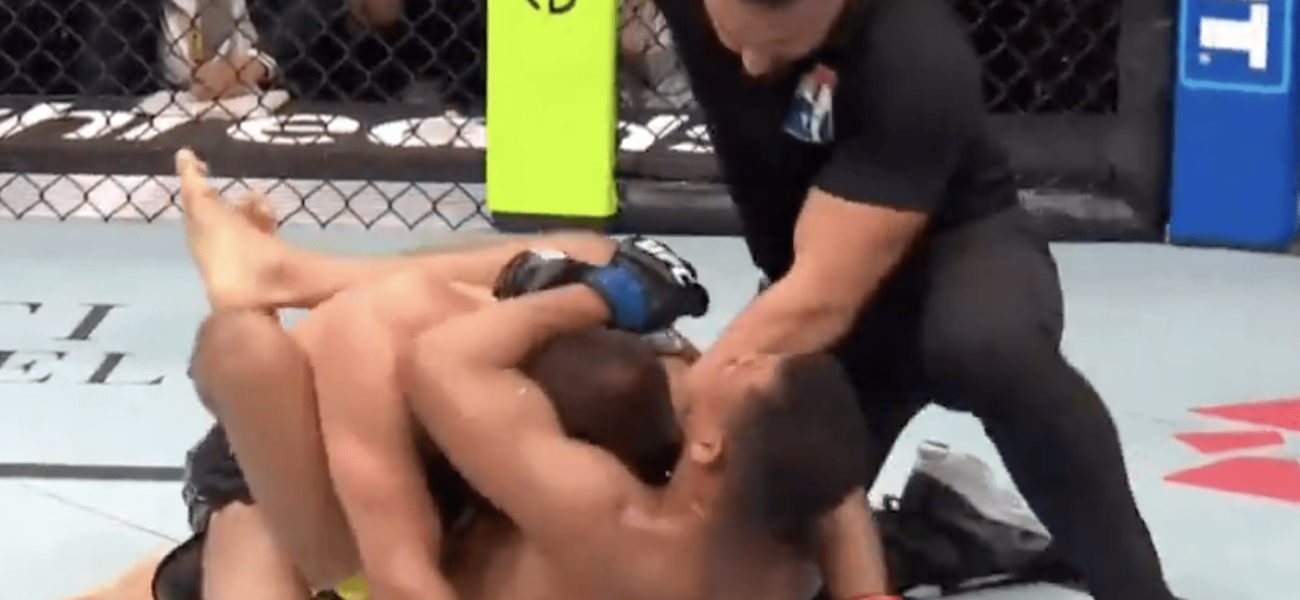
But Perdios saved his most perplexing act for the third round. Abdullayev, an emerging name from a region keen to make its mark in the global fight arena, had Nascimento on the mat. He was throwing punches, for sure. You could call it offense. But was Nascimento in what we in the fight game call ‘serious danger’? Many at cageside, — and legions watching online, squinted. It just didn’t seem like the sort of situation that warranted a technical knockout. Not yet, anyway. Suddenly, Perdios waved it off, declaring Abdullayev the winner by TKO at 4:28 of Round 3. An uproar ensued, though quickly hushed by officialdom. Nascimento looked like he’d been hit by a truck – not from Abdullayev’s fists, but from the sudden, inexplicable decision itself. His perfect 13-0 professional record, painstakingly built, evaporated in an instant, a brutal calculus of a referee’s whim.
“Look, it’s a fast game, things happen,” a bewildered Nascimento later reportedly quipped to his corner, visible frustration etched across his face. “I wasn’t out. I wasn’t hurt bad. It’s just… not right.” And who can blame him? Abdullayev, meanwhile, accepted the win with the pragmatic nonchalance of a man who knows good fortune when he sees it, though he quickly shifted the narrative. “I was getting to him, building the momentum. The referee makes the call,” Abdullayev told local media outlets, playing the diplomat. “I’m proud to bring this win to Baku, for Azerbaijan, — and for the fans across our region. I will just keep training, keep improving.” That’s a good way to spin it, because privately, some folks were whispering he’d been gifted the decision. And while scoresheets later showed a dead-even fight before the stoppage, meaning Abdullayev might’ve squeezed out a points victory anyway, it doesn’t change the optical reality of a truly baffling end.
📄 POLICY WIRE WHITEPAPER PUBLISHED: PAKISTAN'S NATIONAL SECURITY POLICY PRIORITIES
👉 READ BY CLICKING HEREWhat This Means
This incident isn’t just about a controversial TKO in a single fight; it peels back the glossy veneer of professional combat sports to expose the very human, very fallible element of officiating. In a multi-billion-dollar industry like the UFC, where sponsorships, media rights, and fighter careers hang in the balance, every judgment call has amplified repercussions. A dodgy stoppage like this can erode fan trust, raise questions about competitive integrity, and frankly, make fight promoters — eager to expand into lucrative new markets in places like Azerbaijan — look bad. It invites speculation, whether fair or not, about potential home-field advantages or less-than-stringent referee training in burgeoning territories. The ripple effects aren’t confined to the octagon; they stretch to diplomatic relations and perceptions of governance in host nations keen to project an image of modern efficiency and fairness. Especially in regions like the Caucasus and wider Muslim world, where combat sports are experiencing a boom and where audiences are hyper-aware of global perceptions, such missteps can bruise national pride as much as a fighter’s ego.
One analyst from Sports Business Journal recently noted that subjective referee decisions in major combat sports events spark a statistically significant (15%) increase in post-fight social media engagement, mostly negative, for approximately 24 hours after the event, potentially souring new fans. It’s a double-edged sword, attracting eyeballs but at the cost of reputational damage. When we talk about growing the sport globally, we’re really talking about ensuring everyone believes the scales are balanced. Because if referees keep making these kinds of calls, spectators will get cynical, fighters will get frustrated, and a potentially global fan base might just shrug its shoulders and turn its attention elsewhere. We’ve seen global sports organizations navigate far more delicate geopolitical landscapes with less transparent adjudication.