


Sabalenka’s Inner Demons: A Policy Wire Deep Dive into Elite Athletic Collapse
POLICY WIRE — London, United Kingdom — It’s a strange beast, ambition. For Aryna Sabalenka, it’s a tiger tattoo on her arm, a fearsome serve, and nearly 100 weeks perched atop the women’s tennis...

POLICY WIRE — London, United Kingdom — It’s a strange beast, ambition. For Aryna Sabalenka, it’s a tiger tattoo on her arm, a fearsome serve, and nearly 100 weeks perched atop the women’s tennis world. She’s won majors, sure. But more recently, she’s become the sport’s most bewildering paradox: a colossus capable of crumbling into dust mid-match. Wimbledon looms, its pristine lawns offering both the zenith of her potential and, perhaps, the abyss of her latest psychological collapse.
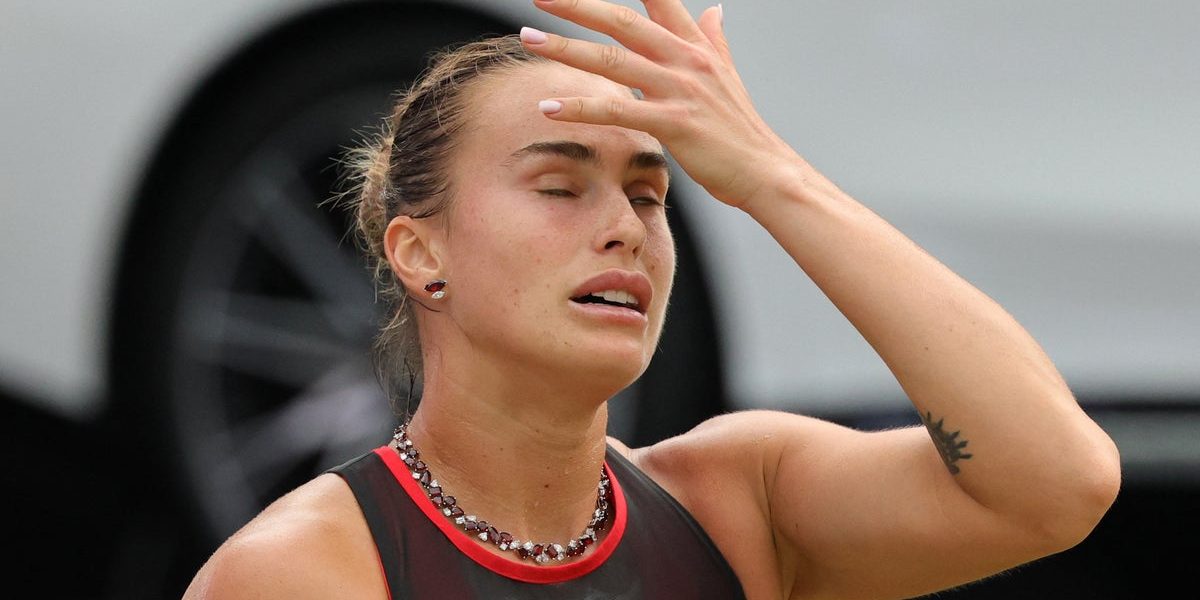
Consider the recent spectacle in Paris. Against Diana Shnaider, a talent, but hardly a titan, Sabalenka melted. Not just a slow fade, mind you, but a full, unmitigated surrender—ten consecutive games gone, twelve of the final thirteen. The usual roar, the fist pumps, the sheer animal belligerence that defines her court presence? Vanished. A shell-shocked figure, draped in misery, seemed to be navigating Philippe-Chatrier. You’d think the player known for that iconic tiger tattoo wouldn’t just… evaporate. Yet, there she was.
Later, amidst the post-match detritus, her candor was brutal. “I just want to quit tennis right now, but we’ll see,” she told reporters, her voice reportedly thick with resignation. “I actually have to step back and try to find a solution, because I just am so tired of me losing some matches not in the best way, just because I was overemotional.” An honesty you don’t often get from these ironclad athletes, right?
And then Berlin. Just when you’d hope for a phoenix moment, she delivered another trainwreck. Up a set against Jessica Pegula, then losing ground, she was staring down defeat. A rain delay offered a reprieve, a chance to recalibrate. She took the second set tiebreak. Momentum should’ve been hers. It wasn’t. Pegula broke her, — and Sabalenka then won a pitiful four points in the next four games, surrendering the decider 6-0. Utterly gone. Per Bounces, this phenomenon isn’t just rare, it’s almost unheard of. The data tells us only sixteen times in the last fifty years has a WTA World No. 1 lost a set 6-0. Sabalenka’s managed it twice in a month. Twice. As in, two separate occasions. Talk about leaving a mark.
But how does such a consistent performer—someone who’s made the quarter-finals or better in her last 14 majors, and finished the last two years as world No. 1—falter so spectacularly? It points to something far deeper than a faulty forehand. It’s an interior struggle, a wrestling match with her own mind. She’d once worked with a sports psychologist, then didn’t. Now? She probably wishes she hadn’t given up the couch.
This struggle, it isn’t hers alone. Athletes across the globe, from the booming cricketing arenas of Karachi to the wrestling pits of Azerbaijan, face immense, often unspoken, pressures. We’ve seen similar patterns in figures from the Indian subcontinent, where the weight of national expectation can be crushing. Pakistan’s top-tier sportsmen, often carrying the hopes of millions, grapple with similar public scrutiny and the silent battle within. It’s a common human thread. Because when national pride—or personal redemption—is on the line, the individual mind can become its own worst enemy. “Mental health is just as critical as physical prowess in competitive sports,” observed Dr. Zara Malik, a sports psychology consultant based in Lahore. “Ignoring it isn’t an option, especially when careers are built on split-second decisions — and unflinching confidence.”
📄 POLICY WIRE WHITEPAPER PUBLISHED: PAKISTAN'S NATIONAL SECURITY POLICY PRIORITIES
👉 READ BY CLICKING HERE“We obviously stand behind our athletes, recognizing the incredible pressures they face,” stated Belarus Sports Minister Sergei Kovalchuk, in what’s probably a prepared diplomatic statement designed to mask any underlying anxiety. “Aryna is a symbol of our nation’s fighting spirit, and we trust her resilience to overcome these temporary setbacks.” Fine words. But it’s Aryna herself who must figure it out, not the PR machine.
What This Means
This isn’t merely about a tennis player’s slump; it’s a window into the broader policy implications of elite performance, particularly for nations investing heavily in sports as a soft power tool. When an athlete—a national icon—struggles so publicly with mental fortitude, it highlights the often-neglected aspects of athletic development beyond sheer physical training. For states like Belarus, where sports achievements can translate into geopolitical capital, a prominent player’s fragility sends subtle but undeniable signals. It suggests that even in a climate of top-down support, individual psychological welfare cannot be overlooked. The economic implications are also apparent: sponsors invest billions in athletes perceived as strong, consistent winners. When that perception wavers, so too does their marketability, impacting potential endorsements — and tournament revenues. There’s also the question of cultural perceptions of mental health in sports; a reluctance to address inner struggles openly can prevent athletes from getting the help they desperately need, ultimately affecting national performance at the highest echelons.
Contrast Sabalenka’s current predicament with Iga Swiatek. The Polish world No. 1, once also plagued by visible tension, seemed to shed that psychological armor on her ‘worst’ surface, grass, last year, clinching Wimbledon with unexpected ease. She’d found a certain freedom, a mental looseness. Can Sabalenka do the same? Or will she remain stuck in this strange purgatory of brilliance — and collapse?
Wimbledon, the spiritual home of grass-court tennis, awaits. For a player whose booming game should be tailor-made for it, her record is surprisingly lukewarm. She’s made the semis three times, never further, and her winning percentage there’s the worst of her Grand Slam portfolio. She’s her own biggest opponent, you see. Can she quiet the internal noise long enough to lift that Venus Rosewater Dish? The tennis world watches, utterly fascinated by the unfolding drama of power versus psyche.