

Dems’ Factional Fights Loom Large as Trump Shadows Unity Calls
POLICY WIRE — Washington, D.C., USA — They say history doesn’t repeat, but it certainly rhymes. American political cycles, particularly the presidential kind, always bring out the knives among...

POLICY WIRE — Washington, D.C., USA — They say history doesn’t repeat, but it certainly rhymes. American political cycles, particularly the presidential kind, always bring out the knives among those who ostensibly share the same tent. Then, after the bruised egos and drained coffers of primary season, comes the predictable-as-death-and-taxes call for solidarity against the designated external foe. And this cycle, oh man, it’s no different. That old maxim—about remembering who the real adversary is—well, it feels heavier than usual right now, echoing through the marble halls of power, whispered behind closed doors.
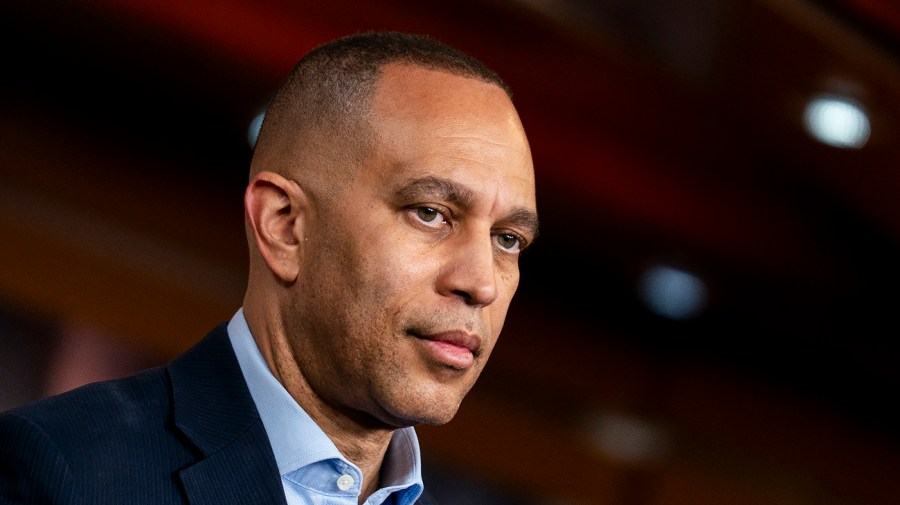
Hakeem Jeffries, who currently wields the speaker’s gavel, hasn’t just been presiding over legislative tussles. He’s been navigating a far more ancient, far more visceral struggle: keeping his fractious coalition from tearing itself apart. There’s always some intra-party scuffle, sure, but lately? It seems the battle lines within the Democratic Party are drawn with an uncommonly sharp pencil, etching deeper divides than many expected, even against a backdrop where a unified front feels, shall we say, rather necessary.
The Congressman’s recent interventions, as they’re termed in the official press releases, come across less as gentle nudges and more as stark warnings. It’s an interesting approach—reminding your own troops that the biggest problem isn’t the person you’re competing against in a primary, but the one you’ll face come November. Jeffries made his hopes plain, apparently wishing that Democrats remember after primaries [QUOTE_PLACEHOLDER]. One has to admire the optimism. Political amnesia, especially the selective kind that grips factions locked in bitter internecine warfare, is a potent force.
It’s not just a polite suggestion either. Jeffries understands, probably better than most, the mathematics of modern American elections. A few thousand votes, here or there, can flip a district, shift state electoral college maps. Disgruntled primary voters, too disheartened or too entrenched in their factional loyalties, just might stay home. Or they might vote third party. And if that happens, the party’s carefully constructed narrative—that their shared values far outweigh their disagreements—it collapses. It’s a tightrope walk. You gotta energize your base without alienating the other parts of it. A delicate dance, indeed.
This dynamic isn’t merely an American eccentricity. The spectacle of a leading democracy tearing itself up, then trying to reassemble its disparate parts for a grand ideological struggle, gets observed globally. From the bustling streets of Karachi to the policy desks in Islamabad, observers watch America’s political health with a particular interest. Stability in the US, or a perceived lack thereof, directly influences geopolitical calculations far beyond its borders. An America consumed by its own internal strife—an America struggling to present a united foreign policy front—is seen as an unreliable, and perhaps even weaker, global actor. It’s a situation that invites alternative partnerships, changes power balances, and frankly, leaves some allies rather nervous. Think about Pakistan: its relationships with Beijing — and Washington are complex, layered. A coherent, consistent American foreign policy is often in their interest, too.
📄 POLICY WIRE WHITEPAPER PUBLISHED: PAKISTAN'S NATIONAL SECURITY POLICY PRIORITIES
👉 READ BY CLICKING HEREConsider the raw numbers. According to recent Pew Research Center data from 2023, roughly 70% of American adults now express negative views about the state of political polarization in the country, up from 55% a decade prior. This growing chasm suggests that Jeffries isn’t just speaking to a historical pattern; he’s addressing a deepening structural fault line. But uniting diverse factions, often with vastly different ideological purity tests, against a common antagonist remains one of the great enduring challenges of electoral politics, for any leader at any level. He’s trying to remind his colleagues about the sheer stakes involved, the big picture.
What This Means
This isn’t merely an internal memo or a routine stump speech. Jeffries’ remarks represent a tactical attempt to mitigate the damage of what could be a particularly bruising primary season. It’s a public plea for a kind of disciplined memory among the rank — and file. Economically, prolonged political instability, particularly if it signals a fractured governance structure, isn’t exactly a booster for investor confidence. Global markets crave predictability, a commodity in increasingly short supply when a major power seems internally divided. If the Democratic Party can’t project unity, its legislative agenda suffers. And that means everything from economic policies to foreign aid packages get bogged down, stuck in gridlock. This has real consequences. A disunited Washington creates uncertainty across emerging economies—affecting trade flows, aid commitments, and the broader confidence in international institutions often propped up by American leadership. From the perspective of nations in South Asia, a fractured American political landscape can translate into less focused attention on their own regional security concerns, or a less coherent approach to pressing global challenges—say, climate change or counter-terrorism—where collaboration is absolutely necessary.
Politically, the implication is clear: the threat of Donald Trump isn’t just about winning an election; it’s about holding together the Democratic coalition for long-term influence. Failure to coalesce could lead to a demoralized base and, critically, a legislative landscape utterly transformed, one perhaps less receptive to the broader center-left agenda. The stakes couldn’t be higher. And it seems even those at the top aren’t entirely sure everyone’s gotten the message yet.